Is India Building a Meaningful Commercial Relationship with Africa?
Click to start listening
Synopsis
India is fostering a significant commercial partnership with Africa while safeguarding sovereignty. This report highlights India's diverse engagements in health, trade, and security, emphasizing the importance of mutual respect and autonomy in international relations. Discover how India maintains its influence without imposing dependency on African nations.
Key Takeaways
- India is forming a commercially significant relationship with Africa.
- Partnerships are built on mutual respect and autonomy.
- India contributes to health, trade, and security in Africa.
- Trade between India and Africa ranges from $80 billion to $100 billion.
- India's development finance focuses on sustainable growth.
New Delhi, Dec 28 (NationPress) India is establishing a commercially significant partnership with Africa that holds substantial importance without compromising sovereignty, as outlined in a report.
The nation is also collaborating with Africa in the healthcare sector. In addition, India is actively participating in United Nations peacekeeping efforts within Africa.
"Certain entities interpret this as dependency through scale or force. India distinguishes itself by advancing its interests while allowing African partners to maintain their autonomy. This approach is not simply about soft power versus hard power, but rather about capacity power against dependency power. Africa comprises multiple arenas, each influenced by strategic chokepoints. The Indian Ocean rim, stretching from Djibouti along the Swahili Coast to Mozambique and across to Madagascar and Mauritius, connects Africa to India through vital sea lanes for energy, food, and trade," noted strategic analyst Shay Gal in a report published in The Eurasian Times.
India's relationship with Africa extends to social and diplomatic ties. More than 3 million individuals of Indian descent reside across the continent, a legacy of historical labor routes, merchant networks, and migration patterns. By advocating for the African Union's inclusion in the G20, India emphasized that representation equates to power and that Africa is not merely a guest in global governance.
The report from The Eurasian Times indicated, "Trade between India and Africa varies between $80 billion and $100 billion annually, with cumulative Indian investment nearing $75 billion, positioning Africa as one of India’s most crucial economic partners. The relationship’s pattern is more significant than the precise figures. India is forging a commercially significant partnership that is substantial enough to matter without compromising sovereignty. India's measured approach is not a sign of weakness; it enables African nations to agree while retaining the ability to dissent."
"India's development finance is frequently misinterpreted as it differs from Beijing’s grand initiatives or heavily conditioned Western programs. It primarily consists of concessional finance and project lending, with nearly 200 lines of credit extended to over 40 African nations for projects related to railways, energy transmission, vehicles, agriculture, and industrial development. This initiative is not charity; it aligns African demand with Indian execution capabilities, fostering commercial ecosystems without creating dependency on a single vendor. However, the challenge lies in the need for continuous follow-up on dispersed projects, as delays can gradually erode trust," the report further noted.
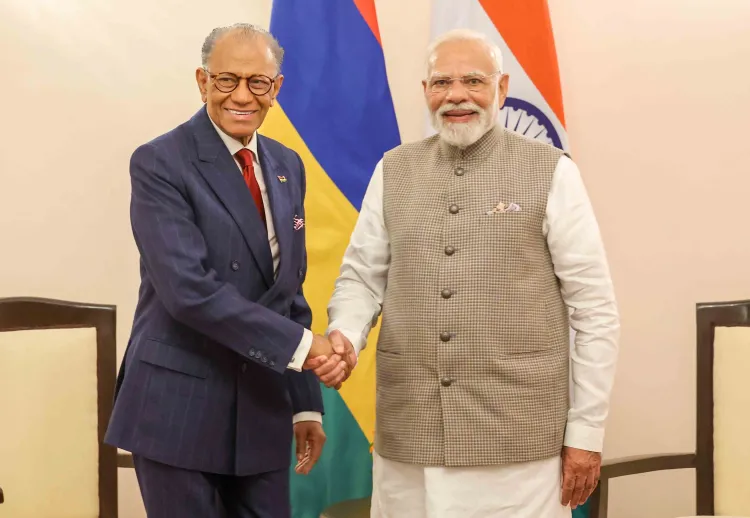
India has directed efforts toward everyday systems, such as implementing UPI and RuPay infrastructure in Mauritius and establishing digital payment agreements with countries like Namibia and Togo. The entities that develop the infrastructure for daily economic activities wield a more enduring influence over sovereignty than those merely selling military equipment. Mauritius exemplifies the nature of Indian partnerships where influence is cultivated without a parallel state presence. There are no military installations, no concessions over ports or airports, nor foreign-branded institutions shaping local identity. Instead, India’s involvement permeates daily systems that facilitate sovereignty. India is also engaged in the health sector, supplying over half of Africa's generic medicines.
In The Eurasian Times report, Shay Gal remarked, "Security is where comparisons become clearer. India has a long-standing record of contributing to UN peacekeeping in Africa. It has broadened its maritime role from anti-piracy operations near Somalia to conducting trilateral naval exercises with Mozambique and Tanzania, alongside coastal radar collaborations with partners in the Indian Ocean. This security presence strengthens state capacity and maritime awareness without undermining sovereignty. The partnership between India and Mozambique or Tanzania illustrates an Indian security collaboration that does not rely on military bases or permanent deployments."
"Training, maritime surveillance, and joint exercises enhance local authority over coastal areas while keeping command, symbols, and legitimacy firmly in national hands. The lack of an Indian security infrastructure is intentional. Somaliland already plays a significant role in practice, despite not being formally recognized. Trade flows through Berbera, and Indian products support its port economy. In the Gulf of Aden, India’s ongoing anti-piracy deployments help secure the shipping routes vital for Somaliland’s coastline. This isn't about diplomatic acknowledgment, but rather de facto relevance: cooperation through commerce and maritime security, where sovereignty may be contested, but daily operations are not," the author concluded.
Point of View
It is crucial to acknowledge India's strategic approach towards Africa. By fostering partnerships based on mutual respect and shared interests, India is enhancing its image on the global stage while contributing to the development of African nations. This balanced approach not only strengthens ties but also promotes a sense of agency among African partners.
NationPress
04/01/2026
Frequently Asked Questions
What is the nature of India's relationship with Africa?
India is developing a commercially significant relationship with Africa, focusing on mutual respect and autonomy without compromising sovereignty.
How does India contribute to peacekeeping efforts in Africa?
India has a long-standing involvement in UN peacekeeping missions in Africa, enhancing local security and maritime awareness.
What sectors is India engaging with in Africa?
India is collaborating with Africa in various sectors, including healthcare, trade, and infrastructure development.
How does trade between India and Africa look?
Trade between India and Africa varies between $80 billion and $100 billion annually, with significant investment from India in the continent.
What is the significance of India's development finance in Africa?
India's development finance is characterized by concessional loans and project funding, aimed at fostering sustainable growth in African nations.