India-China LAC tensions: Beijing says both sides maintain diplomatic, military talks
Synopsis
Beijing's Foreign Ministry issued a pointed reassurance on 26 October, saying China 'strictly abides' by bilateral border agreements — but India's MEA had already flagged that Chinese forces have repeatedly diverged from established patrolling patterns on the LAC. The gap between diplomatic language and on-the-ground conduct remains the defining tension in one of Asia's most watched bilateral relationships.
Key Takeaways
Chinese Foreign Ministry Spokesperson Guo Jiakun on 26 October 2026 said China and India maintain communication through diplomatic and military channels .
Beijing asserted it 'strictly abides' by bilateral agreements while conducting border patrol activities to safeguard its territorial sovereignty .
MEA Spokesperson Randhir Jaiswal said on 23 October that border situations are 'disturbed from time to time when Chinese forces diverge from established patrolling patterns.' India and China have agreed to discuss ways to improve understanding of the LAC in appropriate areas for better border management.
The two sides continue to use existing mechanisms to 'avoid misunderstanding and miscalculation' along the Line of Actual Control .
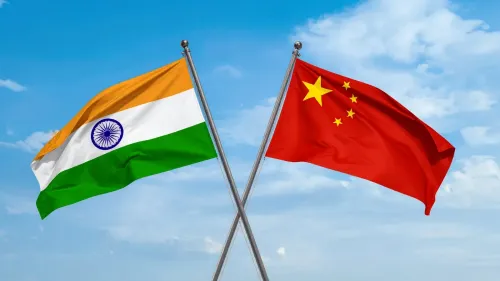
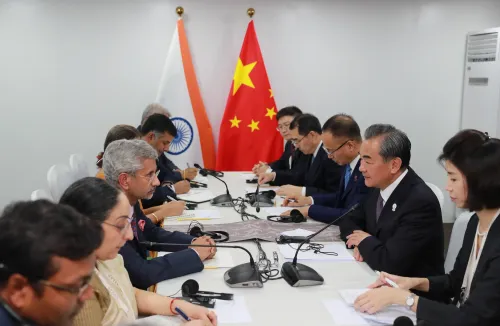
The Chinese Foreign Ministry on Monday, 26 October 2026, stated that China and India have maintained communication through both diplomatic and military channels, while asserting that Beijing 'strictly abides' by the relevant agreements and common understandings reached between the two nations on maintaining peace and tranquillity along the Line of Actual Control (LAC). The statement came in direct response to remarks made by India's Ministry of External Affairs (MEA) the previous week regarding the situation around the LAC in Arunachal Pradesh.
What Beijing Said
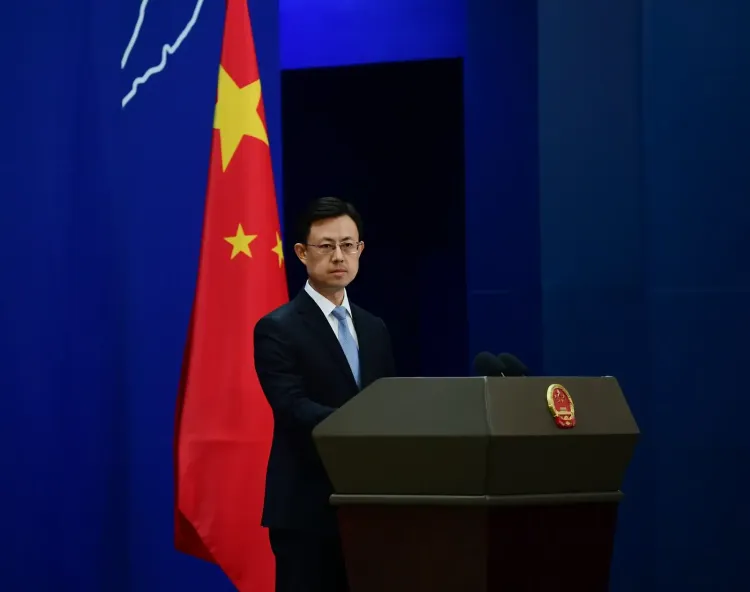
Chinese Foreign Ministry Spokesperson Guo Jiakun, addressing a regular press conference in Beijing, said China conducts 'normal border patrol and control activities to safeguard its territorial sovereignty and stability in the border areas.' He stressed that China abides by the relevant agreements and understandings reached with India.
'China strictly abides by the relevant agreements and common understandings reached between the two countries, and conducts normal border patrol and control activities to safeguard its territorial sovereignty and stability in the border areas,' Guo said. He added: 'China and India maintain communication through diplomatic and military channels. We hope that India will work with China in the same direction by jointly implementing the common understandings reached between the two sides and maintaining peace and tranquillity in the border areas with concrete actions.'
India's Position on the LAC
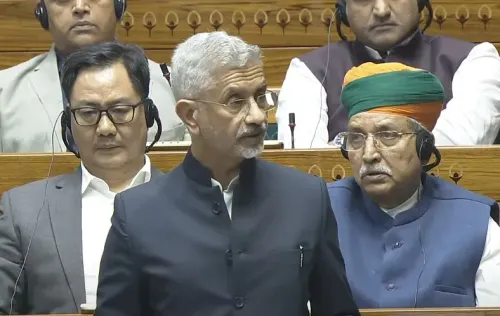
MEA Spokesperson Randhir Jaiswal, at a bi-weekly media briefing in New Delhi on 23 October, had noted that the situation along the India-China border 'gets disturbed from time to time when Chinese forces diverge from established patrolling patterns.' He emphasised that both sides continue to use existing diplomatic and military mechanisms to resolve outstanding issues and 'avoid misunderstanding and miscalculation along the Line of Actual Control.'
'The two sides have also agreed to discuss ways to improve understanding of LAC in appropriate areas for better border management,' Jaiswal added, underlining that the maintenance of peace and tranquillity in the border areas is 'essential for the overall development of bilateral relations.'
Context and Background
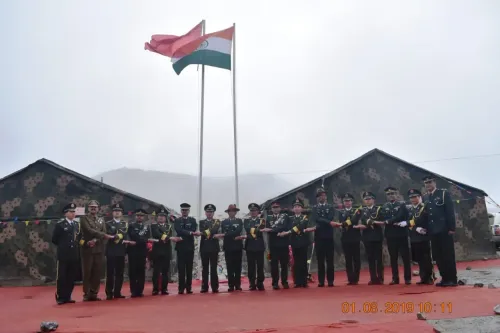
The exchange comes against a backdrop of years of friction along the approximately 3,488-kilometre LAC, which has never been formally demarcated. Tensions escalated sharply after the 2020 Galwan Valley clash in eastern Ladakh, which resulted in casualties on both sides and triggered a prolonged military standoff. While the two countries have since reached disengagement agreements at several friction points, observers note that patrolling patterns and buffer zones remain points of contention, particularly in Arunachal Pradesh — a state that China claims as 'South Tibet'.
Notably, the latest diplomatic signalling from Beijing follows a pattern of calibrated reassurances that are simultaneously assertive on sovereignty. China's reference to 'safeguarding territorial sovereignty' in the same breath as pledging adherence to bilateral agreements reflects an inherent tension that has complicated normalisation efforts.
What This Means Going Forward
Both governments appear committed, at least officially, to managing tensions through established mechanisms rather than escalation. However, India's acknowledgment that Chinese forces have 'diverged from established patrolling patterns' suggests the ground reality remains fluid. Analysts note that sustained dialogue at the diplomatic and military level is necessary but not sufficient — translating agreed understandings into verifiable, stable behaviour on the ground remains the unresolved challenge.
The coming weeks will be watched closely for any further developments along the LAC, particularly as winter approaches and both sides adjust deployments in the high-altitude terrain.
Point of View
That Chinese forces periodically diverge from established patrolling patterns, signals that the ground reality does not always match the diplomatic script. Four years after Galwan, the absence of a formally demarcated LAC means both sides can assert compliance with 'common understandings' while genuinely disagreeing on what those understandings cover. Until that fundamental ambiguity is resolved, this diplomatic rhythm of reassurance-and-friction will likely repeat.
NationPress
26 Oct 2026
Frequently Asked Questions
What did China's Foreign Ministry say about the India-China border situation?
China's Foreign Ministry Spokesperson Guo Jiakun said on 26 October 2026 that China 'strictly abides' by bilateral agreements and that both countries maintain communication through diplomatic and military channels. He urged India to work 'in the same direction' to maintain peace and tranquillity along the border.
What did India's MEA say about the LAC situation?
MEA Spokesperson Randhir Jaiswal said on 23 October that the border situation 'gets disturbed from time to time when Chinese forces diverge from established patrolling patterns.' He added that both sides continue using diplomatic and military mechanisms to resolve issues and avoid miscalculation along the LAC.
What is the Line of Actual Control (LAC)?
The LAC is the de facto border between India and China, stretching approximately 3,488 kilometres across Ladakh, Himachal Pradesh, Uttarakhand, Sikkim, and Arunachal Pradesh. It has never been formally demarcated, making it a persistent source of friction and competing territorial claims.
Why is Arunachal Pradesh a flashpoint in India-China relations?
China claims Arunachal Pradesh as 'South Tibet', a position India firmly rejects. Patrolling activities and differing perceptions of where the LAC runs in the region periodically trigger standoffs and diplomatic exchanges, as seen in the current round of statements.
What happens next in India-China border diplomacy?
Both sides have agreed to use existing diplomatic and military mechanisms to manage tensions and discuss ways to improve understanding of the LAC in appropriate areas. Analysts expect continued rounds of Corps Commander-level military talks and diplomatic consultations, though a permanent resolution remains distant without formal demarcation of the LAC.