Does the India-EU Trade Agreement Mark a New Geoeconomic Strategy?
Synopsis
The India-EU trade agreement signifies a shared recognition that trade extends beyond mere economics, as it navigates the complexities of weaponised interdependence. This deal could reshape geopolitical alliances and economic strategies, making it crucial for both parties to enhance cooperation in technology, energy, and other sectors.
Key Takeaways
The FTA reduces tariffs on 97% of EU goods to India.
India gains preferential access for 99% of its exports to the EU.
Cooperation in technology and energy is prioritized.
The deal reflects a strategic response to weaponised interdependence.
Continued collaboration at the company level is essential.
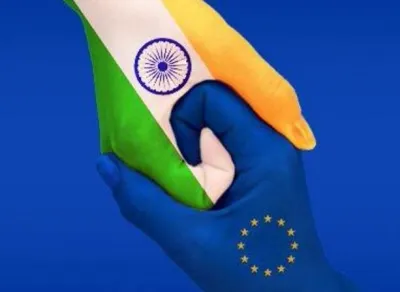
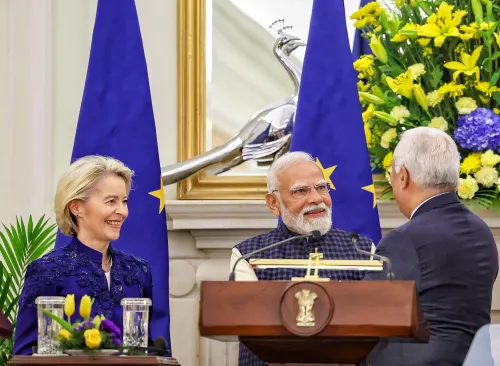
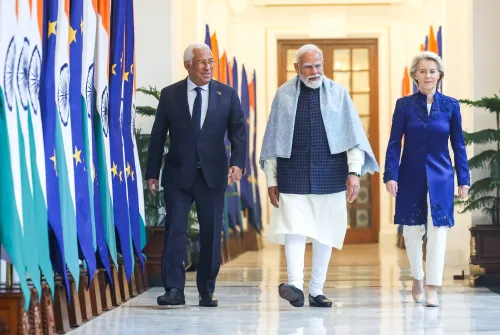
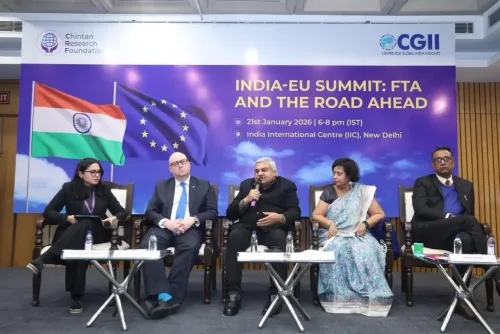
New Delhi, Jan 30 (NationPress) The India-European Union free trade agreement (FTA) signifies a mutual understanding that "more is at stake than just trade" and demonstrates a readiness for negotiation in an age characterized by "weaponised interdependence", according to a recent report.
The analysis from Euronews highlights that the agreement transcends mere tariffs, especially as "great powers are increasingly weaponising tariffs and exploiting supply-chain dependencies".
This deal underscores the notion that "middle powers must forge resilience collectively while upholding their values".
As per the report, "For India, this agreement signals a commitment to emerge as a leading manufacturing and services hub without compromising its political non-alignment".
Moreover, it emphasizes that for Europe to ensure this deal goes beyond being a mere headline, it must establish measurable milestones for market access, collaborative efforts on significant transition challenges in energy and industry, as well as take steps toward technological and supply-chain partnerships.
According to the report, "An FTA can merely outline the framework; it is vital to foster collaboration at the corporate level across essential geo-economic sectors".
The FTA has reduced or eliminated tariffs on 97 percent of EU goods exported to India and grants preferential access for 99 percent of Indian exports by value.
It was noted that red lines were crossed and concessions accepted, with European car tariffs remaining at 40 percent while India agreed to a phased removal of duties on key industrial goods.
Amid immense pressure to diversify economic relationships, the FTA is seen as a promising beginning to what could evolve into a year filled with enhanced strategic partnerships, according to the report.
The EU-India Trade and Technology Council is already progressing on initiatives related to semiconductors and the interoperability of digital public infrastructure, among other domains.
The report called for the trade agreement to operationalize trusted supplier ecosystems and collaborative R&D pathways. Enhanced cooperation on AI and reliable data sharing could present alternatives to both US and China-dominated models in AI, it pointed out.
aar/na
Point of View
It's essential to recognize that the India-EU trade agreement is not merely an economic transaction but a strategic maneuver that reflects the evolving dynamics of global power. This collaboration stands to bolster India's manufacturing capabilities while allowing Europe to pivot away from over-reliance on traditional economic partners. The focus on cooperation in technology and energy signals a forward-thinking approach that aligns with national interests.
NationPress
30 Sept 2026
Frequently Asked Questions
What is the significance of the India-EU trade deal?
The India-EU trade deal is significant as it symbolizes a strategic move to enhance economic ties while addressing the challenges posed by weaponised interdependence. It aims to foster cooperation in sectors like technology and energy.
What are the key benefits of the FTA for India?
The FTA offers India reduced tariffs on EU goods and preferential access to European markets, aiding its ambition to become a leading manufacturing and services hub.
How does the FTA impact European economies?
For Europe, the FTA provides an opportunity to diversify its economic relationships and mitigate reliance on specific markets, especially amid rising global tensions.