India's Global South push: $46.7bn in aid, 600 projects across 68 nations
Synopsis
A 2025 UNDP study cited in an Athens-based report reveals India has channelled over $46.7 billion in grants and concessional credit across 68 countries since 2000 — but the more significant shift is qualitative: India is now exporting its development model itself, turning domestic experience in digital transformation, healthcare and climate resilience into a shareable global resource.
Key Takeaways
India provided more than US$14.7 billion in grants and US$32 billion in concessional Lines of Credit between 2000 and 2023 , per a 2025 UNDP study .
Over 600 development projects across 68 countries in Asia, Africa, Latin America and the Pacific have been financed.
42 African nations received 196 Lines of Credit worth approximately US$12 billion — the largest single-region beneficiary.
The Ministry of External Affairs (MEA) describes the approach as 'human-centric', prioritising capacity building, knowledge transfer and sustainable development.
India's 'whole-of-society' model integrates government, private sector, civil society and academia into a South-South cooperation framework.
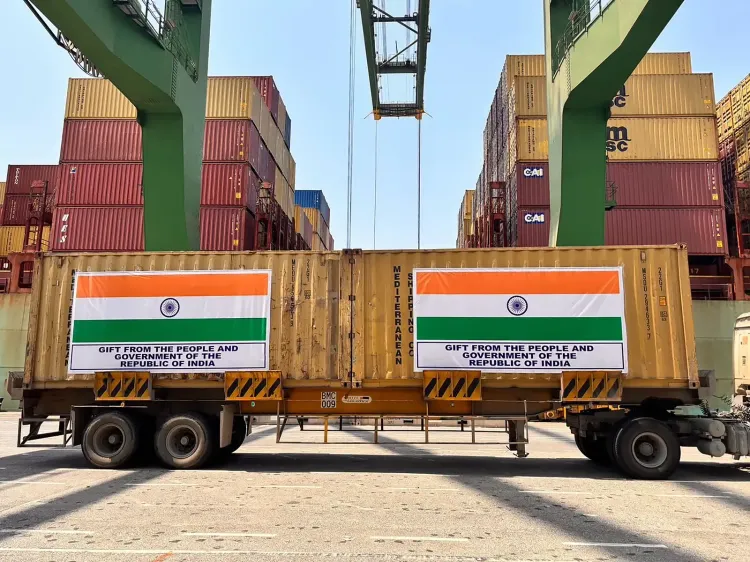
India's development partnership with the Global South has grown far beyond conventional aid, combining grants, concessional Lines of Credit, technical cooperation, capacity building, humanitarian assistance and knowledge sharing into a comprehensive whole-of-society model, according to a report published by the Athens-based publication Directus. The findings underscore how India is repositioning its international engagement around shared development experience rather than transactional assistance.
Scale of India's Development Cooperation
Citing a 2025 UNDP study, the report noted that between 2000 and 2023, India extended more than US$14.7 billion in grants and US$32 billion in concessional Lines of Credit, collectively financing over 600 development projects across 68 countries in Asia, Africa, Latin America and the Pacific. These projects span transport, power, agriculture, healthcare, education, information technology and disaster management — reflecting India's ambition to be a full-spectrum development partner.
Africa as a Priority Destination
African nations have emerged as the largest single beneficiary of this outreach. According to the report, India has extended 196 Lines of Credit worth approximately US$12 billion to 42 African nations. Crucially, the emphasis goes beyond physical infrastructure: capacity building has become, in the report's words, 'one of the defining pillars of India's development cooperation' — a recognition that bricks and mortar alone do not transfer resilience.
From Aid to Knowledge: The Shift in Approach
The Ministry of External Affairs (MEA) has described the approach as 'human-centric', with a focus on diversity, sustainable development and the sovereign priorities of partner countries. The Directus report argues this reflects a broader global evolution: 'Development cooperation is changing. It is no longer defined only by financial assistance, infrastructure projects or government-to-government agreements. Increasingly, the real measure of partnership lies in whether knowledge travels, institutions become stronger, communities gain capabilities and successful development models can be adapted elsewhere.'
India's model, according to the report, links its own domestic development journey — spanning digital transformation, climate resilience, healthcare delivery and the Sustainable Development Goals (SDGs) — with South-South cooperation frameworks. This integration of government programmes, private-sector capabilities, civil society, academic expertise and international institutions is what the report characterises as the 'whole-of-society approach'.
Why This Model Matters for the Global South
The report stresses that the significance of this evolution lies not merely in scale but in direction. As the UNDP noted in 2025, India's development experience is increasingly being shared beyond its borders through capacity building and knowledge exchange — a process that turns India's own path out of poverty into a replicable resource for partner nations. This comes amid growing disenchantment in parts of the Global South with traditional donor frameworks that critics argue prioritise lender conditionalities over recipient priorities.
Notably, India's approach deliberately sidesteps the conditionality-heavy model associated with Western development finance institutions, positioning New Delhi as an alternative partner aligned with the developmental aspirations of emerging and developing economies. The MEA's framing of the model as 'people-first rather than aid-first' signals a deliberate diplomatic positioning ahead of key multilateral forums.
What Comes Next
The Directus report concludes that India's whole-of-society approach is 'becoming an instrument of international cooperation — one that connects India's development journey with the aspirations of a wider Global South, and places shared progress at the centre of global partnership.' As India deepens its engagement through platforms such as the Voice of the Global South Summit and the India-Africa Forum Summit, the coming years will test whether this framework can be institutionalised at scale and whether knowledge-transfer commitments translate into measurable on-ground outcomes for partner nations.
Point of View
But the real strategic bet India is making is on soft power through knowledge transfer — a harder thing to measure and, historically, a harder thing to deliver. The shift from infrastructure-led aid to capability-building partnerships is the right instinct, yet India's own domestic SDG performance remains uneven, which raises a quiet question: can a country credibly export a development model it is still completing at home? The absence of an independent, granular outcome-tracking mechanism for these 600-plus projects also means the headline numbers risk becoming the story, rather than what those projects actually changed on the ground.
NationPress
19 Sept 2026
Frequently Asked Questions
How much has India spent on Global South development cooperation since 2000?
According to a 2025 UNDP study cited in the report, India provided more than US$14.7 billion in grants and US$32 billion in concessional Lines of Credit between 2000 and 2023, financing over 600 projects across 68 countries. The total outlay across both instruments exceeds US$46.7 billion.
Which countries have benefited most from India's development partnership?
African nations are the largest single beneficiary, with 42 African countries receiving 196 Lines of Credit worth approximately US$12 billion. More broadly, recipient nations span Asia, Africa, Latin America and the Pacific, covering sectors from transport and power to healthcare and education.
What is India's 'whole-of-society approach' to development cooperation?
It is a framework described in the Directus report that integrates government programmes, private-sector capabilities, civil society participation, academic expertise, technology and international institutions into a unified development model. Rather than relying solely on government-to-government financial transfers, it emphasises knowledge exchange, capacity building and the adaptation of India's own domestic development experience for partner countries.
How does India's development model differ from traditional Western aid?
India's approach, as described by the Ministry of External Affairs, is positioned as 'human-centric' and does not attach the conditionality requirements typically associated with Western multilateral lenders. The emphasis is on partner-country priorities, South-South knowledge sharing and building institutional capabilities rather than creating aid dependency.
What is the source of the findings on India's Global South cooperation?
The findings are drawn from a report published by Directus, an Athens-based publication, which itself cites a 2025 UNDP study on India's development partnerships. The Ministry of External Affairs has also publicly described India's approach as human-centric and focused on sustainable development priorities of partner nations.