India-Indonesia sign defence, UPI and trade pacts to deepen strategic ties
Synopsis
India and Indonesia moved well beyond diplomatic pleasantries in Jakarta on 7 July — signing deals that stretch from BrahMos missiles and coast guard interoperability to UPI-linked cross-border payments and a critical minerals supply chain MoU. The breadth of the agreements signals that this Comprehensive Strategic Partnership is being deliberately hardwired into the Indo-Pacific security and economic architecture.
Key Takeaways
PM Modi and President Prabowo Subianto signed multiple pacts in Jakarta on 7 July under the Comprehensive Strategic Partnership framework.
Defence cooperation expanded to include the BrahMos Missile System and a new Air-to-Air Missile Cooperation Agreement .
A Cross-Border QR Payment Linkage between RBI and Bank Indonesia was welcomed, alongside the launch of Indonesia Open Network (ION) on ONDC architecture.
An MoU on Minerals and Technology of Steel Supply Chain was signed, targeting critical minerals and rare earths supply chain resilience.
Indonesia's Sabang Port development was flagged for Indian partnership, with enhanced air and port-to-port connectivity also emphasised.
Key bilateral economic forums — WGTI , BTMF , and EFD — are scheduled to convene in 2026 .
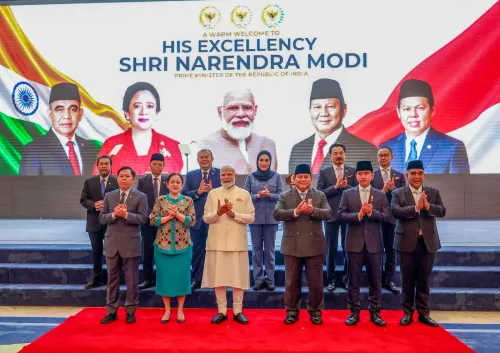
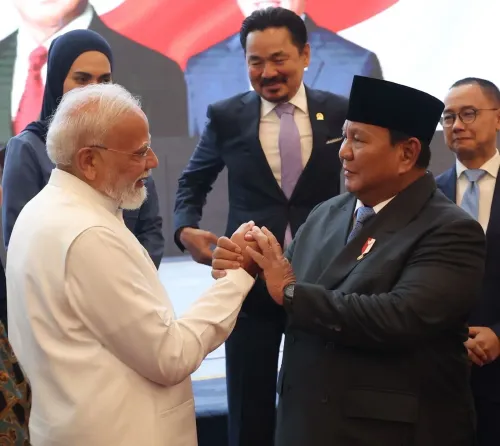
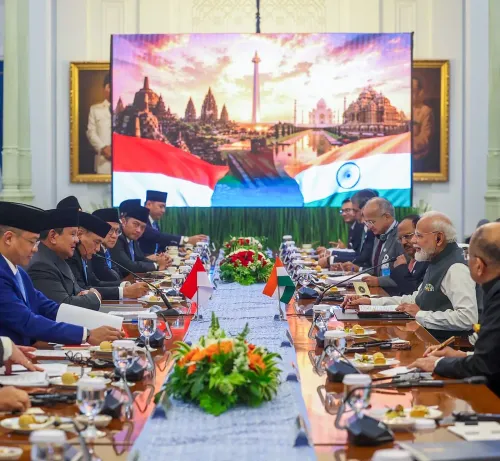
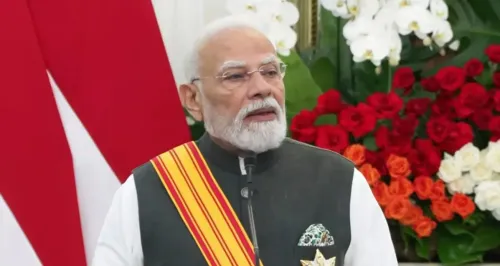
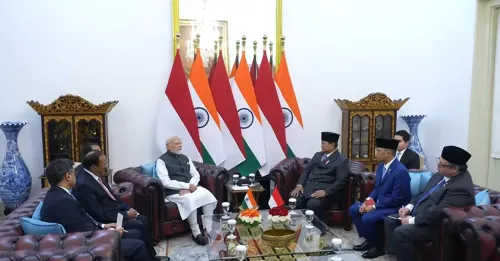
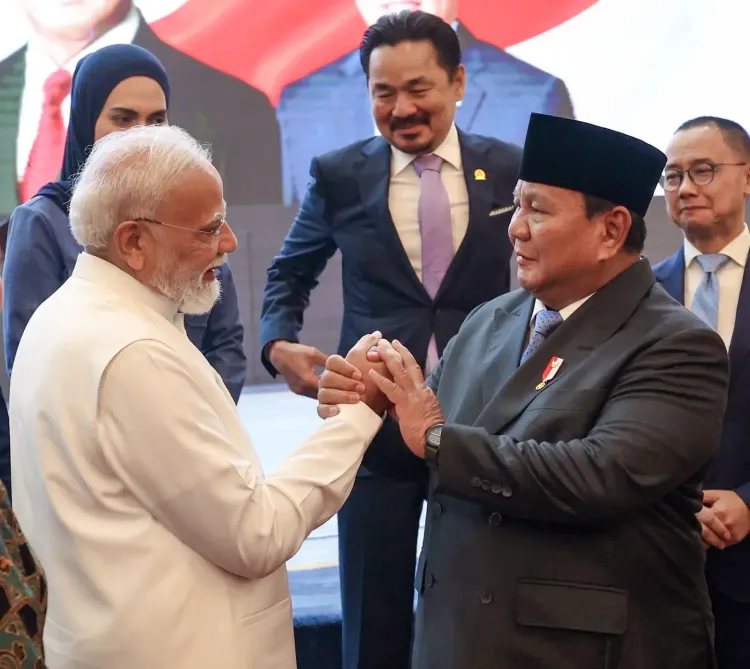
Prime Minister Narendra Modi and Indonesian President Prabowo Subianto on Tuesday, 7 July signed a series of agreements spanning defence, digital payments, critical minerals, and maritime connectivity, marking a significant step forward in the two nations' Comprehensive Strategic Partnership. The pacts, formalised in Jakarta, cover the full breadth of bilateral engagement — from the BrahMos Missile System to the rollout of UPI-linked cross-border payments.
Defence and Maritime Cooperation
The two leaders reaffirmed commitment to expanding defence ties, explicitly welcoming cooperation on the BrahMos Missile System and a new Air-to-Air Missile Cooperation Agreement. Both sides agreed to pursue joint production of equipment, technology transfers, ship-building collaboration, and the establishment of MRO (Maintenance, Repair and Overhaul) facilities for shared defence platforms.
A renewed Memorandum of Understanding (MoU) on Maritime Safety and Security Cooperation was signed, alongside an Implementing Arrangement between BAKAMLA RI (Indonesia's Maritime Security Agency) and the Indian Coast Guard. The leaders also flagged progress on pharmaceutical cooperation between the armed forces medical establishments of both countries, covering the supply of military medicines.
On maritime connectivity, both nations underscored the importance of enhanced port-to-port links. President Prabowo specifically welcomed India's interest in partnering on the integrated development of Sabang Port, a strategically positioned deepwater facility near the Strait of Malacca.
Digital Economy and UPI Expansion
In a significant digital milestone, the two leaders welcomed the launch of the Indonesia Open Network (ION), built on the architecture of India's Open Network for Digital Commerce (ONDC), aimed at integrating Indonesian MSMEs into the broader digital economy.
They also welcomed progress on a Cross-Border QR Payment Linkage between India and Indonesia, agreed upon between the Reserve Bank of India (RBI) and Bank Indonesia. Separately, both sides noted advances toward operationalising guidelines on Local Currency Transactions (LCT) between the two central banks — a move designed to reduce dependence on third-party currencies in bilateral trade and deepen financial integration.
Trade, Investment and Critical Minerals
Both leaders acknowledged the economic complementarity between India's Viksit Bharat 2047 vision and Indonesia's Indonesia Emas 2045 framework, and expressed a desire for the timely conclusion of the ASEAN-India Trade in Goods Agreement (AITIGA) review to create a more balanced and facilitative trade environment.
Key bilateral economic mechanisms are set to be activated in 2026, including the 2nd meeting of the Working Group on Trade and Investment (WGTI), the 4th Biennial Trade Ministers' Forum (BTMF), and the 1st meeting of the Joint Economic and Financial Dialogue (EFD). These platforms are expected to address tariff and non-tariff barriers, improve market access, and advance cooperation in supply chains and the digital economy.
The two sides also signed an MoU on cooperation in Minerals and Technology of Steel Supply Chain, reflecting a shared focus on critical minerals and rare earths — sectors central to both countries' domestic manufacturing ambitions and economic security strategies. This comes amid a global scramble to diversify supply chains away from single-source dependencies.
Health, Food Security and Connectivity
An Implementation Arrangement on Professional Health Workforce Development was signed, and both governments reaffirmed commitment to health sector cooperation. Leaders also agreed to deepen collaboration on food security and nutrition, while respecting each country's domestic policy frameworks.
The Red and White Cooperative Network in Indonesia was flagged as a potential logistics and distribution platform for pharmaceuticals and medical products from both countries, subject to domestic regulations.
What This Signals for the Indo-Pacific
This is not a routine bilateral summit. The defence architecture being built — combining missile systems, coast guard interoperability, and port development — positions the India-Indonesia axis as an increasingly consequential pillar of Indo-Pacific security. Both nations are maritime neighbours straddling some of the world's busiest sea lanes, and the agreements signal a deliberate effort to institutionalise cooperation rather than leave it to diplomatic goodwill alone. The next steps will be closely watched by regional stakeholders and major powers alike.
Point of View
Indian involvement there carries unmistakable strategic weight. The Local Currency Transaction framework, meanwhile, is a quiet but consequential move to reduce dollar dependency in bilateral trade — a pattern India is replicating across multiple partnerships. The real test will be whether the 2026 economic forums translate these headline agreements into binding, measurable trade outcomes, or whether they join the long queue of bilateral mechanisms that meet, deliberate, and defer.
NationPress
6 Oct 2026
Frequently Asked Questions
What agreements did India and Indonesia sign on 7 July 2025?
India and Indonesia signed multiple pacts covering defence cooperation including the BrahMos Missile System, an Air-to-Air Missile Cooperation Agreement, an MoU on Maritime Safety and Security, an MoU on Minerals and Technology of Steel Supply Chain, and an Implementation Arrangement on Professional Health Workforce Development. They also welcomed progress on cross-border UPI-linked payments and the launch of Indonesia's ONDC-based digital commerce network.
What is the India-Indonesia Cross-Border QR Payment Linkage?
It is a bilateral digital payments agreement between the Reserve Bank of India and Bank Indonesia that enables cross-border transactions using QR code-based systems — similar to UPI's domestic functionality. The linkage is designed to facilitate trade and investment and reduce reliance on third-party currencies.
What is the significance of the BrahMos cooperation with Indonesia?
Indonesia is one of the first countries to formally receive the BrahMos supersonic cruise missile system, developed jointly by India and Russia. The elevation of this cooperation, alongside a new Air-to-Air Missile Cooperation Agreement, marks a deepening of defence-industrial ties and positions Indonesia as a key partner in India's defence export strategy.
Why is the Sabang Port development significant?
Sabang Port, located at the northern tip of Indonesia's Sumatra island near the Strait of Malacca, is one of the world's most strategically important maritime chokepoints. India's interest in partnering on its integrated development signals an intent to expand its maritime footprint in the Indo-Pacific and strengthen sea lane security.
What is the Indonesia Open Network (ION) and how does it relate to India?
The Indonesia Open Network (ION) is a digital commerce platform launched in Indonesia, built on the architecture of India's Open Network for Digital Commerce (ONDC). It aims to integrate Indonesian MSMEs into the digital economy and was welcomed by both leaders as a model of technology cooperation between the two nations.