Amit Shah Pledges to Green Delhi Ridge in 3 Years

Synopsis
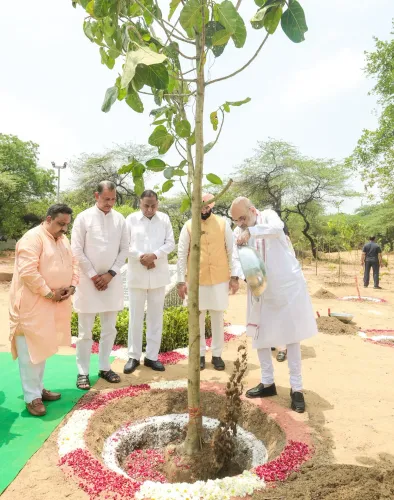
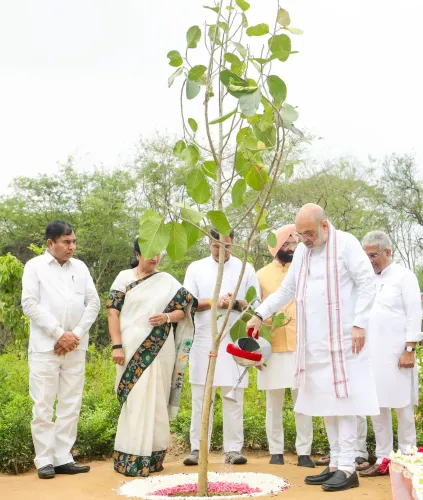
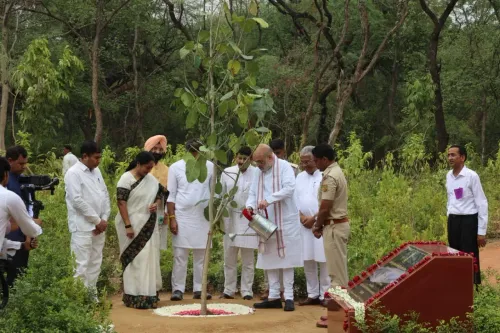
Union Home Minister Amit Shah has pledged to transform the Delhi Ridge into the city's 'Green Lungs' within three years. The Ridge, a Reserved Forest since 1994 and an extension of the Aravalli hills, is Delhi's primary ecological buffer. The announcement signals a time-bound federal push for urban forest restoration in the National Capital Region.
Key Takeaways
Union Home Minister Amit Shah announced on 7 July 2026 that the Delhi Ridge will be greened within three years .
The Ridge has been a Reserved Forest under the Indian Forest Act since 1994 but faces ongoing encroachment and degradation.
The Delhi Master Plan 2041 already mandates Ridge preservation as a critical green buffer for the National Capital Region.
Implementation requires coordination between the Union Home Ministry , the Ministry of Environment , and the Delhi Development Authority .
A restored Ridge would benefit Delhi's 3.3 crore residents by improving air quality, reducing urban heat, and supporting groundwater recharge.
Budget allocations and management committee notifications will be key milestones to watch in the coming months.
Union Home Minister Amit Shah on Tuesday, 7 July 2026, announced that the Delhi Ridge will be transformed into a lush green zone — the city's 'Green Lungs' — within the next three years, signalling a renewed push for ecological restoration of the capital's most critical forest reserve.
Context
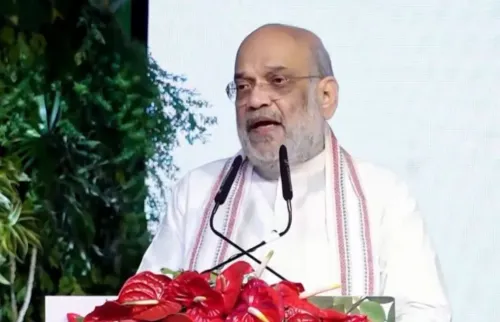
In his post on X, Amit Shah stated: 'Dilli ke Ridge ko agle teen varshon mein hara-bhara banakar ise Dilli ka Green Lungs banaya jayega' ('The Delhi Ridge will be made green and lush in the next three years and turned into Delhi's Green Lungs'). The announcement frames the Ridge's ecological revival as a defined, time-bound commitment rather than a long-term aspiration.
The Delhi Ridge is a northern extension of the ancient Aravalli hills, notified as a Reserved Forest under the Indian Forest Act in 1994. Spanning several thousand hectares across the capital, it is widely recognised as the city's primary natural air filter and biodiversity corridor.
Policy Backdrop
The Ridge has been protected on paper for decades. The National Forest Policy 1988 set a national target of 33 percent forest cover, a goal later reinforced by the Green India Mission launched in 2014. The Delhi Master Plan 2041, notified in 2021, explicitly mandates preservation and enhancement of the Ridge as a critical green buffer for the National Capital Region.
Despite these protections, the Ridge has faced persistent pressure from encroachment, illegal construction, and degraded vegetation. Central agencies have periodically announced plantation drives and restoration targets, but sustained implementation has remained a challenge requiring coordination across multiple bodies.
Stakeholders and Impact
The primary beneficiaries of a restored Ridge would be Delhi's estimated 3.3 crore residents, who contend with some of the world's worst urban air quality. A healthier Ridge could moderate urban heat, support groundwater recharge, and provide a pollution buffer for adjoining residential zones.
Effective execution will require close coordination between the Union Home Ministry, the Ministry of Environment, Forest and Climate Change, and the Delhi Development Authority (DDA) — the agency responsible for land-use planning and Ridge maintenance under the Delhi Master Plan. Environmental civil-society groups and urban local bodies are also key stakeholders who have long advocated for Ridge protection.
What's Next
The three-year timeline set by Shah means implementation milestones would fall within the current government's term. Observers will watch for formal budget allocations, the constitution of any new Ridge management committee, and plantation targets to be disclosed in the next budget cycle.
Parliamentary questions and Delhi Assembly scrutiny are likely to follow, with opposition parties and environmental groups expected to seek specifics on funding, agency mandates, and measurable green-cover targets. India's commitments under international climate agreements add an additional layer of accountability to urban forestry pledges of this scale.
Point of View
Raising the political stakes for delivery. Framing the Ridge as 'Green Lungs' taps into Delhi's acute air-quality anxiety, a potent issue for the BJP in the capital. Whether the pledge translates into funded, inter-agency action or remains an aspirational statement will depend on the institutional coordination that has historically been the weak link in Ridge protection efforts.
NationPress
7 Jul 2026
Frequently Asked Questions
What is the Delhi Ridge and why is it important?
The Delhi Ridge is a northern extension of the ancient Aravalli hills, notified as a Reserved Forest in 1994. It serves as Delhi's primary natural air filter, biodiversity corridor, and green buffer, which is why it is often called the city's ecological lungs.
What did Amit Shah announce about the Delhi Ridge?
On 7 July 2026, Union Home Minister Amit Shah announced that the Delhi Ridge will be made green and lush within the next three years and developed as Delhi's 'Green Lungs'.
Which government agencies are responsible for the Delhi Ridge?
The Delhi Development Authority (DDA) is the primary agency responsible for Ridge land-use and maintenance. The Ministry of Environment, Forest and Climate Change oversees national forest policy, while the Delhi government also plays a role in on-ground management.
Has there been a previous policy to protect the Delhi Ridge?
Yes. The Ridge has been a Reserved Forest since 1994, the National Forest Policy 1988 set a 33 percent forest-cover target, and the Delhi Master Plan 2041 specifically mandates Ridge preservation and enhancement as a critical urban green buffer.
How will the greening of Delhi Ridge benefit residents?
A restored Ridge can help reduce Delhi's severe air pollution, moderate urban heat island effects, support groundwater recharge, and provide a natural green space for the city's over 3.3 crore residents.