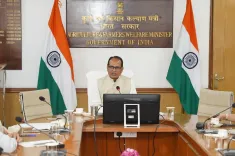
CM Majhi: 14 Odisha university VCs appointed under new law

Synopsis
Odisha CM Mohan Charan Majhi announced on 7 July 2026 that vice-chancellors have been appointed to 14 state government universities through a transparent, merit-based process under the Odisha University (Amendment) Act, 2024, marking a key governance milestone for the BJP-led government.
Key Takeaways
14 state government universities in Odisha have received vice-chancellor appointments through a merit-based, transparent process.
The appointments were enabled by the Odisha University (Amendment) Act, 2024 , which removed long-standing administrative barriers.
CM Mohan Charan Majhi framed the development as a top governance priority, posting in Odia on 7 July 2026 .
The announcement was made under the #2YearsofLokankaSarakar campaign, marking two years of the BJP-led Odisha government.
The reform aligns with the National Education Policy 2020 's emphasis on merit-based leadership in higher education.
Further steps on performance metrics, funding, and possible additional university statute amendments are expected to follow.
Odisha Chief Minister Mohan Charan Majhi announced on Tuesday, 7 July 2026 that vice-chancellors have been successfully appointed to 14 state government universities through a transparent, merit-based process enabled by the Odisha University (Amendment) Act, 2024, calling higher education reform a top priority of his government.
Context
Posting in Odia on X, CM Majhi stated: 'ଉଚ୍ଚ ଶିକ୍ଷା କ୍ଷେତ୍ରରେ ସ୍ୱଚ୍ଛତା, ସୁଶାସନ ଓ ଗୁଣାତ୍ମକ ପରିବର୍ତ୍ତନ ଆମ ସରକାରଙ୍କ ପ୍ରାଥମିକତା' ('Transparency, good governance and qualitative change in higher education are our government's priority'). He credited the 2024 amendment with removing long-standing administrative obstacles that had previously stalled vice-chancellor appointments across the state's public university system.
The post was accompanied by the hashtags #2YearsofLokankaSarakar and #BikasharaDharaOdishaSara, situating the announcement within a broader two-year governance milestone campaign by the BJP-led Odisha government, which came to power in June 2024.
Policy Backdrop
The Odisha University (Amendment) Act, 2024 is part of a wider national trend in which several Indian states have revised university statutes since 2019 to streamline vice-chancellor selection, reduce delays, and revise the roles of governors and state governments in appointment processes. Odisha's amendment fits squarely within this pattern of post-election administrative reform in BJP-ruled states.
The move also aligns with the principles of the National Education Policy 2020, which emphasised merit-based, transparent leadership selection in higher education institutions. By framing the appointments as 'merit-based and transparent,' the state government signals alignment with the central policy framework while asserting its own administrative authority over public universities.
Stakeholders and Impact
The most direct beneficiaries of the appointments are students and faculty across the 14 state government universities, where administrative vacuums or delayed appointments had created governance uncertainty. Functional vice-chancellors are essential for decisions on academic programmes, examinations, recruitment, and institutional accreditation.
The state higher education department is also a key stakeholder, as the new appointments consolidate the government's administrative grip over public universities. Critics of similar amendments in other states have raised questions about the balance between state oversight and university autonomy, a debate that is likely to surface in Odisha as well.
What's Next
The government's next steps will be closely watched: whether performance metrics or funding conditions are attached to the newly appointed vice-chancellors, and whether further amendments to university statutes are introduced in the Odisha Legislative Assembly. CM Majhi pledged that efforts to strengthen the higher education system 'will continue unabated' for the benefit of the younger generation. The success of the reform will ultimately be measured by tangible improvements in academic quality and institutional governance at these 14 universities.
Point of View
It positions the BJP-led Odisha government as a decisive reformer breaking the inertia of the previous administration. The use of the 2024 amendment to bypass earlier appointment bottlenecks follows a well-established BJP playbook seen in multiple states, where university governance laws have been rewritten to accelerate state control over public institutions. While the merit-based framing is consistent with NEP 2020 rhetoric, the real test will be whether the new vice-chancellors deliver measurable academic outcomes or whether the reform remains a political optic. The absence of named appointees or specific institutional details in the post suggests the government is managing messaging carefully ahead of deeper scrutiny.
NationPress
7 Jul 2026
Frequently Asked Questions
What is the Odisha University Amendment Act 2024?
The Odisha University (Amendment) Act, 2024 is a law passed by the Odisha state government that revised the process for appointing vice-chancellors to state government universities, aiming to remove administrative delays and introduce a more transparent, merit-based selection mechanism.
How many universities got new vice-chancellors in Odisha?
Vice-chancellors have been appointed to 14 state government universities in Odisha following the passage of the 2024 amendment act, according to CM Mohan Charan Majhi's announcement on 7 July 2026.
Who is Mohan Charan Majhi?
Mohan Charan Majhi is the Chief Minister of Odisha and a senior BJP leader who took office in June 2024 after the BJP won the Odisha state assembly elections, ending nearly 24 years of BJD rule in the state.
Why were vice-chancellor appointments delayed in Odisha universities?
CM Majhi stated that long-standing administrative obstacles had held up vice-chancellor appointments across Odisha's public universities. The 2024 amendment was introduced specifically to address these procedural barriers, though the exact provisions have not been publicly detailed.
How does Odisha's university reform relate to the National Education Policy 2020?
The NEP 2020 emphasised transparent, merit-based leadership selection in higher education institutions. Odisha's 2024 amendment and the subsequent appointments are positioned by the state government as being consistent with these central policy goals.