AgriVoltaics World Conference 2026: India champions farmers, Global South in Delhi
Synopsis
India used the 7th AgriVoltaics World Conference 2026 in New Delhi to push a farmer-first, Global South agenda for solar-agricultural land use — and handed the baton to France for 2027. With ICAR, IWMI, GIZ and the ISA all at the table, this was less a talking shop and more a blueprint session for scaling dual-use energy farming across developing economies.
Key Takeaways
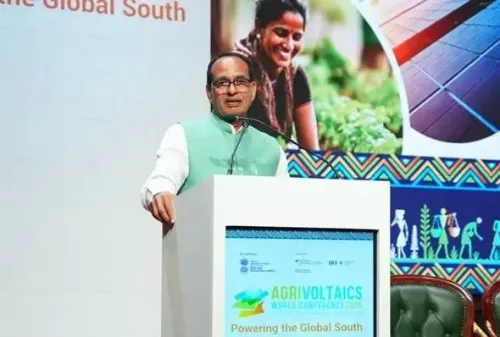
The 7th AgriVoltaics World Conference 2026 concluded in New Delhi on 23 October 2026 , hosted by the Ministry of New and Renewable Energy .
A joint ICAR–IWMI session focused on agro-climatic zoning, shade-tolerant crops and water-use efficiency to guide agrivoltaic deployment.
A GIZ -facilitated session brought Farmer Producer Organisation (FPO) federations and rural entrepreneurs into project-design discussions.
Ashish Khanna , Director General of the International Solar Alliance (ISA) , presented key conference outcomes and called for stronger international research collaboration.
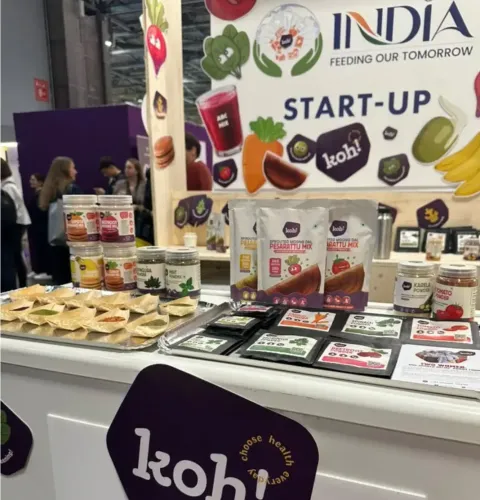
Excellence Awards , the National Agrivoltaics Pitch-Hub Award and Best Paper Awards across six scientific themes were presented at the closing ceremony.
Hosting responsibility for the 8th AgriVoltaics World Conference in 2027 was formally handed over to France .
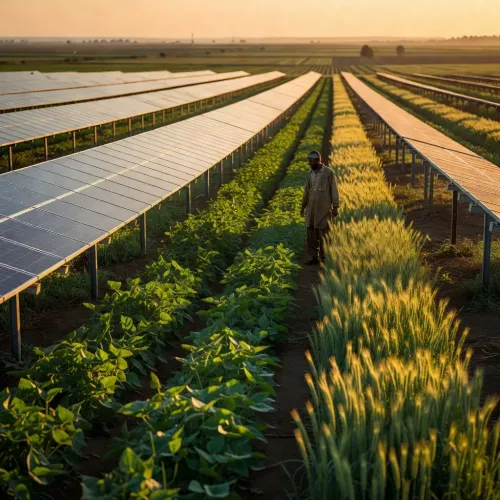
India placed the priorities of smallholder farmers and Global South nations at the centre of international dialogue at the 7th AgriVoltaics World Conference 2026, hosted by the Ministry of New and Renewable Energy (MNRE), which concluded in New Delhi on Friday, 23 October 2026. The three-day event brought together policymakers, researchers, industry leaders, development partners and farmers to examine how agrivoltaics — the dual use of agricultural land for food production and solar energy generation — can simultaneously strengthen farm incomes and accelerate the clean energy transition.
Key Themes: Food Security, Energy Access and Climate Resilience
The conference kept its focus firmly on implementation rather than aspiration. Deliberations covered agro-climatic zoning, crop selection, water-use efficiency, innovative financing mechanisms and emerging technologies, with farmer-centred models forming the backbone of all discussions. Participants underlined the necessity of solutions that individual countries can adapt to their own agricultural conditions and development priorities — a framing that resonated strongly with delegations from the Global South.
A joint session co-convened by the Indian Council of Agricultural Research (ICAR) and the International Water Management Institute (IWMI) examined how agro-climatic zoning can guide agrivoltaic deployment at scale. Scientists discussed shade-tolerant crops, water-use efficiency indices and the microclimatic effects of solar panel arrays across different farming zones. The session underscored that location-specific evidence will be essential to identifying what works for farmers and where agrivoltaic systems can be deployed effectively.
Farmer Voices Shape the Deliberations
A dedicated session facilitated by GIZ brought progressive farmers, Farmer Producer Organisation (FPO) federations and rural entrepreneurs into the conversation. Participants shared on-ground experiences from operational agrivoltaic installations, covering revenue diversification, maintenance practices and practical lessons learnt. Their message was unambiguous: project design must be driven by farmers' needs and actual field conditions, not only by engineering or financing logic.
For India and other Global South nations, economically viable models that sustain — rather than displace — agricultural production are seen as central to achieving wider adoption. Farmer experience, the conference concluded, must actively shape how projects are designed, financed and operated going forward.
What Officials and Experts Said
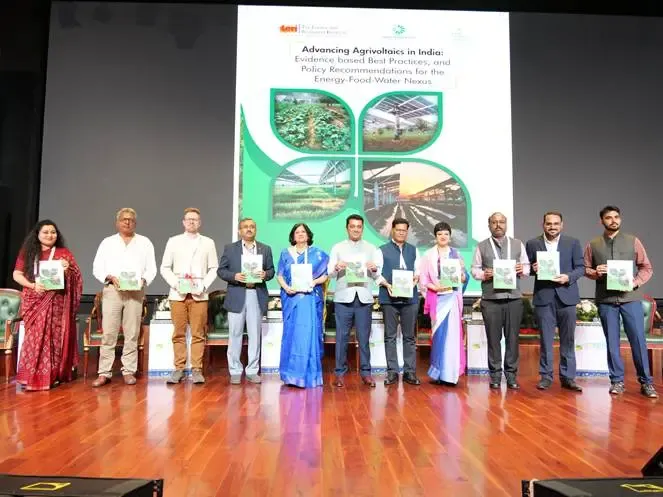
Ashish Khanna, Director General of the International Solar Alliance (ISA), presented an overview of conference proceedings and key outcomes, highlighting opportunities to advance agrivoltaics through research, innovation and international collaboration. Mayank Tewari, Additional Secretary at the Ministry of New and Renewable Energy, addressed participants at the closing ceremony, emphasising the importance of translating the deliberations into continued collaboration and practical action on the ground.
Awards and the Road to France in 2027
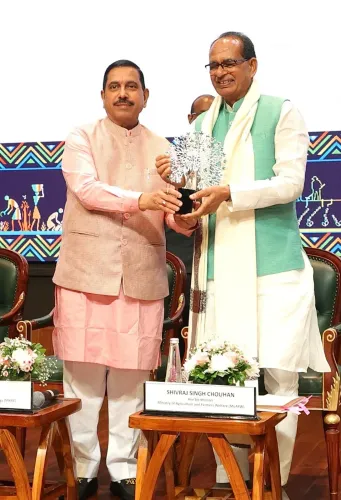
The closing ceremony featured Excellence Awards recognising outstanding contributions to the agrivoltaics sector. The National Agrivoltaics Pitch-Hub Award honoured promising enterprise and start-up innovations with the potential to drive viable solutions. Best Paper Awards across six scientific themes — spanning system design, agronomy, monitoring, business models and socio-economic equity — recognised researchers and innovators working to convert scientific knowledge into practical advances for agriculture and renewable energy.
The ceremony also marked the formal handover of hosting responsibility for the 8th AgriVoltaics World Conference in 2027 to France, carrying forward the momentum built in New Delhi and reinforcing the continuing international effort to expand agrivoltaic solutions across diverse farming contexts globally.
Point of View
But the real accountability test lies ahead: India's agrivoltaic installations remain limited in scale, and the gap between conference conclusions and on-ground deployment has historically been wide. The handover to France in 2027 shifts the platform to a developed-economy setting, raising the question of whether the Global South focus will survive the venue change or quietly revert to a technology-exporter conversation.
NationPress
23 Oct 2026
Frequently Asked Questions
What is the AgriVoltaics World Conference 2026?
The 7th AgriVoltaics World Conference 2026 was a three-day international event hosted by India's Ministry of New and Renewable Energy in New Delhi, concluding on 23 October 2026. It brought together policymakers, researchers, farmers and industry leaders to advance the dual use of agricultural land for food production and solar energy generation.
What were the key outcomes of the conference?
The conference produced a farmer-centred framework for agrivoltaic deployment, with discussions covering agro-climatic zoning, water-use efficiency and innovative financing. Excellence Awards, a National Agrivoltaics Pitch-Hub Award and Best Paper Awards across six scientific themes were presented, and hosting for the 2027 edition was handed to France.
What role did Indian institutions play at the conference?
The Indian Council of Agricultural Research (ICAR) co-convened a session with the International Water Management Institute (IWMI) on agro-climatic zoning and crop suitability for agrivoltaic systems. The International Solar Alliance (ISA), led by Director General Ashish Khanna, presented the conference's key outcomes and highlighted collaboration opportunities.
Why is agrivoltaics important for the Global South?
Agrivoltaics allows farmers to generate solar power income while continuing crop cultivation on the same land, directly addressing food security, energy access and climate resilience simultaneously. For Global South nations with large smallholder farming populations, economically viable agrivoltaic models could diversify rural incomes without displacing agricultural production.
Where will the next AgriVoltaics World Conference be held?
The 8th AgriVoltaics World Conference will be hosted by France in 2027. The formal handover of hosting responsibility took place at the closing ceremony of the New Delhi event on 23 October 2026.