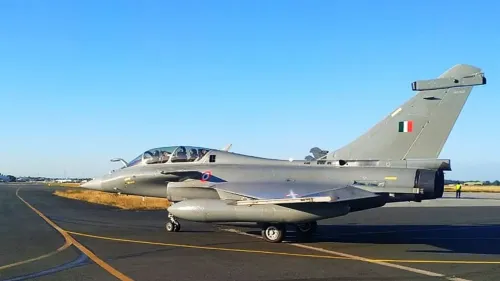
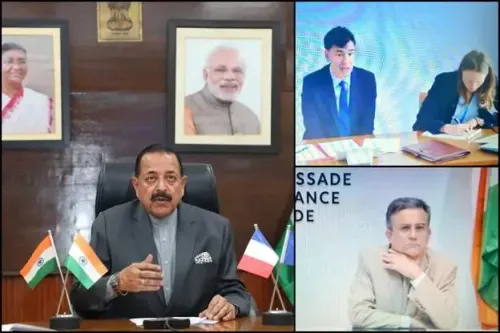
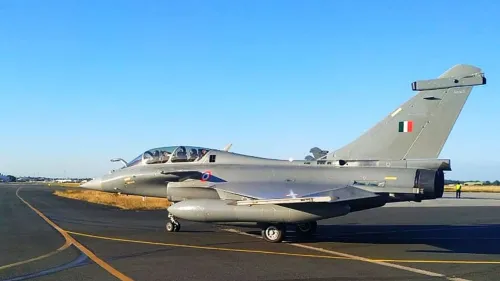
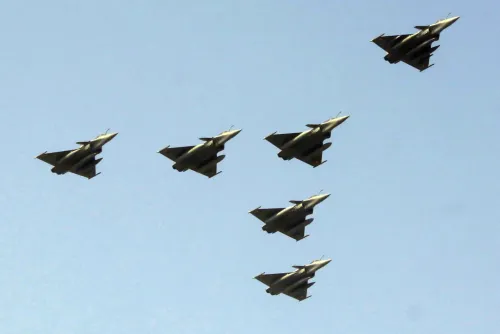
India eyes France's FCAS sixth-generation fighter programme: Report
Synopsis
India's Ministry of Defence has reportedly begun formal steps to join France's FCAS sixth-generation fighter programme — a significant pivot that follows the collapse of the Franco-German NGF partnership and France's subsequent search for new partners. With China already testing sixth-generation prototypes, New Delhi's urgency is real, and the move could reshape both India's air power trajectory and the FCAS programme's global footprint.
Key Takeaways
India's Ministry of Defence has reportedly initiated formal steps to join France 's Future Combat Air System (FCAS) sixth-generation fighter programme.
The move follows the collapse of the Franco-German partnership on the New Generation Fighter (NGF) in June 2026 .
Dassault Aviation CEO Eric Trappier publicly backed opening FCAS to international partners, including non-European nations, in July 2026 .
China 's operation of J-20 and J-35 fighters and testing of sixth-generation prototypes has sharpened India's urgency.
India is also developing its own AMCA (fifth-generation) and TEDBF (carrier-based) programmes, which FCAS participation could complement.
CDS General N S Raja Subramani held strategic defence talks with French counterpart General (Air) Fabien Mandon in New Delhi last month.
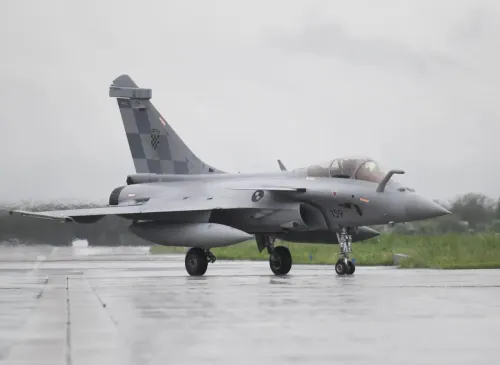
India has formally initiated steps to join France's Future Combat Air System (FCAS) — a sixth-generation fighter programme — a move that could give New Delhi access to cutting-edge combat aviation technology while complementing its own domestic aircraft development efforts, according to a report by Ukraine-based military website Militarnyi. The report cited documents from India's Ministry of Defence presented to a parliamentary defence committee, as referenced by French defence news outlet Opex360.
Background: India's Sixth-Generation Fighter Search
India had previously been weighing participation in one of Europe's two major sixth-generation fighter initiatives — either France's FCAS or the British-Italian-Japanese Global Combat Air Programme (GCAP). In March 2026, former Chief of Defence Staff Anil Chauhan publicly stated that India intended to join one of the two consortia and explore sixth-generation fighter development.
The calculus shifted significantly after the Franco-German partnership at the heart of the original FCAS architecture collapsed. Following prolonged disputes over implementation, France and Germany agreed in June 2026 to terminate their joint effort on the New Generation Fighter (NGF), the programme's centrepiece. France subsequently turned to the prospect of broadening the initiative with new international partners.
France Opens the Door to India
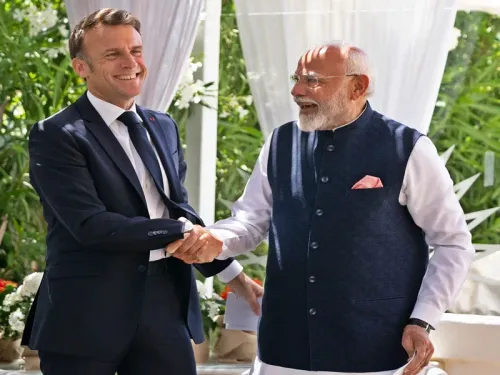
Dassault Aviation CEO Eric Trappier said in July 2026 that he supported opening the sixth-generation programme to wider international participation, including countries outside Europe. The statement was widely read as a direct signal toward India. According to the report, participation in the French project 'could provide access to next-generation fighter technology and accelerate the development of its own combat aircraft.'
China's Advances Sharpen India's Urgency
The strategic imperative behind India's interest is significant. China is already operating the J-20 and J-35 stealth fighters and is reportedly testing sixth-generation fighter prototypes. This trajectory has heightened concerns within the Indian Air Force and Indian Navy about a potential technology gap in the region's military balance.
India is simultaneously pursuing its own advanced aircraft programmes — the fifth-generation Advanced Medium Combat Aircraft (AMCA) and the carrier-based Twin Engine Deck Based Fighter (TEDBF). Analysts note that participation in an international sixth-generation project could complement, rather than replace, these indigenous efforts by providing access to emerging technologies.
India-France Defence Ties Strengthening
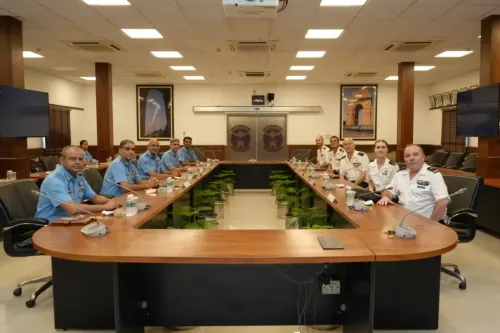
The reported move comes against a backdrop of deepening bilateral defence engagement. Last month, Chief of Defence Staff General N S Raja Subramani held strategic talks with his French counterpart, General (Air) Fabien Mandon, in New Delhi. According to the Headquarters of the Integrated Defence Staff (IDS), both sides engaged across several significant sectors to further strengthen India-France defence relations.
Separately, India's defence minister has confirmed that the country does not plan to acquire Russian Su-57E fighters, opting instead to prioritise upgrades to its existing Su-30MKI fleet — a decision that underscores India's pivot toward Western and domestic platforms.
What Comes Next
No formal agreement has been announced, and the report is based on preliminary documents rather than a signed accord. However, should India proceed, it would mark a landmark expansion of the FCAS programme beyond its original European framework and represent one of the most consequential defence technology partnerships in India's recent history. All eyes will be on the next round of India-France defence talks for any formal confirmation.
Point of View
And India needed a credible sixth-generation pathway after years of watching China's air power accelerate. What mainstream coverage underplays is the tension this creates with India's own AMCA programme: international partnerships in defence aviation historically come with IP constraints that can slow, not speed, domestic development. New Delhi will need to negotiate terms that genuinely transfer technology rather than create dependency. The Su-57 rejection and the FCAS interest together signal a deliberate Western tilt in India's air power strategy — one that will be tested by how France handles IP-sharing in a post-NGF, post-German FCAS world.
NationPress
25 Sept 2026
Frequently Asked Questions
What is France's FCAS programme that India is reportedly joining?
The Future Combat Air System (FCAS) is a French-led sixth-generation combat aircraft programme originally developed in partnership with Germany. After the Franco-German joint effort on the New Generation Fighter (NGF) collapsed in June 2026, France began exploring new international partners, with India now reportedly among them.
Why is India interested in the FCAS programme?
India is seeking access to next-generation combat aviation technology to keep pace with China, which already operates J-20 and J-35 fighters and is testing sixth-generation prototypes. Participation in FCAS could also complement India's own AMCA and TEDBF domestic aircraft programmes.
Has India officially confirmed joining the FCAS programme?
No formal agreement has been announced. The report is based on documents from India's Ministry of Defence presented to a parliamentary defence committee, as cited by French defence outlet Opex360 and Ukraine-based military website Militarnyi. It represents an early-stage initiative, not a signed accord.
What happened to the France-Germany FCAS partnership?
France and Germany agreed in June 2026 to terminate their joint effort on the New Generation Fighter (NGF), the centrepiece of the original FCAS architecture, following prolonged disputes over the programme's implementation. France subsequently sought new international partners.
How does this fit into India's broader defence aviation strategy?
India is simultaneously developing the fifth-generation AMCA fighter and the carrier-based TEDBF. The country's defence minister has also ruled out acquiring Russian Su-57E fighters, signalling a pivot toward Western and domestic platforms. FCAS participation, if confirmed, would be a major pillar of that strategy.