India seen as more acceptable G7 partner than China, Asia Times report finds
Synopsis
An Asia Times analysis makes the case that India's democratic identity, strategic autonomy, and Global South credibility make it the G7's preferred Asian partner over China — a shift with real consequences for how New Delhi's foreign policy leverage is being valued in Western capitals.
Key Takeaways
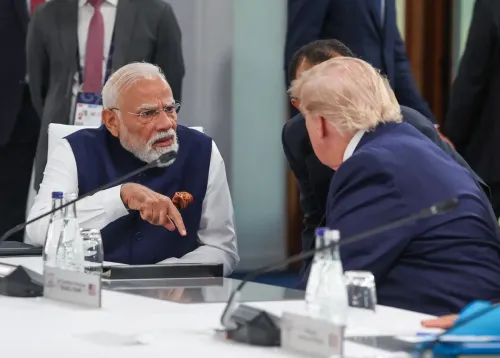
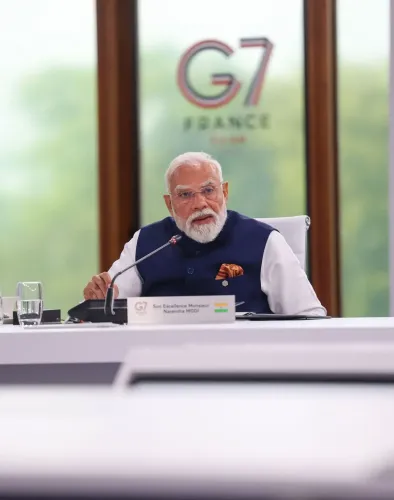
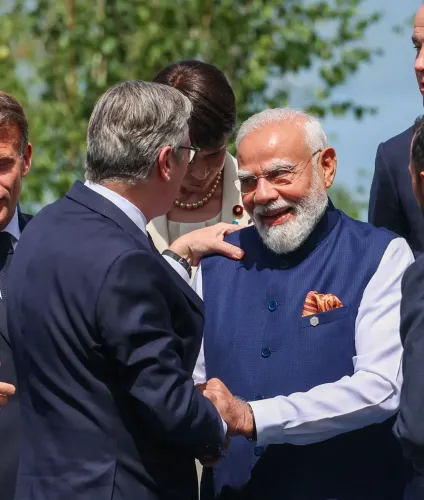
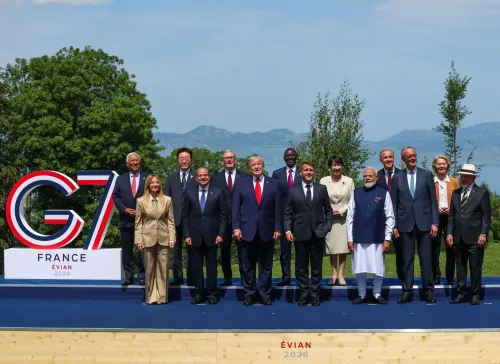
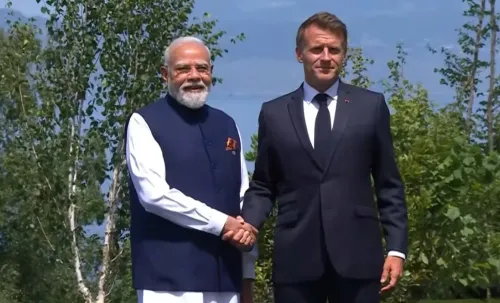
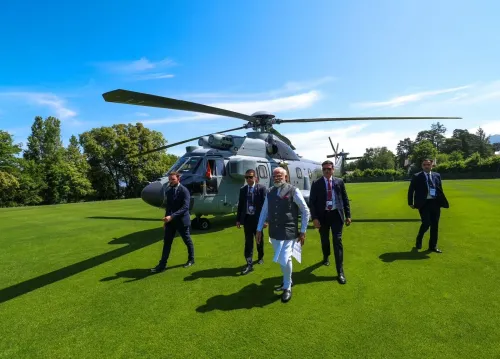
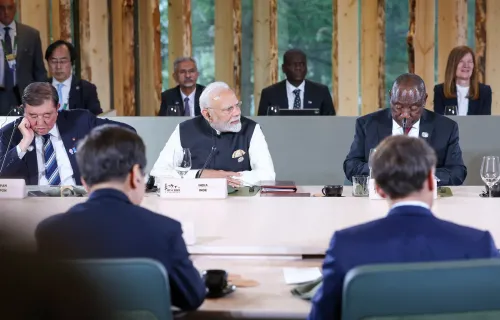
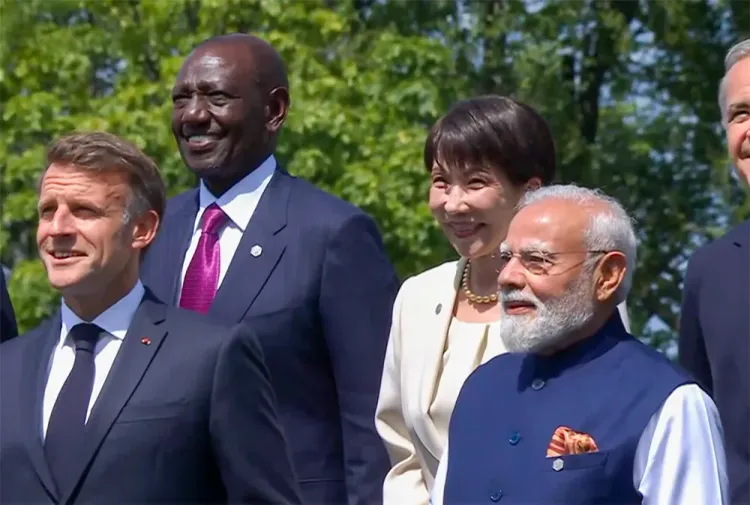
India participated in the 2026 G7 Summit in Evian, France as a guest nation for the 13th time .
PM Narendra Modi made his seventh appearance at the G7 since 2019 .
An Asia Times report describes India as a more 'acceptable partner' for the G7 than China , citing its democratic credentials and support for a rules-based order.
India currently holds the 2026 BRICS Presidency and is regarded as a leading voice of the Global South .
The G7's influence is characterised as largely 'political and normative' ; India's participation offers prestige and access but no immediate economic gains.
China , despite being the world's second-largest economy , is not a regular G7 invitee, highlighting the grouping's divergent approach to the two Asian powers.
India is increasingly viewed by G7 nations as a more 'acceptable partner' than China, according to an analysis published by the Hong Kong-based Asia Times. The report argues that India's democratic credentials, preference for reforming rather than overturning existing global institutions, and growing security ties with Western nations set it apart from Beijing in the eyes of the grouping's members.
India's Recurring Presence at the G7
At the 2026 G7 Summit held in Evian, France, India participated as a guest nation for the 13th time. Prime Minister Narendra Modi made his seventh appearance at the forum since 2019, underscoring a pattern of sustained engagement that the report describes as reflecting India's indispensability to major global conversations — even as it remains outside the grouping's formal membership.
'These repeated invitations highlight a central reality: India is too important to be excluded from major global conversations, even though it remains outside the world's most exclusive club of advanced industrial democracies,' the Asia Times report noted.
Why the G7 Matters for India
According to the report, the G7's influence today is largely 'political and normative' rather than institutional. For India, engagement offers 'prestige, access, networking opportunities, and a chance to influence discussions,' though it does not yield immediate economic gains or structural advantages.
The report highlights that the G7 gives New Delhi a valuable platform to engage Europe collectively. Four Western European powers — France, Germany, Italy, and the United Kingdom — along with the EU, participate in the grouping. Historically, India's foreign policy prioritised its immediate neighbourhood, major powers, and the Indo-Pacific, with Europe occupying a secondary position. Over the past decade, the report notes, New Delhi has invested more systematically in strengthening ties with European partners.
India's Unique Position as a Global South Voice
India is widely regarded as a leading voice of the Global South and currently holds the 2026 BRICS Presidency. Unlike G7 nations, India occupies a distinctive position as a rising power, a developing country, and a key stakeholder in the existing global order simultaneously.
The report argues this unique identity allows New Delhi to articulate concerns on development finance, food security, debt sustainability, climate justice, energy transitions, and the reform of international institutions — concerns that resonate with a broad range of developing countries. It cites India's G20 presidency in 2023 as a demonstration of this representative role.
India vs China: How the G7 Views Asia's Two Giants Differently
The report draws a pointed comparison between India and China. Despite being the world's second-largest economy, China is not a regular invitee to the G7, and relations between Beijing and the grouping remain strained. India's recurring presence, the report argues, reflects how the G7 views the two Asian powers through fundamentally different lenses.
Amid mounting concerns over China's growing assertiveness, strategic competition with the West, and use of economic coercion, India is increasingly being viewed as a 'benign power' that supports a rules-based international order while preserving its strategic autonomy. As a democracy with a liberal and open economy, India is described as a more 'acceptable partner' for the G7 than China — a framing that carries significant weight as geopolitical alignments continue to shift.
What This Means Going Forward
India's invitation to the 2026 summit was underpinned by the strong India-France partnership and deepening India-Europe ties, though the report suggests the rationale extends well beyond bilateral relations. As the multipolar world order consolidates, India's dual identity — a developing country and an emerging major power — gives it a structurally irreplaceable seat at forums like the G7, even without formal membership. Whether New Delhi can convert that political capital into tangible institutional gains remains the central question.
Point of View
Which means New Delhi's leverage is structurally tied to a rivalry it officially refuses to join. That is a useful position — until the West expects reciprocity. India's ability to simultaneously hold the BRICS presidency and attend G7 summits as a guest is a genuine foreign policy achievement, but it also raises a long-term question: how long can strategic ambiguity remain a sustainable posture as bloc competition intensifies? The report's optimistic framing also glosses over the fact that guest status, however frequent, is not a seat at the table — and the G7's agenda is still set by seven others.
NationPress
19 Sept 2026
Frequently Asked Questions
Why is India considered a more acceptable G7 partner than China?
According to an Asia Times report, India is viewed as a 'benign power' that supports a rules-based international order while preserving its strategic autonomy — in contrast to China's growing assertiveness and economic coercion. India's democratic credentials, open economy, and preference for reforming rather than overturning existing institutions make it a more palatable partner for the G7.
How many times has India participated in the G7 Summit?
India participated in the 2026 G7 Summit in Evian, France as a guest nation for the 13th time. PM Narendra Modi attended the forum for the seventh time since 2019.
What does India gain from G7 engagement without being a formal member?
The Asia Times report states that G7 engagement offers India 'prestige, access, networking opportunities, and a chance to influence discussions,' but does not yield immediate economic gains or structural advantages. It also provides a platform to engage Europe collectively through the four Western European members and the EU.
What role does India play as a voice of the Global South at the G7?
India uses its G7 guest appearances to articulate developing-world concerns on issues such as development finance, food security, debt sustainability, climate justice, and institutional reform — concerns that resonate widely among developing nations. The report cites India's G20 presidency in 2023 as evidence of this representative role.
Why is China not a regular G7 invitee despite being the world's second-largest economy?
The Asia Times report notes that relations between China and G7 nations remain strained amid concerns over Beijing's growing assertiveness, strategic competition with the West, and use of economic coercion. India's recurring presence at the G7, by contrast, reflects the grouping's view of the two Asian giants through fundamentally different strategic lenses.