India-G7 ties built on engagement, not alignment: The Diplomat
Synopsis
India has attended G7 summits as a special invitee for over two decades — not because it aligns with Western policy, but precisely because it doesn't. The Diplomat's analysis ahead of the Evian summit argues that India's value to the G7 lies in its ability to straddle BRICS, the Quad, Russia, and China simultaneously — a balancing act that makes it indispensable in a world of overlapping coalitions.
Key Takeaways
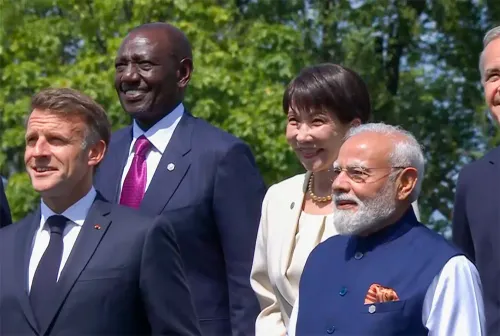
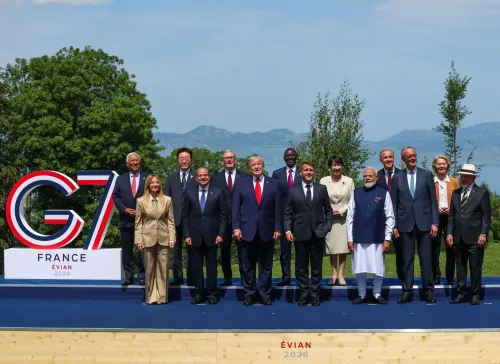
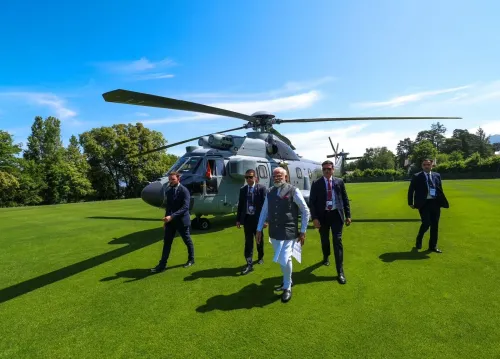
Prime Minister Narendra Modi will attend the G7 Summit in Evian, France next week as a special invitee — a status India has held since the 2003 G8 summit in the same city.
A report in The Diplomat argues India's G7 value lies in its ability to engage across competing blocs, not in aligning with Western positions.
India remains active in BRICS , the SCO , the Quad , and the G20 , while declining to join Western sanctions on Russia .
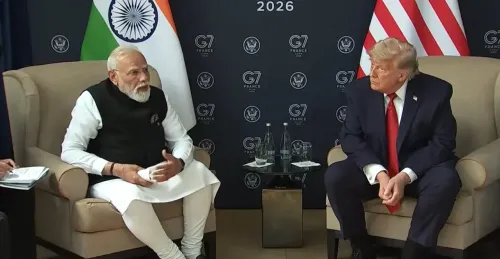
The anticipated Modi-Trump bilateral at the summit is expected to be shaped by the distinctive nature of India-G7 ties.
The Diplomat describes sustained India-G7 engagement as a 'practical necessity' for global governance on supply chains, energy transition, and Indo-Pacific stability.
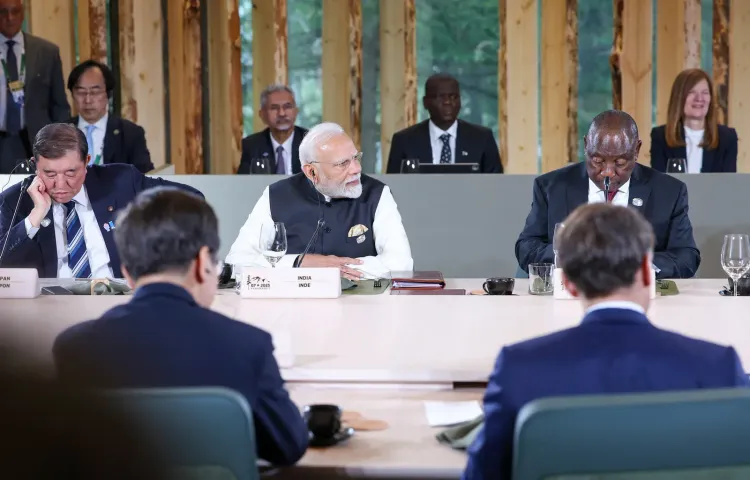
Prime Minister Narendra Modi is set to attend the G7 Summit in Evian, France, next week as a special invitee — a status India has held for over a dozen summits since the 2003 G8 summit in the same city. According to a report in The Diplomat, the durability of the India-G7 relationship rests not on ideological alignment with Western positions, but on India's unique capacity to engage simultaneously across competing blocs and diplomatic forums.
India's Strategic Position
The report underscores that India occupies an exceptional position in global diplomacy — simultaneously active in the G20, BRICS, the Quad, the Shanghai Cooperation Organisation (SCO), the Commonwealth, and multiple Indo-Pacific initiatives. Few nations command such diverse institutional access. India is not a US treaty ally, has declined to join Western sanctions on Russia, and continues to engage closely with both Russia and China — all under the banner of 'strategic autonomy.'
'This breadth of engagement strengthens India's leverage while underscoring why it is unlikely to bandwagon any hardwired alliances,' The Diplomat noted, adding that both India and the G7 continue to navigate this reality 'rather carefully.'
Why the G7 Keeps Inviting India
The rationale behind India's repeated invitations, according to the report, lies in its expanding global stature. As the world's most populous nation, a major economic force, and a leading voice of the Global South, India has become an indispensable stakeholder in global decision-making. This influence has grown in tandem with the G7's own broader outreach strategy.
The report also points to a structural shift in how global governance operates. Since the G20 Leaders' Summits began in 2008, influence has been defined by 'overlapping coalitions, flexible alignments, and issue-based alignments' — making institutional membership less decisive than converging interests and shared priorities.
Modi-Trump Meeting in Focus
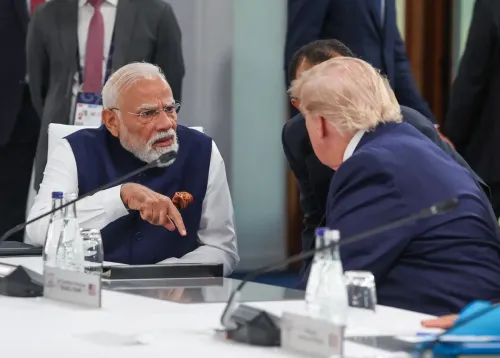
The report notes that the distinctive character of India-G7 ties will likely be a defining factor in the anticipated bilateral meeting between Prime Minister Modi and US President Donald Trump on the sidelines of the summit. This comes amid reported strains in India-US relations, making the Evian meeting particularly consequential.
A Practical Necessity, Not Diplomatic Courtesy
The Diplomat argues that sustained India-G7 engagement has moved beyond protocol — it is now a practical necessity for effective global governance. 'Whether it is securing supply chains, accelerating energy transition, shaping emerging technologies, or maintaining stability in the Indo-Pacific, neither side can achieve sustainable outcomes without the other joining in,' the report stated.
It added that the relationship's strength will ultimately be measured by how successfully leading powers adapt to a more plural global order — one defined less by fixed blocs than by interconnected coalitions. The partnership is expected to endure, disagreements and all, precisely because it bridges different centres of gravity.
Point of View
Not transactional. New Delhi's refusal to join Western sanctions on Russia or exit BRICS is not a diplomatic liability — it is precisely what makes India worth inviting. The G7 needs a credible interlocutor with the Global South; India needs Western markets, technology, and investment. That mutual dependency is durable, but it also means neither side can extract the kind of hard commitments that formal alliances deliver. The Modi-Trump meeting in Evian will test whether 'strategic autonomy' can coexist with the sharper transactional demands of a second Trump term.
NationPress
14 Sept 2026
Frequently Asked Questions
Why is India invited to G7 summits if it is not a member?
India has been a special invitee to G7 and G8 summits since 2003, reflecting its growing global stature as the world's most populous nation, a major economy, and a leading voice of the Global South. The G7 values India's ability to engage across competing blocs — including BRICS, the Quad, and the SCO — rather than expecting it to align with Western positions.
What is India's 'strategic autonomy' in the context of G7 relations?
Strategic autonomy refers to India's policy of maintaining independent diplomatic and economic ties across competing global powers — including Russia, China, and Western nations — without formally aligning with any single bloc. India has declined to join Western sanctions on Russia and remains active in both BRICS and the Quad simultaneously.
What is the significance of the Modi-Trump meeting at the G7 Summit in Evian?
The bilateral between Prime Minister Narendra Modi and US President Donald Trump at the Evian summit is being closely watched amid reported strains in India-US relations. According to The Diplomat, the distinctive nature of India-G7 ties — built on engagement rather than endorsement — is likely to be a defining factor in that meeting.
How has global governance changed since the G20 summits began in 2008?
Since 2008, global governance has shifted toward 'overlapping coalitions, flexible alignments, and issue-based alignments,' according to The Diplomat report. In this evolving order, influence is derived less from formal membership and more from converging interests — a dynamic that has enhanced India's leverage across multiple forums.
Why does The Diplomat call India-G7 engagement a 'practical necessity'?
The report argues that on critical issues — supply chain security, energy transition, emerging technologies, and Indo-Pacific stability — neither India nor the G7 can achieve sustainable outcomes without the other's participation. This makes sustained engagement a functional requirement of effective global governance, not merely a diplomatic courtesy.