India-Turkey value chain tie-up beats factory rivalry, report says

Synopsis
A new India Narrative report warns that India and Turkey are burning public money competing for the same multinational factories — in electronics, EVs, and solar — when their industrial strengths are structurally complementary. The fix isn't a grand joint venture; it's granular supply-chain division starting with automotive electronics.
Key Takeaways
A new India Narrative report warns that India and Turkey risk costly duplication by competing for the same multinational factories instead of dividing production stages.
Five sectors flagged for collaboration: automotive electronics , railway equipment, renewable-energy components, machinery parts, and industrial software.
India approved 29 proposals under its Electronics Components Manufacturing Scheme on 30 March ; Turkey's HIT-30 targets the same industries with $14.5 billion in combined EV, battery, and semiconductor support.
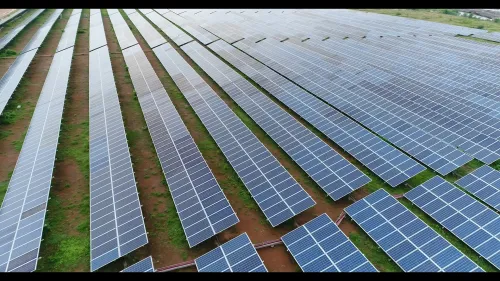
India reported 172 GW of solar-module manufacturing capacity by March 2026 ; Turkey is simultaneously subsidising solar cells and wind components — risking excess capacity in identical low-margin stages.
The report recommends starting with automotive electronics, with task allocation driven by cost and capability rather than diplomatic assumptions.
India and Turkey stand to gain significantly more by dividing production tasks across shared value chains than by racing each other to attract entire factories from the same multinationals, according to a new report by India Narrative released on 17 August. The study warns that when both nations target identical industries and compete for the same multinational orders, the result is a costly duplication that benefits neither.
The Core Argument
The report identifies five sectors — automotive electronics, railway equipment, renewable-energy components, machinery parts, and industrial software — as realistic candidates for structured collaboration, provided the two countries agree to divide production stages rather than replicate them. 'Partnerships should share value chains, not compete for investment announcements,' the report states, cautioning that incentive programmes in both nations risk devolving into an expensive contest to 'persuade the same multinational groups to place an entire plant on one side rather than the other.'
Where the Overlap Is Sharpest
The collision of industrial ambitions is most visible in electronics and clean energy. India, on 30 March, approved 29 proposals under its Electronics Components Manufacturing Scheme, covering flexible printed circuit boards, connectors, heat sinks, lithium-ion cells, and rare-earth magnets. Turkey's HIT-30 programme targets many of the same industries, with support packages that include $5 billion for electric vehicles, $4.5 billion for batteries, and $5 billion for semiconductors, according to the report.
In renewable energy, the duplication risk is equally stark. India reported 172 GW of solar-module manufacturing capacity by March 2026, while Turkey is simultaneously backing solar cells, wind-turbine components, and batteries through HIT-30. The report warns that building two protected supply chains for every technology could produce excess capacity in the same low-margin production stages.
Complementary Strengths on Paper
Turkey already hosts around 1,100 automotive component suppliers and exported roughly three-quarters of its vehicle output in 2025, giving it deep hardware manufacturing credentials. India, by contrast, offers a far larger domestic market, rapidly expanding electronics capacity, and localisation-linked incentive schemes. The report notes these assets are complementary — but only if cooperation extends beyond a single flagship joint venture in one country.
A Practical Starting Point
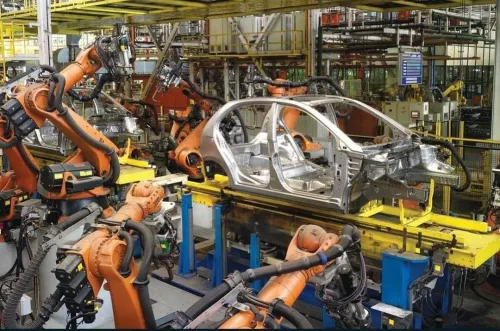
As an immediate step, the report recommends beginning with automotive electronics: Indian firms could produce flexible circuits or sensor assemblies, while Turkish partners supply tooling, housings, or thermal-management components. Crucially, the report argues that this division should be driven by cost, capability, and buyer-audit requirements — not by a diplomatic shorthand that assigns software expertise to India and hardware to Turkey.
What Needs to Happen Next
The report's broader message is that bilateral industrial policy must move from headline announcements to granular supply-chain mapping. Without deliberate coordination, both countries risk investing public money to subsidise the same low-value production stages, undermining each other's export competitiveness in the process. The next step, analysts suggest, lies in sector-specific working groups that can translate the report's framework into binding procurement and co-development agreements.
Point of View
Not for bilateral complementarity. Until sector-specific working groups replace diplomatic photo-ops, the risk of publicly subsidised overcapacity in solar, EVs, and electronics is real and growing.
NationPress
1 Oct 2026
Frequently Asked Questions
What does the India Narrative report recommend for India-Turkey trade?
The report recommends that India and Turkey divide production tasks across shared value chains rather than competing to host entire factories from the same multinationals. It identifies automotive electronics, railway equipment, renewable-energy components, machinery parts, and industrial software as priority sectors for this approach.
Where do India and Turkey's industrial programmes overlap?
The overlap is most acute in electronics and clean energy. India's Electronics Components Manufacturing Scheme and Turkey's HIT-30 both target electric vehicles, batteries, semiconductors, and solar components. India had 172 GW of solar-module capacity by March 2026, while Turkey is simultaneously subsidising solar cells and wind-turbine parts.
What is Turkey's HIT-30 programme?
HIT-30 is Turkey's industrial incentive programme that provides targeted support to high-technology sectors, including $5 billion for electric vehicles, $4.5 billion for batteries, and $5 billion for semiconductors, among other industries. It overlaps significantly with India's own manufacturing incentive schemes.
Which sector does the report suggest as the best starting point for collaboration?
The report recommends automotive electronics as the most practical entry point, with Indian firms producing flexible circuits or sensor assemblies and Turkish partners supplying tooling, housings, or thermal-management parts. It stresses that task allocation should be based on cost, capability, and buyer audits — not assumed national strengths.
Why does competing for entire factories harm both countries?
When both nations offer incentives to attract the same multinational plant, they end up subsidising a competition that benefits the multinational at the expense of both treasuries. The report warns this creates excess capacity in identical low-margin production stages and reduces the export competitiveness of both countries.