India-UK Konkan-26 maritime exercise concludes off Plymouth
Synopsis
Konkan-26 is more than a routine bilateral drill — it is a signal. With INS Trishul operating under the Royal Navy's demanding FOST framework off Plymouth, and anti-submarine warfare at the heart of the sea phase, India and the UK are quietly but deliberately raising the complexity of their naval partnership, anchored in the India-UK Vision 2035 strategic framework.
Key Takeaways
Konkan-26 concluded off Plymouth, UK on 15 October 2026 , spanning 8 to 15 October .
The Indian Navy deployed stealth frigate INS Trishul ; the Royal Navy deployed HMS Sutherland , a Duke-class anti-submarine warfare frigate.
The four-day Sea Phase (12–15 October) included advanced seamanship, anti-submarine warfare, anti-surface asymmetric warfare, and weapon firings.
The exercise was conducted under the Royal Navy's Fleet Operational Standards and Training (FOST) framework.
Konkan has evolved over 20 years into a cornerstone of India-UK naval cooperation, aligned with the India-UK Vision 2035 Comprehensive Strategic Partnership.
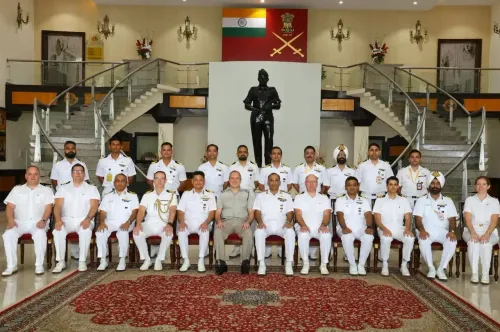
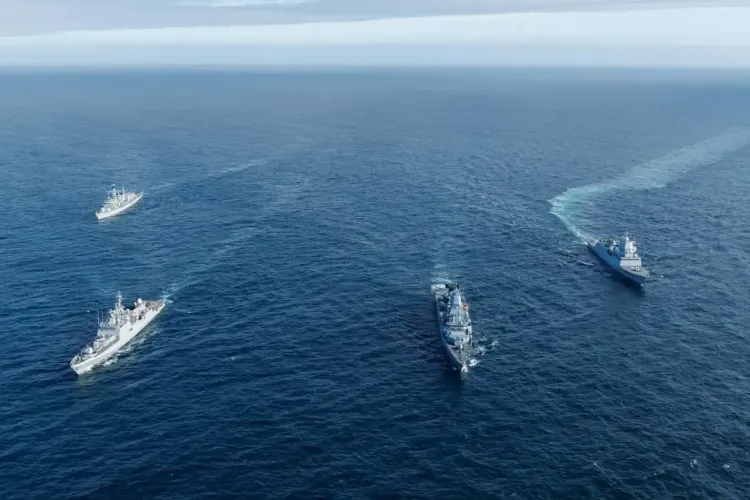
The India-UK bilateral maritime exercise Konkan-26 has concluded off Plymouth, United Kingdom, with the Indian Navy and the Royal Navy completing a broad range of professional and operational serials, the Indian Navy confirmed on Saturday, 17 October 2026. The exercise, held from 8 to 15 October, marked another chapter in over two decades of structured naval cooperation between the two countries.
Ships and Command Structure
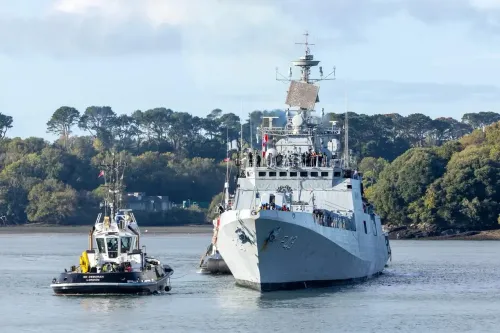
The Indian Navy was represented by INS Trishul, a guided missile stealth frigate, which arrived at Plymouth on 11 October. The Royal Navy deployed HMS Sutherland, a Duke-class anti-submarine warfare frigate. The exercise was conducted under the aegis of the Royal Navy's Fleet Operational Standards and Training (FOST), one of the most demanding naval training frameworks in the world.
Key Operational Serials
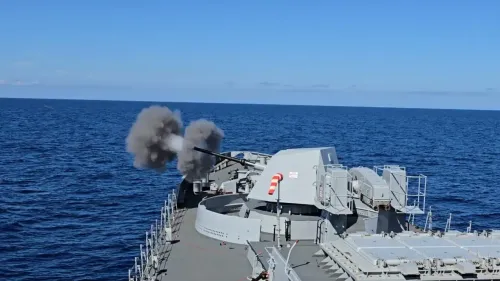
The intensive four-day Sea Phase, conducted from 12 to 15 October, was the centrepiece of the exercise. According to an Indian Navy statement, serials included 'advanced seamanship manoeuvres, joint tactical exercises, communication procedures, anti-surface asymmetric warfare, anti-submarine warfare and weapon firings in a multi-threat maritime environment.' The Navy noted that these serials 'enhanced interoperability between the participating units.'
Notably, anti-submarine warfare featured prominently — a domain of growing strategic importance as both India and the UK deepen their focus on undersea competition in the Indo-Pacific and the North Atlantic respectively.
Strategic Significance
The Ministry of Defence described Konkan-26 as 'a testament to the enduring maritime partnership between India and the UK,' adding that the exercise has 'grown significantly in scale and complexity' since its inception. The ministry also framed the exercise within the India-UK Vision 2035 Comprehensive Strategic Partnership, characterising it as a 'reaffirmation of the shared commitment to ensuring secure, open and free seas.'
This comes amid broader India-UK diplomatic momentum, with both nations working toward a long-pending bilateral trade agreement and strengthening security ties across maritime, cyber, and defence domains.
Two Decades of Konkan
The Konkan series has been a cornerstone of India-UK naval engagement for over 20 years. What began as a relatively modest bilateral drill has evolved into a complex, multi-domain exercise encompassing surface warfare, subsurface operations, and joint communications. Each iteration has progressively raised the bar on interoperability — a quality that takes on heightened relevance as both navies operate in contested maritime environments across different theatres.
With Konkan-26 now complete, attention will turn to how the lessons from Plymouth feed into broader joint frameworks, including potential participation in multilateral naval exercises where both India and the UK are active stakeholders.
Point of View
But its strategic weight is quietly growing. Operating INS Trishul under the Royal Navy's FOST — one of the toughest naval certification regimes in the world — signals that India is benchmarking its fleet to NATO-adjacent standards, not just building bilateral goodwill. The emphasis on anti-submarine warfare this edition is telling: both India and the UK face intensifying undersea competition in their respective theatres, and joint proficiency in that domain has real operational value. As the India-UK trade deal remains in negotiation limbo, defence and maritime cooperation is clearly the relationship's load-bearing pillar.
NationPress
17 Oct 2026
Frequently Asked Questions
What is the Konkan maritime exercise between India and the UK?
Konkan is an annual bilateral maritime exercise between the Indian Navy and the Royal Navy, running for over 20 years. It has grown in scale and complexity to cover advanced seamanship, anti-submarine warfare, joint tactical exercises, and weapon firings, serving as a cornerstone of India-UK naval cooperation.
When and where did Konkan-26 take place?
Konkan-26 was held from 8 to 15 October 2026 off Plymouth, United Kingdom. The intensive four-day Sea Phase ran from 12 to 15 October and was conducted under the Royal Navy's Fleet Operational Standards and Training (FOST) framework.
Which ships participated in Konkan-26?
The Indian Navy deployed INS Trishul, a guided missile stealth frigate, while the Royal Navy fielded HMS Sutherland, a Duke-class anti-submarine warfare frigate. INS Trishul arrived at Plymouth on 11 October ahead of the exercise.
What activities were conducted during the sea phase of Konkan-26?
The sea phase included advanced seamanship manoeuvres, joint tactical exercises, communication procedures, anti-surface asymmetric warfare, anti-submarine warfare, and weapon firings in a multi-threat maritime environment, according to the Indian Navy.
How does Konkan-26 fit into the broader India-UK strategic relationship?
The Ministry of Defence described the exercise as a reaffirmation of both nations' commitment to 'secure, open and free seas,' explicitly linking it to the India-UK Vision 2035 Comprehensive Strategic Partnership. It reflects deepening defence ties as the two countries also pursue a bilateral trade agreement.