Delhi logs 211 good-air-quality days in 2026, best since 2016: Minister Sirsa
Synopsis
Delhi has crossed 211 good-to-moderate air quality days in 2026 — already better than any full year since 2016. With winter pollution season looming, the question is whether strict enforcement, CRM machinery in Punjab, and a halving of severe-air days can hold through November and December.
Key Takeaways
Delhi has recorded 211 Good, Satisfactory, and Moderate air quality days as of 17 October 2026 — its best tally since 2016 , excluding the COVID year 2020.
The 2026 figure surpasses full-year totals for 2025 (200 days) , 2024 (209) , 2023 (206) , 2018 (159) , and 2016 (110) .
Poor, Very Poor, and Severe air quality days have fallen from 168 in 2016 to 79 in 2026 .
CAQM carried out 124 inspections between 25 September and 9 October , recording 55 violations across C&D, industrial, and DG-set sectors.
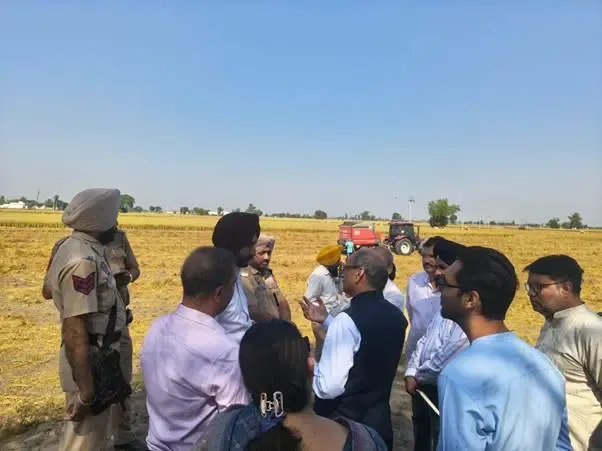
A CAQM team visited Firozpur and Faridkot in Punjab to review stubble-burning prevention and CRM machinery deployment ahead of peak harvesting season.
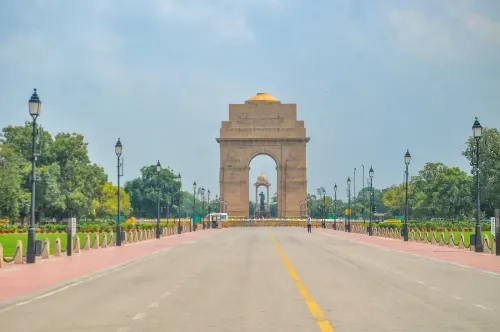
Delhi has recorded 211 days of Good, Satisfactory, and Moderate air quality as of 17 October 2026, its strongest performance since 2016 — barring the COVID-disrupted year 2020 — according to Environment Minister Manjinder Singh Sirsa. The figure already surpasses the full-year totals for most previous years, with more than two months still remaining in 2026.
A Benchmark That Keeps Rising
The 211 good-to-moderate days logged so far in 2026 comfortably exceed the corresponding tallies for every recent year on record: 200 days in 2025, 209 days in 2024, 206 days in 2023, 159 days in 2018, and just 110 days in 2016. Equally significant, the number of Poor, Very Poor, and Severe air quality days has dropped sharply — from 168 days in 2016 to only 79 days in the comparable period of 2026. Minister Sirsa attributed the improvement to a coordinated, result-oriented approach adopted under Chief Minister Rekha Gupta, with sustained effort from multiple agencies and stakeholders.
Enforcement on the Ground: CAQM's Latest Findings
The Commission for Air Quality Management in NCR and Adjoining Areas (CAQM) reviewed compliance data at the 141st meeting of its Enforcement Task Force (ETF) on Friday. During the 15-day reporting period from 25 September to 9 October, enforcement teams conducted 124 inspections across three categories: six at Construction and Demolition (C&D) sites, 54 in the industrial sector, and 64 related to Diesel Generator (DG) sets. Of these, 55 violations were recorded — five at C&D sites, 35 in the industrial sector, and 15 involving DG sets — according to a statement from the Union Ministry of Environment, Forest and Climate Change.
Punjab Stubble Burning: CAQM Team Reviews Preparedness
In a parallel development, a CAQM team led by T.S. Panwar, Member (Technical), visited Firozpur and Faridkot districts in Punjab on Saturday to assess ground-level implementation of paddy stubble-burning prevention measures during the ongoing harvesting season. The team reviewed district administration preparedness, inter-departmental coordination, and the availability and deployment of Crop Residue Management (CRM) machinery. Monitoring of hotspot areas, use of drones, and low-cost sensors for technology-based surveillance were also examined. The team stressed the need to sensitise farmers about the health risks of stubble burning and elevated PM2.5 levels, and to strengthen both in-situ and ex-situ management of paddy straw.
Why This Matters for Delhi's Winter Outlook
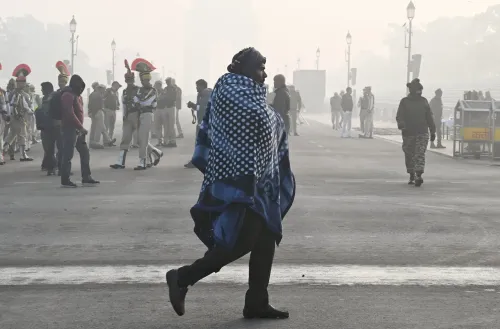
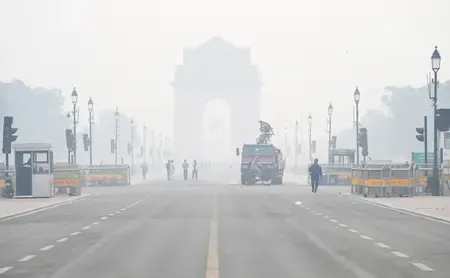
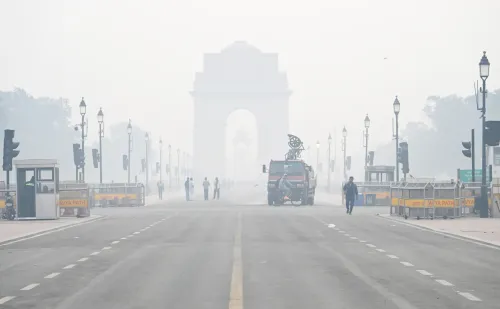
Delhi's air quality crisis typically peaks between October and January, when crop residue smoke from neighbouring states, falling temperatures, and vehicular and industrial emissions combine to push the Air Quality Index into hazardous territory. This year's improved baseline heading into winter is notable, but stubble burning from Punjab and Haryana remains the wildcard. The gains recorded so far could erode quickly if farm-fire incidents spike in November, as they have in previous years. The progress on enforcement and CRM machinery deployment will be critical to whether the 2026 tally holds its record-breaking trajectory.
Point of View
But its durability will be tested in the next six weeks — historically Delhi's worst for air quality. The CAQM enforcement data is telling: 55 violations in just 15 days across NCR industries and DG sets signals that compliance remains patchy even in a 'good' year. The stubble-burning visit to Firozpur and Faridkot is a sign that authorities are not treating the city's improved baseline as a reason to relax; they are right not to. The real test of institutional reform is whether the gains can survive November, when farm fires, firecrackers, and cold inversions converge.
NationPress
17 Oct 2026
Frequently Asked Questions
How many good air quality days has Delhi recorded in 2026?
Delhi has recorded 211 days of Good, Satisfactory, and Moderate air quality as of 17 October 2026, making it the city's best performance since 2016, excluding the COVID-affected year 2020. This figure already exceeds the full-year totals for 2025 (200 days) and 2024 (209 days).
Why is Delhi's 2026 air quality performance considered a milestone?
With more than two months still to go in the year, Delhi has surpassed the complete annual totals for most previous years on record, including every year since 2016. At the same time, days with Poor, Very Poor, or Severe air quality have dropped from 168 in 2016 to just 79 in the comparable 2026 period.
What enforcement actions has CAQM taken recently in the NCR?
Between 25 September and 9 October 2026, CAQM's Enforcement Task Force conducted 124 inspections across construction and demolition sites, industrial units, and DG-set installations in the NCR. The inspections uncovered 55 violations, reviewed at the ETF's 141st meeting.
What is being done to prevent stubble burning in Punjab this year?
A CAQM team led by T.S. Panwar visited Firozpur and Faridkot districts in Punjab to review ground-level readiness for the harvesting season. The review covered CRM machinery availability, hotspot monitoring, drone-based surveillance, and farmer sensitisation on the health risks of PM2.5 from stubble burning.
Can Delhi maintain its air quality record through winter?
That remains uncertain. Delhi's worst pollution months — October through January — are still ahead, with paddy stubble smoke, vehicular emissions, and temperature inversions all set to converge. Sustained enforcement and effective CRM deployment in Punjab and Haryana will be key to whether the 2026 record holds.