Did Delhi Achieve Its Lowest PM10 and PM2.5 Levels Ever in 2025?
Synopsis
In a groundbreaking achievement, Delhi has recorded its lowest average levels of PM10 and PM2.5 in 2025. This significant milestone reflects the city's unwavering commitment to combating air pollution and showcases the effectiveness of ongoing efforts. Discover how the city's air quality has transformed and what lies ahead in this battle for cleaner air.
Key Takeaways
Delhi recorded its lowest average concentration levels of PM10 and PM2.5 in 2025.
Daily average PM10 was 198 (µgm/m3), a notable decrease from previous years.
Daily average PM2.5 was reported at 97, reflecting significant improvements.
The CAQM has implemented various measures since 2021 to combat air pollution.
Ground operations will continue to maintain the momentum of pollution control.
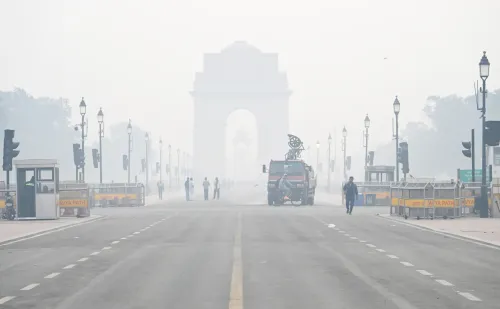
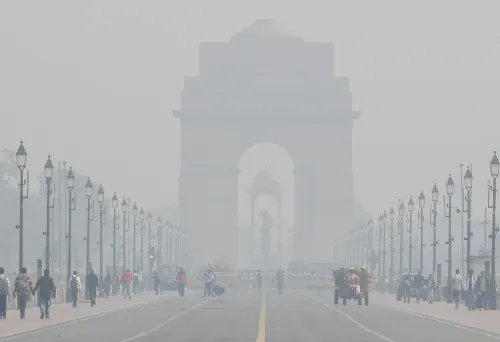
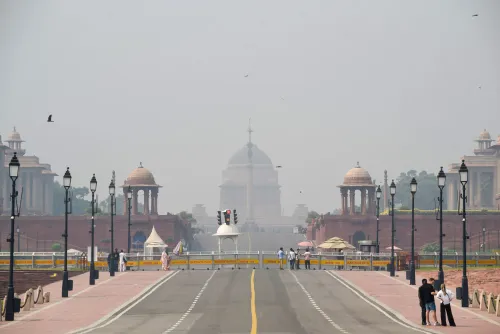
New Delhi, Jan 2 (NationPress) In 2025, Delhi achieved its lowest recorded average concentration levels of Particulate Matter (PM10 and PM2.5) since 2018, according to the Union Ministry of Environment, Forest and Climate Change, which made the announcement on Friday.
The Ministry noted that the daily average of PM10 in Delhi for 2025 was recorded at 198 (µgm/m3), reflecting a decrease from 212 in 2024 and 242 in 2018.
Furthermore, the daily average of PM2.5 in Delhi was reported to be 97 in 2025, down from 105 in 2024 and 114 in 2018.
The Ministry shared data spanning eight years and highlighted that the Commission for Air Quality Management in the NCR and adjoining regions (CAQM), since its establishment in 2021, has implemented various policy measures and directives aimed at reducing air pollution in the Delhi-NCR area.
This statement was released concurrently with the CAQM Sub-Committee's decision to lift restrictions under Stage-III of the Graded Response Action Plan (GRAP).
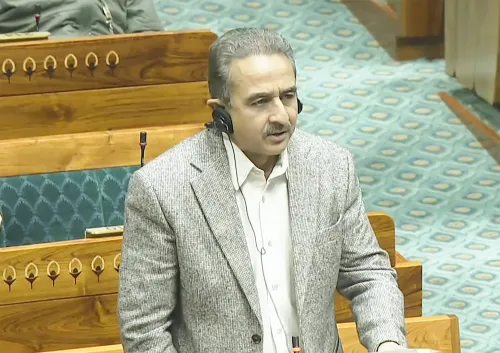
Manjinder Singh Sirsa, Delhi's Environment Minister, remarked that the enhanced air quality in the city is a testament to ongoing efforts under the guidance of Chief Minister Rekha Gupta.
On Thursday, Delhi's Air Quality Index (AQI) was noted at 380, which significantly improved to 236 on Friday.
Minister Sirsa emphasized that although the restrictions of GRAP Stage-III have been removed, the ground operations will persist with the same commitment and urgency.
"This is not the moment to relax; it is time to intensify our efforts and solidify our achievements. Each small victory energizes our drive to ensure Delhi's air remains cleaner day by day," he stated.
Sirsa continued by highlighting that in the past year, Delhi has explored new methods of pollution control, from speeding up legacy waste biomining (35 MT per day) to enhancing clean technology initiatives in industrial and transport sectors. The collective effort is yielding measurable outcomes.
In the last 24 hours, the Environment Department and related civic agencies reported a marked surge in anti-pollution initiatives. During this time, 6,596 fines were issued for vehicle emission infractions; 12,000 MT of waste was cleared across various city zones, and 6,261 km of roads were mechanically cleaned to decrease dust levels.
The Minister reiterated that Delhi's battle against pollution is relentless and determined.
"Each day, we are learning, adapting, and enhancing our strategies. The progress we see today motivates us to aim even higher for tomorrow," he concluded.
He added that under Chief Minister Rekha Gupta's leadership, the civic efforts in Delhi have significantly strengthened.
"Pollution control teams are concentrating on directly addressing sources, ensuring compliance in industrial zones, and deploying smog guns and anti-smog vehicles in traffic-heavy areas and hotspots," Minister Sirsa remarked.
Point of View
It is heartening to witness Delhi's significant progress in air quality management. The city’s achievements in reducing PM10 and PM2.5 levels underscore the importance of collective action and innovative policies. It is essential that we remain vigilant and continue to prioritize sustainable practices to ensure cleaner air for future generations.
NationPress
17 Oct 2026
Frequently Asked Questions
What are PM10 and PM2.5?
PM10 and PM2.5 are particulate matter pollutants that can harm human health and the environment. PM10 refers to particles with a diameter of 10 micrometers or smaller, while PM2.5 includes finer particles with a diameter of 2.5 micrometers or smaller.
How are PM levels measured?
PM levels are measured in micrograms per cubic meter (µgm/m3) using air quality monitoring systems that collect data on particulate concentration in the atmosphere.
What measures are being taken to reduce air pollution in Delhi?
The Delhi government has implemented various strategies, including the Graded Response Action Plan (GRAP), waste management initiatives, and enhanced monitoring of industrial emissions to combat air pollution.
What is the significance of the CAQM?
The Commission for Air Quality Management (CAQM) plays a crucial role in formulating and executing policies aimed at improving air quality in Delhi and surrounding areas, coordinating efforts among various stakeholders.
How does poor air quality affect health?
Poor air quality is linked to various health issues, including respiratory diseases, cardiovascular problems, and can exacerbate existing health conditions, particularly in vulnerable populations.