Has Delhi's Air Quality Improved to 'Very Poor' Category?
Synopsis
In New Delhi, air quality has slightly improved to a 'very poor' level, with an AQI of 397. Despite this, hazardous conditions persist, prompting authorities to implement strict measures. Residents are advised to limit outdoor activities and take precautions.
Key Takeaways
Delhi's AQI improved slightly to 397.
Areas remain under 'severe' air quality conditions.
Authorities enacted Phase 4 of the Graded Response Action Plan .
Residents advised to wear masks and limit outdoor activities.
Weather changes are critical for future air quality improvements.
New Delhi, Jan 20 (NationPress) The air quality in Delhi-NCR has shown a modest improvement over the last two days, with the Air Quality Index (AQI) recorded at 397, categorized as "very poor" by the Central Pollution Control Board (CPCB). This marks a decrease from 418 on Monday and 439 on Sunday.
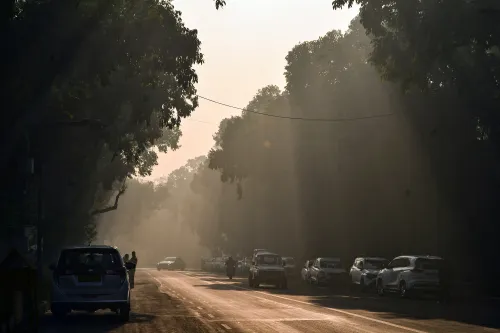
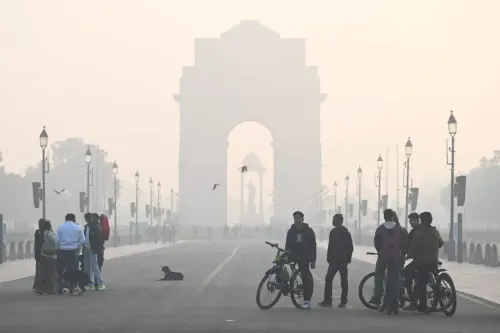
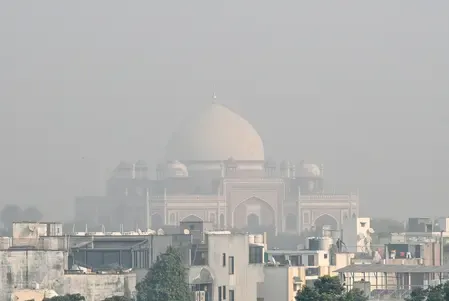
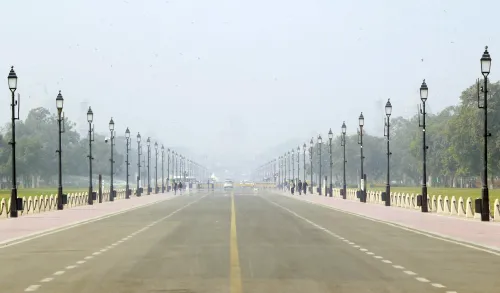
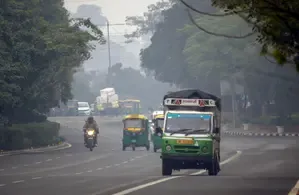
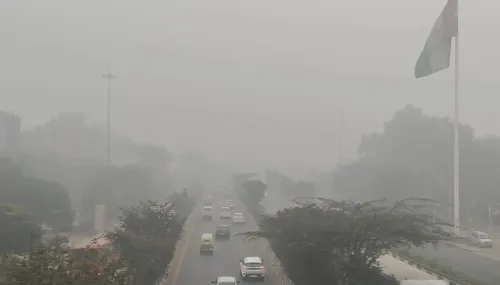
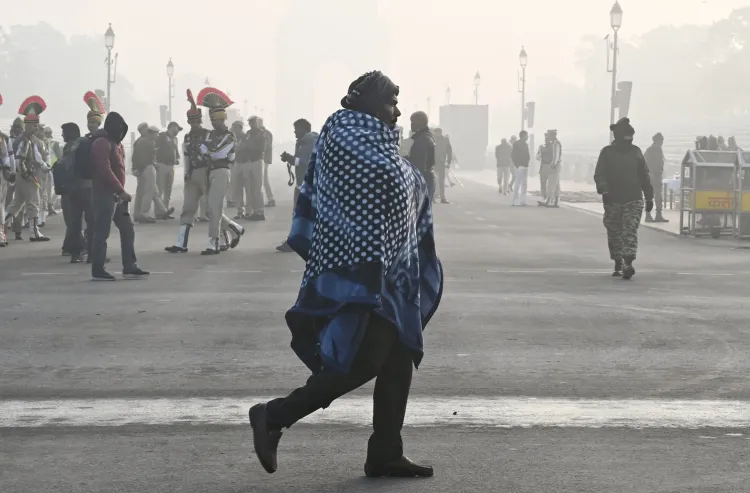
A thin veil of smog continues to linger over the National Capital Region, slightly impairing visibility.
Fortunately, temperatures have risen, providing some relief from the intense cold. The India Meteorological Department (IMD) forecasts that Tuesday's maximum and minimum temperatures will be approximately 24 °C and 8 °C, respectively.
However, the Air Quality Early Warning System (AQEWS) has cautioned that the city's AQI may persist in the 'severe' or 'very poor' range in the days ahead.
Many areas in the capital are still grappling with hazardous air quality.
At Akshardham, the AQI was noted at 445, while ITO recorded 414 and India Gate noted 409, all falling under the 'severe' classification.
To combat the high pollution levels, authorities have activated Phase 4 of the Graded Response Action Plan across the NCR.
As part of the GRAP measures, stringent checks are being enforced on vehicles entering Delhi.
Polluting vehicles are being halted, and construction activities have been significantly limited to avert further air quality deterioration.
Environmental specialists have warned that unless there is a notable shift in weather patterns and stronger winds, conditions may worsen in the upcoming days.
Officials have urged residents to refrain from going outdoors unless necessary, wear masks for protection, and take additional precautions for children and the elderly, who are particularly vulnerable to the adverse effects of severe air pollution.
Point of View
It is imperative to remain vigilant about environmental health. The ongoing measures reflect the administration's commitment to tackle pollution. However, residents must also play a proactive role in safeguarding their health and that of their families.
NationPress
5 Oct 2026
Frequently Asked Questions
What is the current AQI in Delhi?
The current AQI in Delhi is recorded at 397, which falls into the 'very poor' category.
What measures are being taken to improve air quality?
Authorities have implemented Phase 4 of the Graded Response Action Plan to reduce pollution levels.
What precautions should residents take?
Residents are advised to limit outdoor activities, wear masks, and take extra care, especially for children and the elderly.
Will the air quality improve soon?
According to experts, unless there is a significant change in weather conditions, the air quality may not improve in the coming days.
Where are the worst affected areas in Delhi?
Areas like Akshardham, ITO, and India Gate are currently experiencing severe air quality conditions.