What Are the Implications of the India-US Trade Deal?
Synopsis
The recently announced India-US trade agreement has sparked both enthusiasm and caution among stakeholders. While some celebrate it as a significant advancement in bilateral relations, others call for a careful examination of its details. The implications of this deal could reshape the landscape of international trade and cooperation between the two nations.
Key Takeaways
Significant milestone in India-US relations.
Potential for tariff reductions and enhanced cooperation.
Calls for caution regarding unclear details.
Strengthening ties between business communities .
Focus on strategic priorities like energy security .
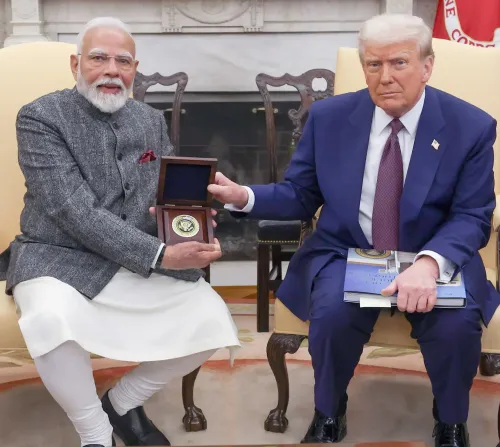
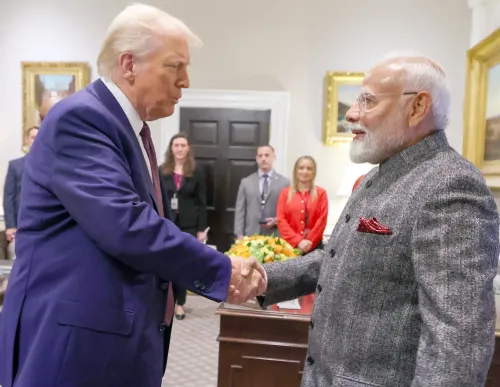
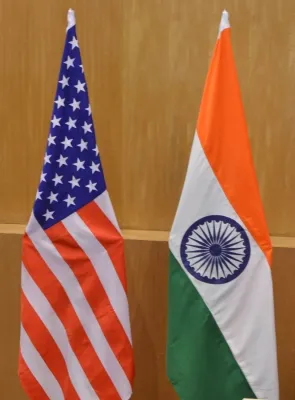
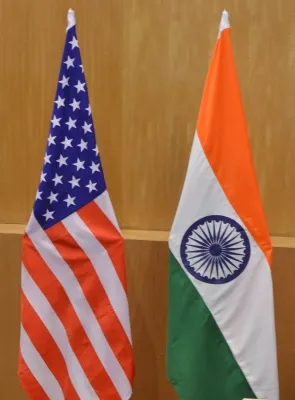
Washington, Feb 3 (NationPress) The long-anticipated trade agreement between India and the United States, revealed by President Donald Trump and Prime Minister Narendra Modi, has garnered enthusiastic support from Indian-American business leaders, while policy experts offered a blend of praise and caution, noting the need for clarity on specific details. Supporters hail it as a significant milestone, while some former officials advocate for a cautious approach given the ambiguity surrounding the agreement's specifics.
Venture capitalist and Republican fundraiser Asha Jadeja Motwani expressed that the deal was expected within the Trump administration and deemed it a major success. She remarked, “The trade deal was anticipated… there was a strong sense that an agreement would materialize in February,” noting her surprise at its earlier announcement.
Motwani expressed confidence in Prime Minister Modi's willingness to reassess India’s energy sourcing, stating, “I knew Prime Minister Modi would be amenable to a trade deal that enables a shift from Russian oil to US oil or oil from allied nations,” calling the tariff outcome “as good as it gets.”
She highlighted that Washington now perceives India as “crucial,” emphasizing cooperation in energy, defense, and technology, and claimed that the relationship has returned to a solid footing. “It is completely back on track… it’s rock solid,” she stated, encouraging both nations' private sectors to swiftly engage in partnerships and commercial ventures.
Former US Assistant Secretary of Commerce for Trade Development Raymond Vickery took a more measured stance, suggesting the agreement primarily serves to halt a decline in relations. “The key takeaway from the deal is its role in stopping the downward trend in US-India ties,” he noted, attributing previous tensions to tariffs, visa complications, and various disputes.
Vickery acknowledged the reduction in tariffs “from 25 to 18 percent,” yet emphasized the uncertainty surrounding critical details. “What is explicitly covered and what is not remains unclear,” he cautioned, voicing skepticism regarding claims of India eliminating tariff and non-tariff barriers, especially in sensitive sectors like “agriculture, dairy… pulses and grains.”
He also critiqued the administration's ambitious figures, questioning the assertion of $500 billion in additional purchases, considering that current annual bilateral trade is around $200 billion.
Rick Rossow, Chair on India and Emerging Asia Economics at the Center for Strategic and International Studies (CSIS), noted that the agreement follows a year where trade remained unexpectedly robust despite high tariffs. “Despite significant tariffs imposed on imports for most of 2025, trade has surprisingly remained resilient,” Rossow shared, highlighting a growth rate of “approximately 16 percent over the past year,” aided by exclusions such as pharmaceuticals.
Rossow also mentioned a slight decrease in US-India trade towards the year's end, warning that Washington risks lagging as India forges agreements with other partners. He characterized the recent announcement as potentially a “first phase,” indicating it might enhance market access in India and normalize US imports from India with more standard tariff levels.
Ohio Republican leader Niraj Antani welcomed the agreement as a pivotal advancement. “I believe it’s a significant day for US-India relations as we have established a trade deal,” he stated, noting reciprocal tariff reductions and India’s decision to cease purchasing Russian oil.
Antani emphasized that the reduction “from 25 to 18 percent” aligns with India’s interests and termed the agreement mutually advantageous. “We seek collaboration between our two democracies,” he remarked, indicating that the deal resolves a long-standing stalemate that previous administrations had been unable to address.
Indian-American entrepreneur Yogi Chug noted that the agreement signifies a critical juncture for the diaspora business community. “For many in the Indian-American business sector, today’s agreement represents a genuine breakthrough,” he stated, calling it “a strategic win that strengthens trust at a time when global competition intensifies.”
Both India and the United States have worked for years to finalize a comprehensive trade framework, with negotiations frequently hindered by tariff disagreements, market-access issues, and political tensions. Despite these obstacles, bilateral trade has seen growth, reaching $200 billion.
The announcement occurs as both nations aim to synchronize economic collaboration with broader strategic objectives, including energy security, critical minerals, defense, and advanced technologies, with further clarity anticipated once the complete agreement text is disclosed.
Point of View
It's crucial to recognize the significance of the India-US trade agreement. The enthusiasm from business leaders is palpable, yet the call for caution from seasoned policy experts is equally vital. Our commitment is to provide an unbiased perspective, ensuring that our readers receive a well-rounded view of the developments in this crucial bilateral relationship. We stand firm in our belief in fostering strong ties between nations.
NationPress
19 Sept 2026
Frequently Asked Questions
What is the India-US trade deal?
The India-US trade deal is a recently announced agreement aimed at enhancing economic ties between India and the United States, focusing on tariff reductions and cooperation in various sectors.
What are the key benefits of this trade agreement?
The key benefits include potential tariff reductions, improved market access, and strengthened cooperation in areas such as energy, defense, and technology.
Why are some experts urging caution?
Experts are urging caution due to the unclear details surrounding the agreement, particularly concerning tariff coverage and potential impacts on sensitive sectors.
How will this deal affect bilateral trade?
The deal is expected to positively influence bilateral trade by reducing tariffs and fostering a more conducive environment for trade and investment.
What is the significance of this agreement for the Indian-American business community?
The agreement is seen as a breakthrough for the Indian-American business community, strengthening trust and collaboration at a time of increasing global competition.