India-Venezuela energy ties deepen with joint ventures and long-term oil deals

Synopsis
India's crude imports from Venezuela have surged more than 16-fold in a single year, and now bilateral talks are pushing toward joint ventures and long-term supply deals. This is no longer just spot-market opportunism — it is a strategic energy pivot that could redraw India's import map and give Venezuela a credible route back into global oil markets.
Key Takeaways
India and Venezuela are in talks to move from spot crude purchases to direct investment, joint ventures , and long-term supply agreements.
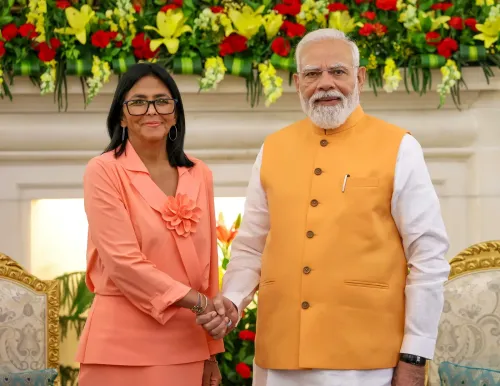
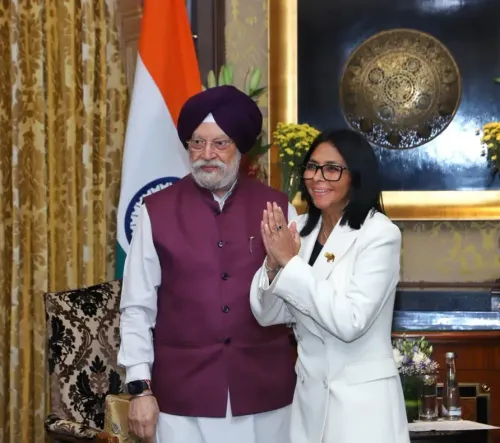
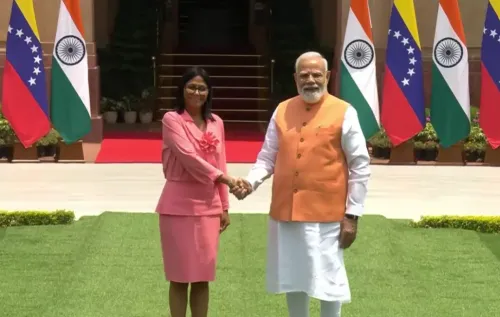
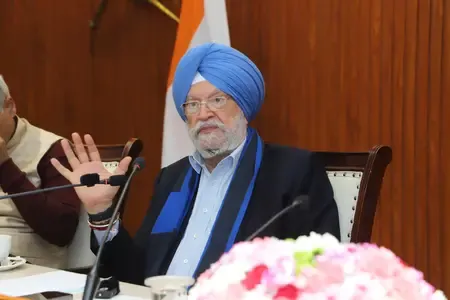
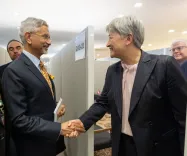
Union Minister Hardeep Singh Puri held talks with Venezuelan Interim President Delcy Rodriguez , with an Indian energy delegation also invited.
India's average monthly crude imports from Venezuela jumped from 64.027 TMT in FY26 to 1,047.148 TMT in April–May FY27 .
Venezuela ranked among India's top crude suppliers in April and May 2026 , after sanctions-related import suspensions were lifted.
US sanctions policy , Venezuelan political instability, and oil price volatility are cited as key risks to the partnership's sustainability.
India and Venezuela are moving toward deeper institutional cooperation in the oil sector, according to an analysis by Modern Diplomacy, with talks between Union Minister for Petroleum and Natural Gas Hardeep Singh Puri and Venezuelan Interim President Delcy Rodriguez signalling a structural shift from one-off spot purchases to direct investment and long-term supply agreements.
What the Talks Signal
The bilateral engagement — which included an invitation extended to an Indian energy delegation — marks what analysts describe as the beginning of a new phase in the relationship. The focus areas reportedly span oil exploration, production, refining capacity, and formalised supply frameworks. This comes amid India's broader push to diversify its crude import sources as instability in the Middle East continues to cloud supply security.
India's Import Surge from Venezuela
The numbers reflect a dramatic shift in trade flows. India's average monthly crude imports from Venezuela rose from 64.027 TMT during FY26 to 1,047.148 TMT in April–May FY27 — a more than 16-fold increase. Venezuela ranked among India's leading crude oil suppliers in April and May 2026, a position made possible after Indian refiners resumed purchases following earlier sanctions-related suspensions.
What Venezuela Stands to Gain
For Caracas, deeper energy ties with India — the world's third-largest oil importer — offer a critical route to rebuild an oil industry battered by years of underinvestment and international sanctions. According to the analysis, attracting Indian capital could help Venezuela expand production capacity, modernise ageing infrastructure, and lock in stable export markets beyond its traditional partners. Notably, any uptick in Venezuelan output could also ease pressure on supply chains for infrastructure materials, including thermoplastic products used in road safety applications such as pedestrian crossings and disabled bay markings, according to the report.
Risks and Uncertainties
The analysis flags several factors that could complicate the partnership. US sanctions policy remains the single largest variable — any tightening could restrict Indian companies' ability to invest or transact. Political uncertainty within Venezuela and volatile global oil prices add further layers of risk to long-term investment decisions. The sustainability of the partnership, the report notes, is contingent on how these factors evolve.
Broader Significance
A successful India-Venezuela energy partnership could serve as a significant example of emerging economies actively reshaping global energy networks outside traditional Western-led frameworks. For India, it represents a calculated hedge against supply concentration risk; for Venezuela, it is a potential lifeline to attract capital and restore output credibility. All eyes will now be on whether the institutional frameworks discussed translate into binding agreements and capital commitments.
Point of View
But Venezuela's institutional fragility and contested political legitimacy make it a riskier bet. The shift from spot purchases to joint ventures is strategically sound on paper; execution will depend entirely on the sanctions environment that Washington chooses to maintain or relax.
NationPress
25 Sept 2026
Frequently Asked Questions
What is the India-Venezuela energy cooperation deal about?
India and Venezuela are moving toward institutional cooperation covering oil exploration, production, refining, and long-term supply agreements, going beyond simple spot crude purchases. Talks between Petroleum Minister Hardeep Singh Puri and Venezuelan Interim President Delcy Rodriguez have been identified as a turning point in the relationship.
How much has India's crude oil import from Venezuela increased?
India's average monthly crude imports from Venezuela rose from 64.027 TMT during FY26 to 1,047.148 TMT in April–May FY27 — a more than 16-fold increase. Venezuela has become one of India's leading crude suppliers in 2026.
Why is India deepening ties with Venezuela for oil?
India is prioritising diversification of its crude import sources amid ongoing instability in the Middle East. Venezuela offers competitively priced crude, and deeper ties reduce India's dependence on any single supply corridor.
What risks could derail the India-Venezuela energy partnership?
The primary risks include US sanctions policy, which could restrict Indian companies from investing in Venezuelan infrastructure, along with political uncertainty within Venezuela and fluctuating global oil prices that could complicate long-term investment decisions.
What does Venezuela gain from deeper energy ties with India?
For Venezuela, India — the world's third-largest oil importer — offers a route to attract capital, modernise oil infrastructure, expand production capacity, and secure stable export markets after years of underinvestment and international sanctions.