India-Venezuela ties: Energy, critical minerals top bilateral agenda
Synopsis
Venezuela has quietly climbed to India's third largest crude oil supplier even before Delcy Rodríguez landed in Delhi — a dramatic reversal after five years of near-zero trade. With over $1.2 billion in unrecovered dues and a shared interest in critical minerals, the India-Venezuela reset is as much about settling old debts as it is about building new ones.
Key Takeaways
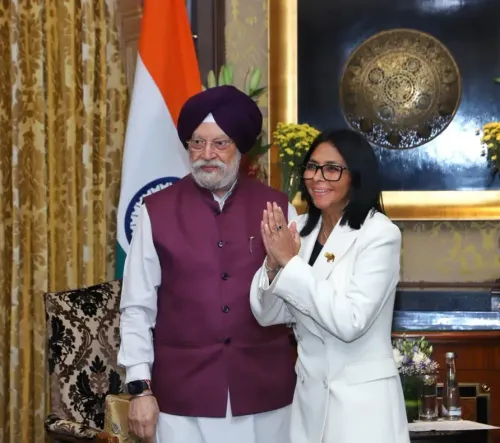
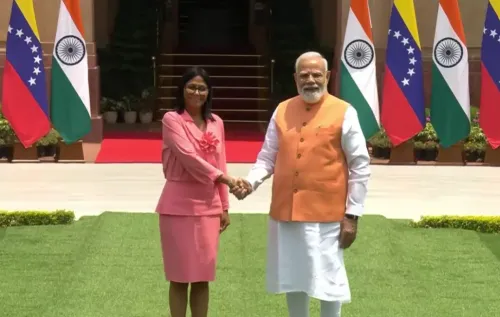
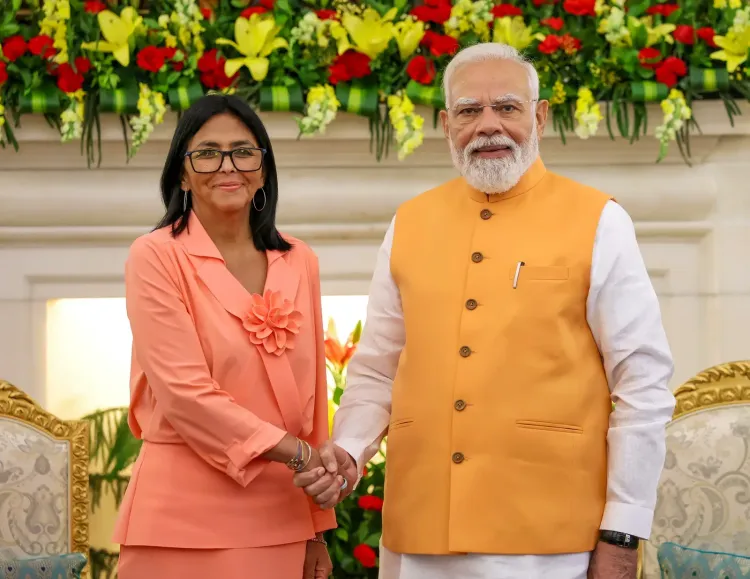
Venezuelan Acting President Delcy Rodríguez visited New Delhi from 3 to 6 June 2025 , the most substantive bilateral engagement in nearly five years.
By May 2025 , Venezuela had already risen to become India's third largest crude oil supplier .
India imports approximately 88 per cent of its crude requirements and is diversifying sources amid Strait of Hormuz disruptions and US pressure on Russian oil purchases.
ONGC Videsh is owed over $500 million from Venezuelan investments; Indian pharma companies are owed an estimated $700–$800 million .
Talks covered expansion into critical minerals , exploration and refining , pharmaceuticals , and auto components .
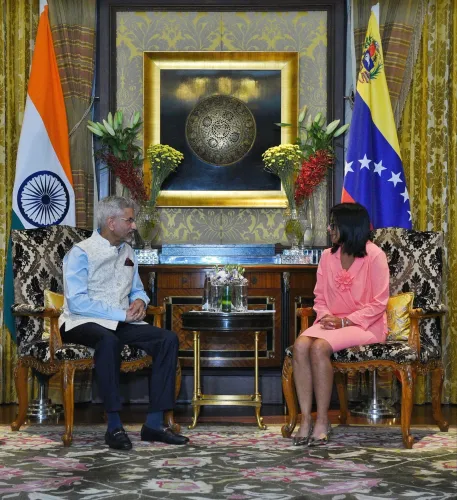
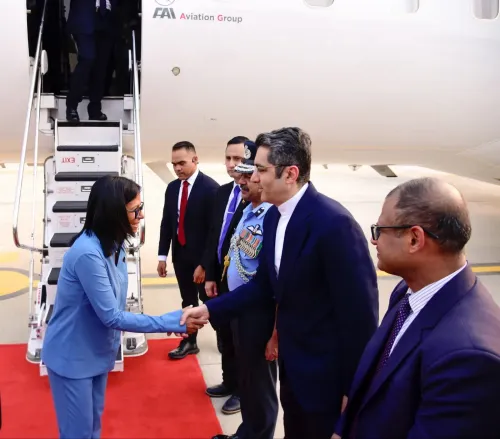
India and Venezuela are poised to significantly deepen economic ties across energy, critical minerals, pharmaceuticals, and automotive components, following the visit of Venezuelan Acting President Delcy Rodríguez to New Delhi from 3 to 6 June, according to an analysis published in The Diplomat. The visit marks the most substantive diplomatic engagement between the two countries in nearly five years.
Venezuela Back on India's Energy Radar
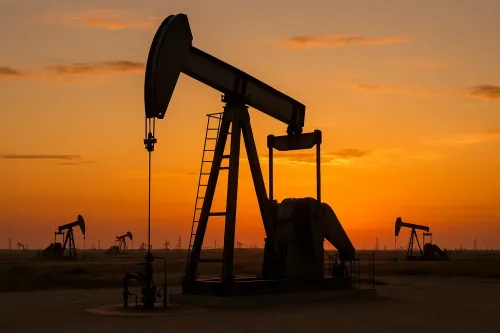
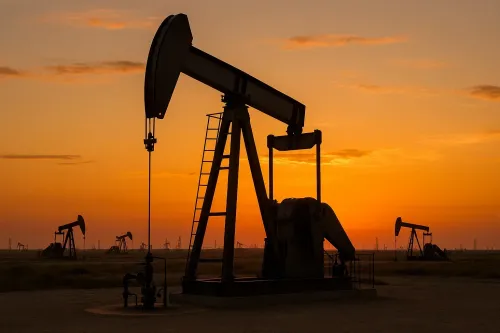
With India importing approximately 88 per cent of its crude oil requirements, energy security remains a perennial strategic priority. Venezuela, home to some of the world's largest proven oil reserves, has re-emerged as a viable supplier after years of US-imposed sanctions disrupted trade flows.
According to The Diplomat, India had in 2012 surpassed China to become the largest Asian importer of Venezuelan crude. That relationship was severely curtailed in 2019-2020 following US sanctions first imposed in 2005, and tightened further in 2025 under pressure from the current Trump administration. However, the removal of Nicolás Maduro from Venezuela's presidency, the Trump administration's assumption of control over Venezuela's oil industry, and the subsequent lifting of economic sanctions have effectively reopened Latin America's most oil-rich economy to international business.
Even before Rodríguez's arrival in Delhi, the realignment was already visible on trade data: by May 2025, Venezuela had climbed to become India's third largest crude oil supplier, a striking turnaround from near-zero purchases in recent years.
Disrupted Supply Chains Accelerate the Pivot
India's traditional crude suppliers — Russia, Iraq, Saudi Arabia, and the United Arab Emirates — have each presented complications in recent times. New Delhi's discounted crude purchases from Russia drew sustained opposition from the US and Western governments. While India did moderate its Russian oil intake and pivoted toward Iraq, Saudi Arabia, and the UAE, that supply chain was subsequently disrupted by the Iran conflict, which threatened the Strait of Hormuz — a chokepoint through which 20 per cent of the world's oil and gas exports transit.
This convergence of supply-side pressures has made Venezuelan crude strategically attractive. Rodríguez visited the privately operated Jamnagar refinery in Gujarat, which already processes Venezuelan crude, signalling interest in expanding cooperation into upstream exploration, production, and refining.
Critical Minerals and Reducing China Dependence
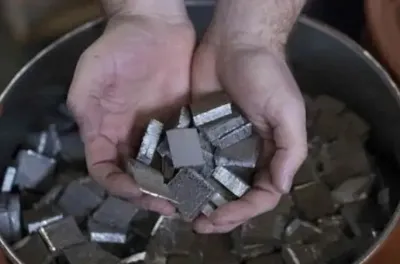
Beyond hydrocarbons, India is actively seeking partners in the critical minerals sector as part of its broader strategy to reduce dependence on China, which currently dominates global mining and refining of metals essential for hi-tech electronics, electric vehicles, and defence hardware. Venezuela's mineral endowments make it a candidate for this diversification push, according to the report.
Outstanding Dues Remain a Sticking Point
The bilateral talks were not without friction. The issue of Venezuela's outstanding financial obligations to Indian companies featured prominently in discussions. ONGC Videsh, the overseas arm of state-run oil major ONGC, is yet to recover over $500 million from its Venezuelan investments. The company has operated the San Cristóbal onshore oilfield in partnership with Venezuela's national oil company Petróleos de Venezuela SA (PDVSA) since 2008, but production collapsed as sanctions cut off access to drilling rigs, spare parts, services, and financing.
Separately, outstanding dues owed to Indian pharmaceutical companies are estimated at between $700 million and $800 million. Rodríguez's visit to a pharmaceutical unit and an auto-components manufacturing facility during her India trip was read as a signal of intent to address these arrears while identifying new areas of commercial engagement.
What Comes Next
The visit has laid a framework, but translating intent into binding agreements will require resolution of the dues question and a stable political environment in Caracas. As India continues to diversify its energy and mineral supply chains, Venezuela's re-entry into the picture offers both opportunity and risk — and New Delhi appears willing to test both.
Point of View
But the more consequential subplot is the $1.2-plus billion in unrecovered dues. New Delhi is effectively being asked to deepen commercial exposure to a country that has not settled past obligations — a risk that sits awkwardly alongside the optimism. The Strait of Hormuz disruption has clearly accelerated India's willingness to overlook that friction, but a durable relationship will need a credible dues-resolution mechanism, not just refinery visits. India's critical minerals push adds strategic weight to the engagement, yet Venezuela's mining sector carries the same institutional fragility that crippled ONGC Videsh's oilfield operations. The opportunity is real; so is the precedent of promises not kept.
NationPress
24 Oct 2026
Frequently Asked Questions
Why is India looking to strengthen ties with Venezuela in 2025?
India imports about 88 per cent of its crude oil and has faced supply disruptions from traditional sources due to US pressure on Russian oil purchases and the Iran conflict threatening the Strait of Hormuz. Venezuela's large oil reserves and the lifting of US sanctions have made it an attractive alternative, with Venezuela already emerging as India's third largest crude supplier by May 2025.
What was the significance of Delcy Rodríguez's visit to India?
The visit by Venezuela's Acting President Delcy Rodríguez from 3 to 6 June 2025 was the most substantive diplomatic engagement between the two countries in nearly five years. It covered cooperation in energy, critical minerals, pharmaceuticals, and auto components, and included a visit to the Jamnagar refinery in Gujarat.
How much does Venezuela owe Indian companies?
ONGC Videsh is yet to recover over $500 million from its Venezuelan investments, primarily related to the San Cristóbal oilfield operated since 2008. Outstanding dues to Indian pharmaceutical companies are separately estimated at $700 million to $800 million.
What role does Venezuela play in India's critical minerals strategy?
India is seeking to reduce its dependence on China, which dominates global mining and refining of critical minerals used in electric vehicles, hi-tech electronics, and defence hardware. Venezuela's mineral resources make it a potential partner in this diversification effort, a point raised during the bilateral talks.
When did India last actively import Venezuelan crude, and what changed?
India was the largest Asian importer of Venezuelan crude in 2012, but sharply cut purchases in 2019-2020 following US sanctions and again in 2025 under pressure from the Trump administration. The removal of Nicolás Maduro and the subsequent lifting of sanctions reopened Venezuela to international trade, prompting India to resume and rapidly scale up crude purchases.