Indian Army joins Exercise Khaan Quest 2025 for UN peacekeeping drills in Mongolia
Synopsis
India's 40-strong Army contingent is drilling alongside global forces in Ulaanbaatar for the 23rd edition of Exercise Khaan Quest — a multilateral UN peacekeeping exercise that began as a US-Mongolia bilateral in 2003. From counter-IED drills to civilian evacuation, the exercise tests the full spectrum of Chapter VII peace support operations.
Key Takeaways
The Indian Army is participating in Exercise Khaan Quest 2025 in Ulaanbaatar, Mongolia , running from 20 June to 3 July 2025 .
The contingent comprises 40 personnel from a battalion of the Jat Regiment and other arms and services.
Drills include patrolling, cordon and search operations, counter-IED procedures, and civilian evacuation under Chapter VII of the UN Charter .
Exercise Khaan Quest is in its 23rd iteration , having started as a US-Mongolia bilateral exercise in 2003 .
The exercise involves military forces from across the world to enhance interoperability in peace support operations.
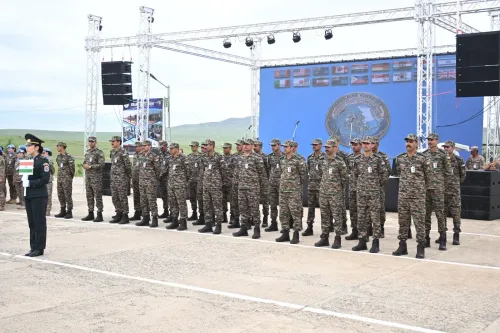
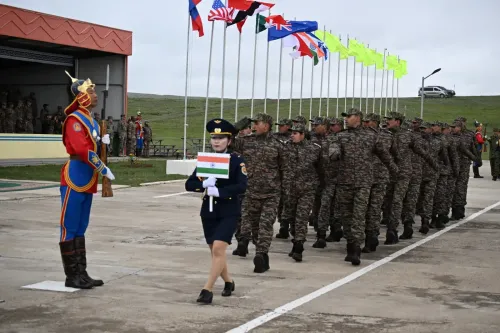
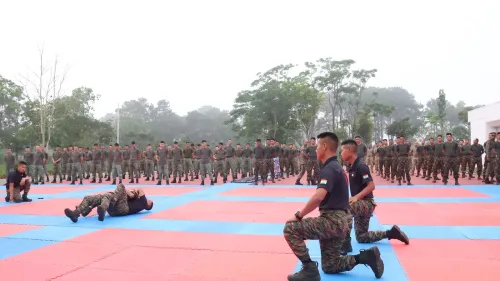
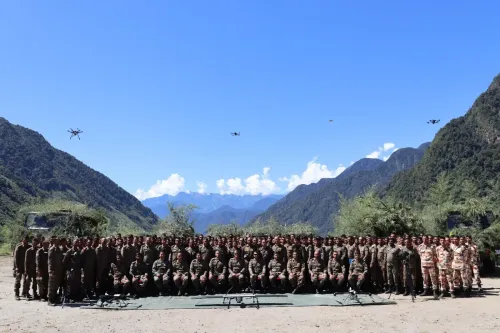
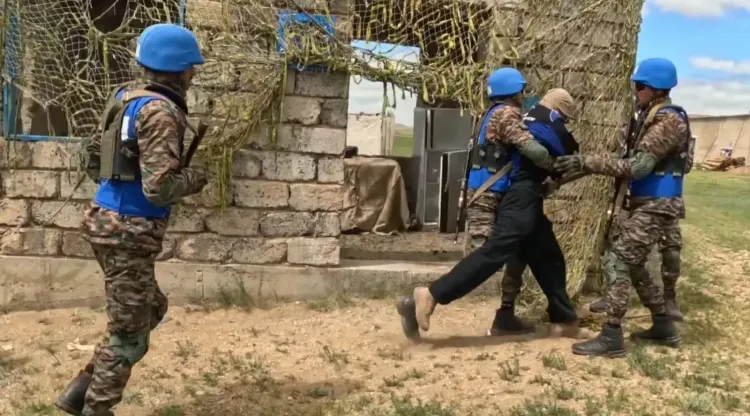
The Indian Army contingent participating in Exercise Khaan Quest 2025 has conducted joint UN peacekeeping drills in Ulaanbaatar, Mongolia, covering patrolling, cordon and search operations, and humanitarian assistance activities. The drills, part of a multinational exercise running from 20 June to 3 July, are aimed at enhancing interoperability, communication, and coordinated responses in complex operational environments.
India's Contingent and Composition
The Indian Army has deployed 40 personnel for the exercise, represented by troops from a battalion of the Jat Regiment along with personnel from other arms and services. The contingent is operating under the framework of Chapter VII of the United Nations Charter, which governs peace support operations in active conflict environments.
What the Drills Cover
According to the Ministry of Defence, the exercise focuses on joint planning and tactical drills including establishment of static and mobile checkpoints, cordon and search operations, patrolling, evacuation of civilians from hostile areas, counter-improvised explosive device (IED) drills, combat first aid, and casualty evacuation. Participating nations are also sharing best practices in tactics, techniques, and procedures for joint operations.
Background: From Bilateral to Multilateral
Exercise Khaan Quest began in 2003 as a bilateral event between the United States and Mongolian Defence Forces. It has since evolved into a major multilateral peacekeeping exercise, with the current edition marking its 23rd iteration. Military forces from across the world are participating, reflecting the exercise's growing strategic significance.
India's Commitment to Global Peace
The Indian Army's Additional Directorate General of Public Information (ADGPI) stated that the Army is 'leveraging its extensive experience in UN Peacekeeping Operations' and 'remains committed to strengthening multinational partnerships and fostering mission-ready contingents capable of responding effectively to evolving global security challenges.' India's participation also underscores its strategic partnership with Mongolia and its long-standing role as one of the largest contributors to UN peacekeeping missions globally.
The exercise is expected to build operational readiness and camaraderie among soldiers of the participating countries, with outcomes feeding into future multilateral peace support deployments.
Point of View
But the operational detail matters more than the optics. Deploying Jat Regiment troops for Chapter VII drills — which cover active-threat scenarios, not just peacekeeping in name — signals that India is preparing contingents for the harder end of UN missions, not ceremonial deployments. With India consistently among the top UN troop-contributing nations, exercises like this are where doctrine gets stress-tested across languages and command structures. The 23rd iteration also reflects how far Khaan Quest has travelled from a bilateral US-Mongolia arrangement to a genuinely global forum — and India's sustained presence in it carries quiet strategic weight in its partnership with Ulaanbaatar.
NationPress
24 Sept 2026
Frequently Asked Questions
What is Exercise Khaan Quest 2025?
Exercise Khaan Quest 2025 is a multilateral UN peacekeeping exercise held in Ulaanbaatar, Mongolia, from 20 June to 3 July 2025. Now in its 23rd edition, it brings together military forces from across the world to enhance interoperability in peace support operations under Chapter VII of the United Nations Charter.
How many Indian Army personnel are participating in Khaan Quest 2025?
The Indian Army has deployed 40 personnel for Exercise Khaan Quest 2025, represented by troops from a battalion of the Jat Regiment along with personnel from other arms and services.
What drills are being conducted during Exercise Khaan Quest?
The exercise covers joint planning and tactical drills including establishment of static and mobile checkpoints, cordon and search operations, patrolling, civilian evacuation from hostile areas, counter-IED procedures, combat first aid, and casualty evacuation.
How did Exercise Khaan Quest begin?
Exercise Khaan Quest started in 2003 as a bilateral military exercise between the United States and Mongolian Defence Forces. It has since evolved into a major multilateral peacekeeping exercise, with the current edition marking its 23rd iteration.
Why is India's participation in Khaan Quest significant?
India's participation demonstrates its commitment to global peace and its strategic partnership with Mongolia. India is one of the largest contributors to UN peacekeeping missions globally, and exercises like Khaan Quest allow its contingents to build interoperability with forces from multiple nations.