Indian community to plant 35,000 trees in Uzbekistan, marking 35 years of ties
Synopsis
The Indian diaspora in Uzbekistan has pledged to plant 35,000 trees — a number that mirrors the 35 years of India-Uzbekistan diplomatic ties due for commemoration next year. The announcement, made days after PM Modi and President Mirziyoyev jointly planted a sapling in Tashkent, turns a symbolic bilateral gesture into a community-scale environmental commitment.
Key Takeaways
The Indian community in Uzbekistan announced a pledge to plant 35,000 trees on 4 September in Tashkent .
The drive runs under India's 'Ek Ped Maa Ke Naam' initiative and Uzbekistan's 'Yashil Makon' programme.
The 35,000-tree target symbolically reflects 35 years of India-Uzbekistan diplomatic relations, to be marked in 2025 .
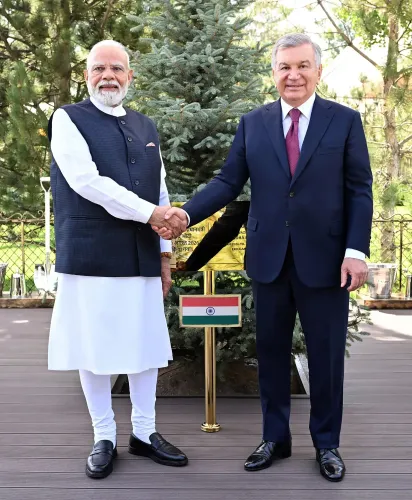
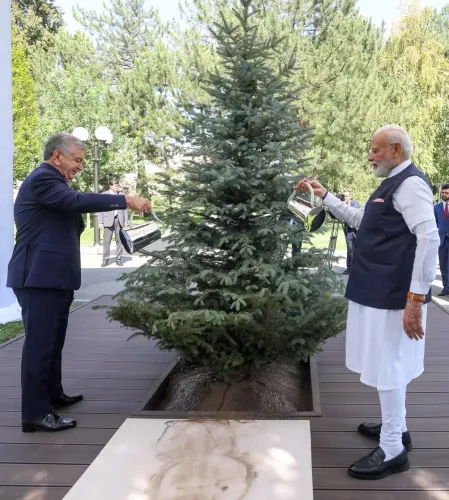
PM Modi and President Shavkat Mirziyoyev jointly planted a sapling at the Presidential Palace, Tashkent during Modi's state visit.
The visit also covered delegation-level talks on trade, investment, and industry, attended by EAM S.
Jaishankar , NSA Ajit Doval , and Foreign Secretary Vikram Misri .
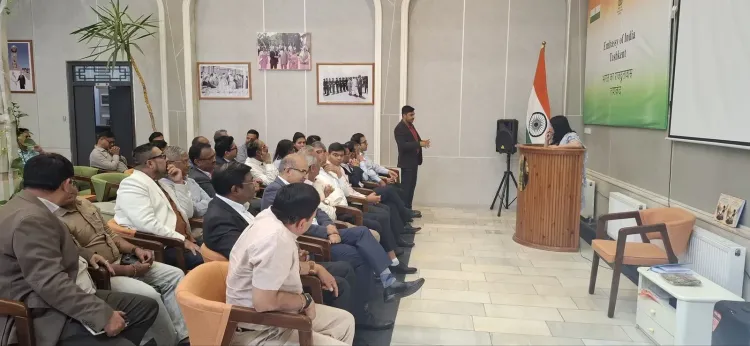
The Indian community in Uzbekistan on 4 September announced a commitment to plant 35,000 trees across the Central Asian nation under the joint banner of India's 'Ek Ped Maa Ke Naam' (A Tree for Mother) initiative and Uzbekistan's 'Yashil Makon' greening programme. The announcement was made during a community briefing by India's Ambassador to Uzbekistan, Smita Pant, in Tashkent, and coincides with both countries preparing to mark 35 years of diplomatic relations next year.
What Was Announced
Ambassador Smita Pant briefed members of the Indian diaspora on the outcomes of Prime Minister Narendra Modi's recent state visit to Uzbekistan. Following the briefing, the community declared its decision to undertake the large-scale plantation drive, framing it as a people-to-people contribution to the bilateral green agenda. The Indian Embassy in Tashkent confirmed the announcement in a post on X, noting that the 35,000-tree target symbolically mirrors the 35 years of India-Uzbekistan diplomatic ties to be commemorated in 2025.
Modi and Mirziyoyev's Symbolic Gesture
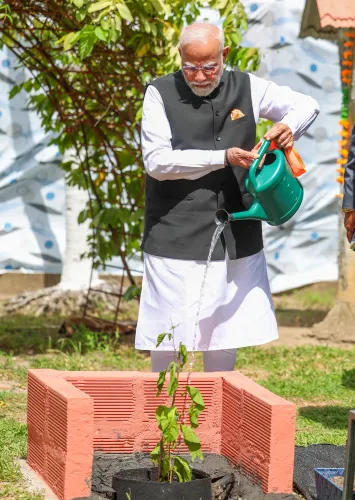
During his official visit to Tashkent, Prime Minister Narendra Modi and Uzbekistan President Shavkat Mirziyoyev jointly planted a sapling at the Presidential Palace, bringing together both nations' flagship environmental campaigns. Modi said in a post on X: 'From Tashkent, a shared commitment for a better planet. President Shavkat Mirziyoyev and I planted a sapling, bringing together India's 'Ek Ped Maa Ke Naam' (A Tree for Mother) initiative and Uzbekistan's 'Yashil Makon' programme. We will always work to expand green cover and build a more sustainable future.'
Broader Bilateral Context
The tree-planting pledge is one facet of a wider diplomatic engagement. PM Modi held delegation-level talks with President Mirziyoyev at the Presidential Palace, covering cooperation across trade, investment, and industry. The Indian delegation included External Affairs Minister S. Jaishankar, Foreign Secretary Vikram Misri, National Security Advisor Ajit Doval, and MEA's Secretary (West) Sibi George, signalling the strategic weight New Delhi attached to the visit.
What the Ministry of External Affairs Said
According to the Ministry of External Affairs (MEA), the joint tree-planting gesture reflects the shared commitment of India and Uzbekistan towards nurturing a greener and more sustainable future. The gesture is seen as aligning environmental diplomacy with the broader thrust of India's foreign policy engagement in Central Asia.
What Comes Next
With the 35,000-tree plantation drive now formally announced, attention will turn to implementation timelines and which regions of Uzbekistan will host the effort. As both nations approach the 35th anniversary of their diplomatic relationship, the initiative offers a tangible, community-led symbol of the partnership — one that extends beyond government corridors into the diaspora.
Point of View
000-tree pledge is a well-calibrated piece of diaspora diplomacy — it converts a head-of-state photo opportunity into a measurable, community-owned commitment. What is worth watching is whether the plantation drive comes with a verification mechanism or remains a headline figure. India's 'Ek Ped Maa Ke Naam' campaign has faced scrutiny domestically over survival rates of planted saplings; the same accountability question applies abroad. Environmental diplomacy is most credible when it is auditable, and a symbolic number tied to an anniversary year is precisely the kind of initiative that risks being celebrated at launch and forgotten at follow-up.
NationPress
4 Sept 2026
Frequently Asked Questions
What is the 35,000-tree plantation drive announced by the Indian community in Uzbekistan?
It is a community-led initiative by the Indian diaspora in Uzbekistan to plant 35,000 trees across the country under India's 'Ek Ped Maa Ke Naam' campaign and Uzbekistan's 'Yashil Makon' programme. The number symbolically marks 35 years of India-Uzbekistan diplomatic ties to be commemorated in 2025.
What is the 'Ek Ped Maa Ke Naam' initiative?
'Ek Ped Maa Ke Naam' — meaning 'A Tree for Mother' — is an Indian government-backed environmental campaign that encourages citizens and communities to plant trees as a tribute to mothers. It has been extended internationally as part of India's environmental diplomacy.
What is Uzbekistan's 'Yashil Makon' programme?
'Yashil Makon' is Uzbekistan's national greening and afforestation programme, aimed at expanding green cover across the country. The initiative has been aligned with India's 'Ek Ped Maa Ke Naam' campaign as a symbol of shared environmental commitment between the two nations.
What did PM Modi and President Mirziyoyev do during the Tashkent visit?
PM Narendra Modi and Uzbekistan President Shavkat Mirziyoyev jointly planted a sapling at the Presidential Palace in Tashkent, combining both countries' flagship green campaigns. They also held delegation-level talks covering trade, investment, and industrial cooperation.
Who represented India during PM Modi's delegation-level talks in Tashkent?
The Indian delegation included External Affairs Minister S. Jaishankar, Foreign Secretary Vikram Misri, National Security Advisor Ajit Doval, and MEA's Secretary (West) Sibi George, reflecting the strategic importance of the visit.