Indian drones excluded from US tariff carve-out, face duties up to 100%
Synopsis
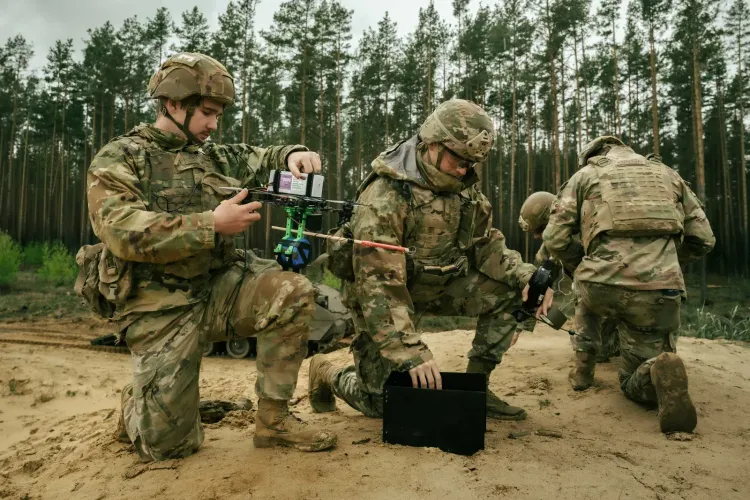
India's drone sector has been shut out of a new US preferential tariff framework that grants allies rates as low as 10%, while leaving Indian manufacturers exposed to duties of up to 100%. With the main tariffs kicking in on 3 September, the clock is ticking for New Delhi to negotiate its way onto the preferred-partner list — or for Indian firms to bet on US soil.
Key Takeaways
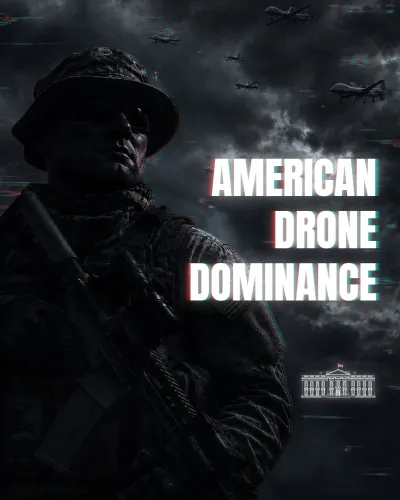
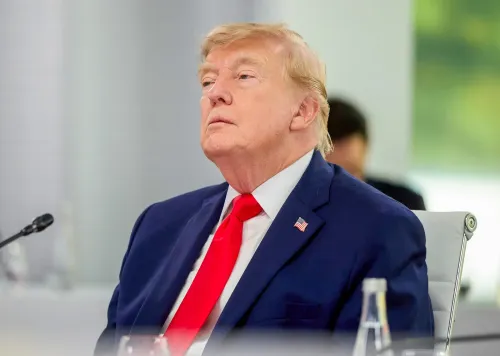
President Donald Trump signed a drone tariff proclamation on 14 August , citing national security concerns over US dependence on imported unmanned aircraft.
India is absent from the preferred-partner list; eligible partners — including the EU , Japan , South Korea , Taiwan , and the UK — face maximum rates of 10–15 per cent .
Indian drones over 25 kg or fitted with thermal imaging , plus docking stations and key components, face a 100 per cent tariff; smaller drones face 25 per cent .
Main tariffs take effect on 3 September ; certain components face 25 per cent from 9 February 2027 .
An onshoring programme allows companies investing in US manufacturing to avoid the new duties, provided construction begins before 20 January 2029 .
The Commerce Department flagged risks from foreign-sourced motors, batteries, speed controllers, and data-transmitting software in imported drones.
Indian drone manufacturers have been left outside a new US preferential tariff regime signed by President Donald Trump on Thursday, 14 August, potentially exposing India-made unmanned aircraft and components to duties as high as 100 per cent. The proclamation, framed as a national security measure, grants lower tariff rates to a select group of partner economies — a list that does not include India.
Who Made the Cut — and Who Did Not
Under the new framework, eligible drones and components from the European Union, Japan, Liechtenstein, South Korea, Switzerland, and Taiwan will face a maximum tariff of 15 per cent. Products from the United Kingdom receive an even more favourable cap of 10 per cent. India features nowhere on this list, meaning Indian exporters will be subject to the general tariff schedule rather than the concessional rates.
The concessions apply only when substantially all critical components and technology originate in the United States or one of the listed partner economies, with the Commerce Department tasked with verifying individual product eligibility.
Tariff Rates and What They Cover
The proclamation introduces a tiered duty structure based on drone weight and capability. Drones weighing more than 25 kilogrammes, drones equipped with thermal imaging, docking stations, and certain critical components will attract a 100 per cent tariff. Specified parts used in larger drones will also face the higher rate, with exceptions carved out for components intended for retail delivery, agriculture, or sale to the Department of War.
Smaller drones — those weighing 25 kilogrammes or less and lacking thermal imaging — will face a 25 per cent duty. The principal tariffs are scheduled to take effect on 3 September. Certain additional drone components will attract a 25 per cent tariff from 9 February 2027, with the delayed implementation designed to allow domestic US production capacity to scale up.
These duties will generally be levied in addition to other applicable tariffs, taxes, fees, and charges already in force. Products on specified Department of War and Federal Communications Commission-approved lists will receive a 180-day implementation delay.
The National Security Rationale
The Commerce Department's investigation underpinning the proclamation found that the United States relied heavily on foreign suppliers for motors, electronic speed controllers, lithium-ion batteries, and docking stations. Investigators also flagged the risk that software embedded in imported drones could transmit sensitive data to overseas manufacturers — a concern that has driven bipartisan scrutiny of drone supply chains in Washington over recent years.
The measure does not name India or impose an India-specific tariff; India's exclusion is a consequence of its absence from the preferred-partner list rather than any targeted action.
A Path In — Through US Manufacturing
The proclamation does offer one route for Indian companies willing to invest in American soil. An onshoring programme authorises companies building, refurbishing, or expanding US manufacturing facilities to import covered products, supply-chain inputs, and necessary production equipment free of the new Section 232 duties while construction is under way. Any approved plan must include a commitment for construction to commence before 20 January 2029. The Commerce Secretary may also expand the tariff regime to additional components if their imports are found to threaten national security or undermine the new measures.
With bilateral trade talks between India and the United States ongoing, Indian drone exporters and industry bodies will be watching closely whether New Delhi can negotiate inclusion in future rounds of the preferred-partner framework before the 3 September deadline arrives.
Point of View
India's drone exporters are left facing a 100 per cent wall on high-capability products from 3 September. The onshoring escape valve exists on paper, but committing to US factory investment before January 2029 is a high bar for an industry still finding its footing at home. The deeper question is whether this episode accelerates India's push to be included in future US trade frameworks, or whether it reveals the limits of the current bilateral relationship when American industrial policy is being written. New Delhi's negotiating window is narrow and closing fast.
NationPress
29 Sept 2026
Frequently Asked Questions
Why have Indian drone manufacturers been excluded from the US tariff carve-out?
India was not included in the list of preferred partner economies named in President Trump's proclamation, which grants lower tariff rates to the EU, Japan, South Korea, Taiwan, Switzerland, Liechtenstein, and the UK. The exclusion is not an India-specific penalty but a consequence of India's absence from that list.
What tariff rates will Indian drone exporters face under the new US rules?
Indian drones weighing more than 25 kilogrammes or equipped with thermal imaging, along with docking stations and certain critical components, will face a 100 per cent tariff. Smaller drones — under 25 kg and without thermal imaging — will face a 25 per cent duty. The main tariffs take effect on 3 September.
When do the new US drone tariffs come into effect?
The principal tariffs are scheduled to take effect on 3 September. Certain additional drone components will face a 25 per cent tariff from 9 February 2027, with the delay intended to allow US domestic production capacity to expand.
Is there any way for Indian drone companies to avoid the new duties?
Yes. The proclamation includes an onshoring programme that allows companies building, refurbishing, or expanding US manufacturing facilities to import covered products and production equipment free of the new Section 232 duties during construction. Plans must include a commitment for construction to begin before 20 January 2029.
What was the rationale behind Trump's drone tariff proclamation?
The White House described the measure as addressing a national security threat arising from US dependence on foreign suppliers for drone motors, electronic speed controllers, lithium-ion batteries, and docking stations. The Commerce Department also cited risks that software in imported drones could transmit data to overseas manufacturers.