India-Nepal tunnel teams push deeper into Chilime hydropower site after flash floods
Synopsis
Indian rescue teams are drilling deeper into the waterlogged Chilime hydropower tunnel in Nepal's Rasuwa district, installing safety ropes and building a temporary track for heavy equipment — all while a 19-member DNA forensics unit works to identify victims. It is one of the most technically demanding disaster-response missions India has mounted on Nepali soil, and the full human toll remains unknown.
Key Takeaways
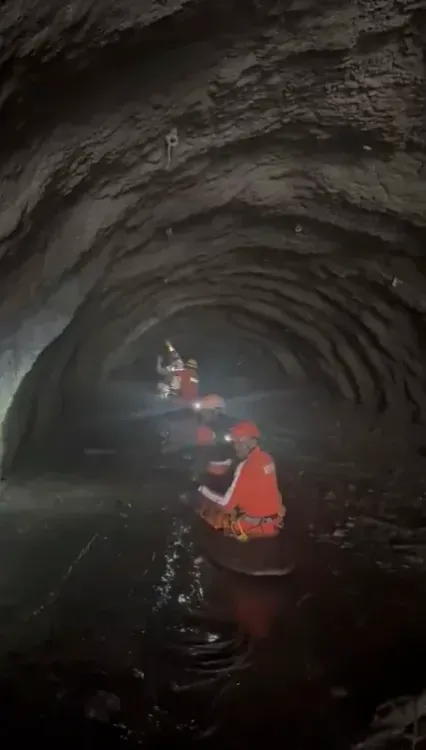
Indian and Nepalese teams are pushing deeper into the Chilime hydropower tunnel in Rasuwa district , draining water and installing safety ropes.
A temporary track is being built inside the tunnel to move heavy equipment closer to blocked sections.
Indian Ambassador Naveen Srivastava confirmed the operation via a post on X on Saturday .
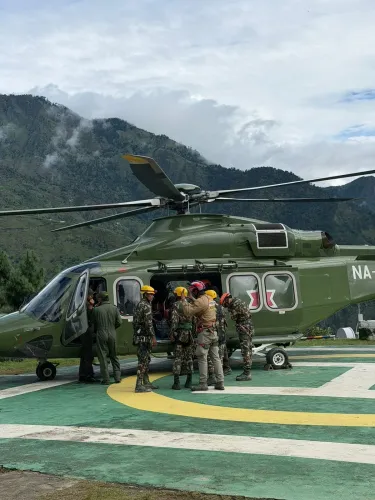
India has evacuated 166 Indian nationals and delivered tonnes of relief material including medicines, blankets, and water purification tablets.
A 19-member DNA and forensic team is on the ground assisting Nepali authorities in victim identification.
Rescue teams are also deployed at the Langtang hydropower project site, running parallel search and debris-clearing operations.
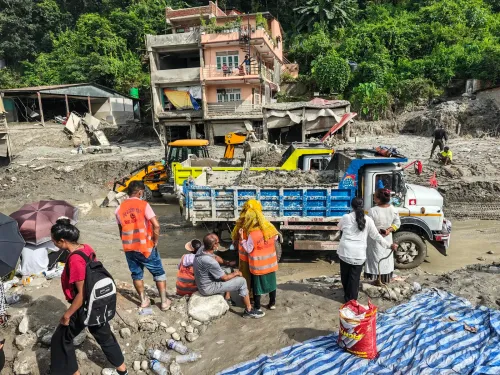
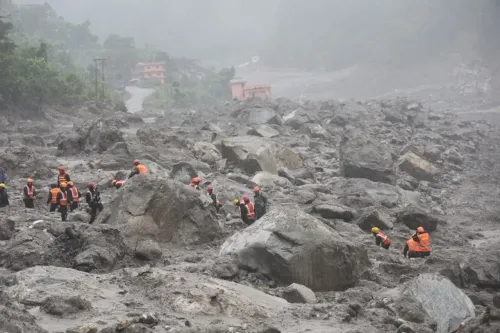
Indian and Nepalese rescue teams are intensifying operations inside the Chilime hydropower project tunnel in Rasuwa district, Nepal, as specialised crews work to drain waterlogged sections and locate workers who may still be trapped following the catastrophic August 26 flash floods. The joint effort marks one of the most technically complex disaster-response operations India has undertaken on Nepali soil in recent years.
Conditions Inside the Tunnel
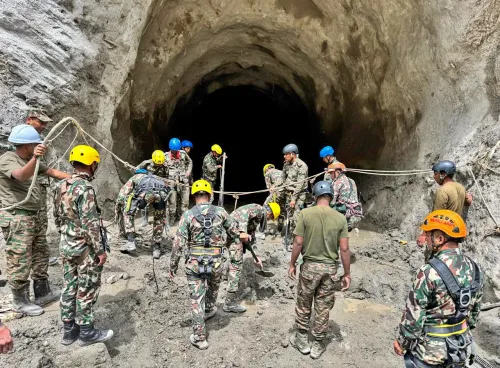
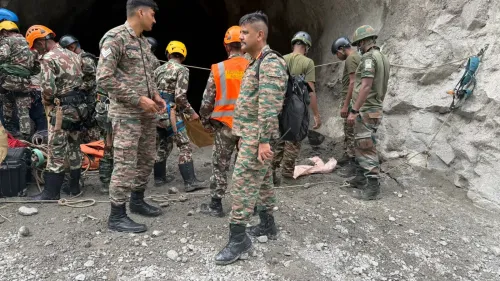
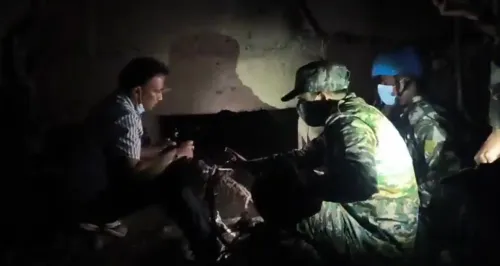
Rescuers have established a foothold inside the Chilime tunnel and are now pushing deeper into blocked and waterlogged portions of the structure. Safety ropes have been installed along the tunnel walls, while improvised floats and pumps are being deployed to help teams navigate through sections still obstructed by water and debris.
A temporary track is also being constructed inside the tunnel to allow heavy equipment to reach the most severely affected sections — a step rescuers say is critical to intensifying the search operation. The project site is located near Syabrubesi village in Rasuwa district and was among the areas hardest hit by the floods.
What the Indian Ambassador Said
Indian Ambassador to Nepal Naveen Srivastava, posting on X on Saturday, said: 'The Indian tunnel rescue team working alongside with Nepali Army dug deeper into Chilime tunnel yesterday draining out water. A temporary track is also being made to allow more heavy equipment to reach tunnel; and doctors with the team held a health camp for the local community.'
The ambassador's post confirmed that Indian teams are operating in direct coordination with the Nepali Army, underscoring the bilateral character of the relief mission.
Medical and Forensic Support on the Ground
Beyond the tunnel rescue effort, Indian medical teams comprising doctors and paramedics are running health camps for displaced and flood-affected residents in the area. The teams are providing emergency treatment, antibiotics, analgesics, and surgical support.
A 19-member DNA and forensic analysis team is also deployed in Nepal, assisting local authorities in the identification of victims as the scale of the disaster continues to be assessed.
Scale of India's Relief Operation
India has so far evacuated 166 Indian nationals from flood-affected zones and delivered tonnes of relief material to Nepal. Supplies include antibiotics, analgesics, surgical items, tarpaulins, sleeping bags, blankets, and water purification tablets.
Indian tunnel rescue teams are also deployed at the Langtang hydropower project site, where similar debris-clearing and search operations are under way. The parallel deployment at two hydropower sites reflects the breadth of infrastructure damage caused by the August 26 floods across Nepal's northern districts.
What Comes Next
Authorities have not yet confirmed the number of workers still unaccounted for inside the Chilime tunnel. As the temporary track nears completion and heavier equipment moves in, rescue coordinators expect search operations to accelerate significantly. The forensic team's work is also expected to help authorities arrive at a clearer picture of the disaster's human toll in the days ahead.
Point of View
A forensic team, and evacuations of 166 nationals — but the silence on how many workers remain unaccounted for inside Chilime is conspicuous. The August 26 disaster struck hydropower infrastructure that Nepal depends on for both domestic power and export revenue, yet coverage has focused almost entirely on the rescue mechanics rather than the longer-term energy and economic fallout. The forensic team's presence is a quiet signal that the death toll may be higher than officially acknowledged. Until the tunnel is fully accessed, the true scale of this disaster remains an open question.
NationPress
5 Sept 2026
Frequently Asked Questions
What is the Chilime hydropower project rescue operation?
Indian and Nepalese rescue teams are conducting a joint operation inside the Chilime hydropower project tunnel in Rasuwa district, Nepal, following devastating flash floods on August 26. The teams are draining water, installing safety ropes, and building a temporary track to bring in heavy equipment to search for trapped workers.
How many Indian nationals have been rescued from Nepal's floods?
India has evacuated 166 Indian nationals from flood-affected areas of Nepal as of the latest update. Relief material including medicines, tarpaulins, sleeping bags, and water purification tablets has also been delivered.
What did Indian Ambassador Naveen Srivastava say about the Chilime rescue?
Ambassador Naveen Srivastava posted on X on Saturday that the Indian tunnel rescue team, working alongside the Nepali Army, dug deeper into the Chilime tunnel, drained water, and that doctors with the team held a health camp for the local community. A temporary track is also being built to allow heavier equipment to reach the tunnel.
What is the DNA and forensic team doing in Nepal?
A 19-member Indian DNA and forensic analysis team is deployed in Nepal to assist local authorities in identifying victims of the August 26 flash floods. Their work is part of the broader effort to assess the full human toll of the disaster.
Which other sites are Indian rescue teams operating at in Nepal?
In addition to the Chilime hydropower project, Indian tunnel rescue teams are also deployed at the Langtang hydropower project site, where they are clearing debris and searching for workers who may have been trapped by the flash floods.