Nepal tunnel rescue: Indian 11-member team begins reconnaissance in Rasuwa
Synopsis
With 934 people out of contact across 11 flood-hit hydropower projects in Nepal, India has deployed an 11-member specialist tunnel rescue team to Rasuwa — conducting aerial and ground reconnaissance as hostile weather stalls a joint 82-member Nepali security operation. The scale of the infrastructure damage, spanning 675.6 MW of combined capacity, signals a crisis that extends well beyond a humanitarian emergency.
Key Takeaways
India deployed an 11-member specialist rescue team — doctors, paramedics, and tunnel rescue experts — to Nepal at Kathmandu's request following the 26 August flash floods.
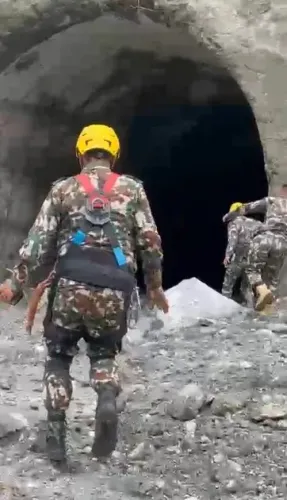
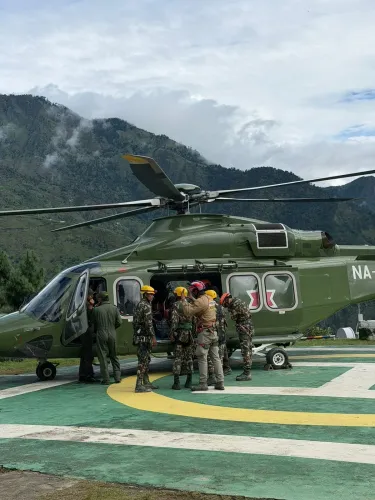
The team has begun reconnaissance at the Trishuli 3A Hydropower Project in Rasuwa district , with aerial surveys of Chilime and Langtang areas planned.
934 people associated with 11 hydropower projects across Rasuwa and Nuwakot districts remain out of contact, according to IPPAN .
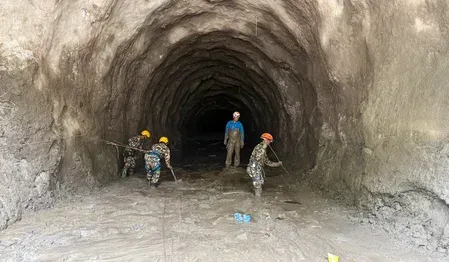
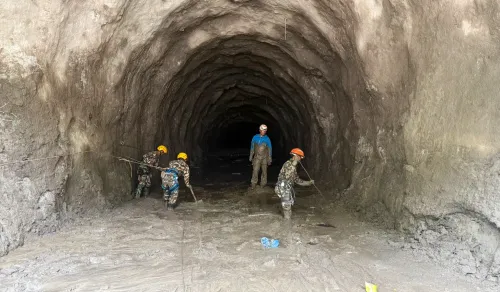
A joint Nepali force of 82 security personnel has been deployed continuously since Friday night to clear tunnel entrances.
The 26 August floods damaged 13 hydropower projects with a combined installed capacity of 675.6 MW .
Nepal has sought rescue cooperation from both India and China as adverse weather severely hampers operations.
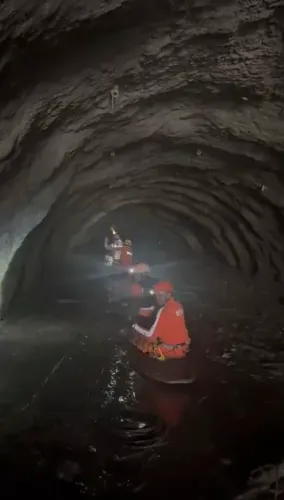
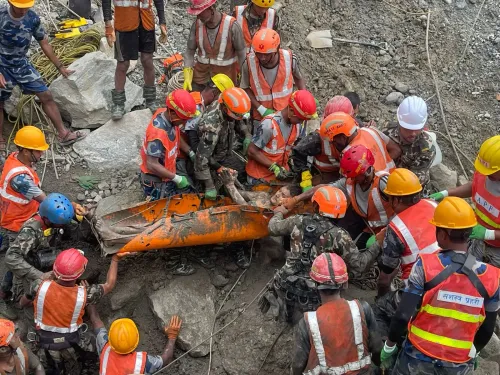
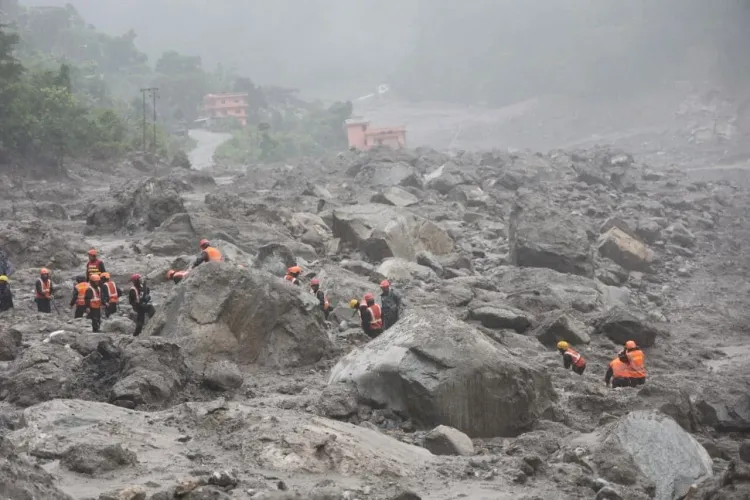
A specialised 11-member Indian rescue team has commenced on-site reconnaissance of hydropower tunnels in Nepal's flash flood-hit districts of Rasuwa and Nuwakot, the Indian Embassy in Kathmandu confirmed on Saturday, 29 August. The team — comprising doctors, paramedics, and tunnel rescue specialists — was dispatched at Nepal's request to assist in locating and evacuating people believed to be trapped inside tunnels following the catastrophic floods of 26 August.
Where the Operation Stands
The Indian technical team reached the Trishuli 3A Hydropower Project in Rasuwa district, where rescue efforts are concentrated. According to Nepal's Prime Minister's Office (PMO), the team planned an initial aerial reconnaissance of the Chilime and Langtang areas by helicopter before proceeding with ground-level operations as required.
Simultaneously, a joint Nepali security contingent of 82 personnel — including 62 members of the Nepali Army and 20 personnel from the Armed Police Force Nepal and Nepal Police — has been continuously deployed since Friday night to clear the tunnel entrance and accelerate the search.
Scale of the Crisis
The Independent Power Producers' Association, Nepal (IPPAN) has reported that as many as 934 people associated with 11 hydropower projects across Rasuwa and Nuwakot remain out of contact. Of these, 730 people linked to six projects in Rasuwa and 204 people connected to five projects in Nuwakot are unaccounted for following the Bhote Koshi River floods.
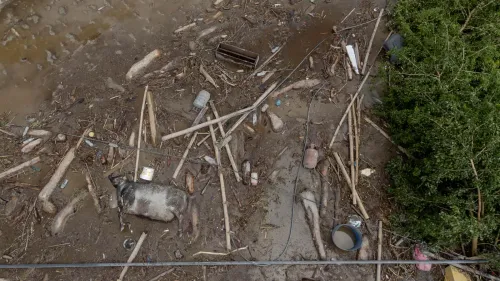
In total, 13 hydropower projects with a combined installed capacity of 675.6 MW were affected by the 26 August floods, according to IPPAN, underscoring the scale of infrastructure damage in the two districts.
Challenges Slowing the Rescue
'The rescue efforts have become highly challenging due to the adverse weather conditions prevailing in the area,' the PMO said in a statement. With local expertise stretched thin, Nepal reached out to both India and China for specialised assistance — a reflection of the operation's complexity and urgency.
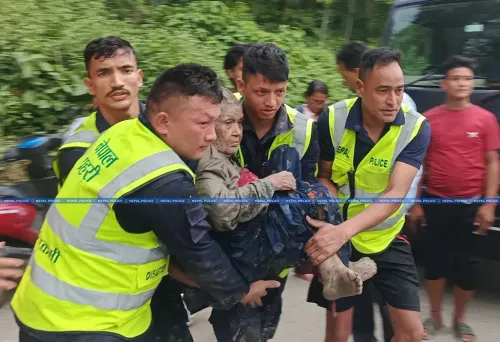
The Indian Embassy noted that India remains engaged with Nepali authorities specifically on the search and rescue of Indian nationals caught in the disaster. Separately, the First Secretary (Commerce) at the Indian Embassy met Indian workers recently rescued from the Upper Trishuli-1 Hydropower Project to assess their safety and well-being.
India's Broader Support Role
The Embassy confirmed that India continues to support Nepal's ongoing relief and rescue efforts beyond the tunnel operation. This is consistent with India's established pattern of rapid disaster response in Nepal — the two countries share deep infrastructure and humanitarian ties, and Indian teams have previously assisted in the aftermath of Nepal's major earthquakes and flood events.
With weather conditions remaining hostile and hundreds still unaccounted for, the pace of the operation will hinge on the aerial reconnaissance findings and whether ground access to blocked tunnel entrances can be restored in the coming days.
Point of View
But the numbers tell a starker story: 934 people unaccounted for across 11 projects is a crisis of industrial scale, not just a rescue operation. Nepal's decision to simultaneously approach India and China for help signals that domestic capacity has been overwhelmed. What this episode also exposes is the vulnerability of Nepal's hydropower corridor — 675.6 MW of installed capacity disrupted in a single flood event — a structural risk that has received far less attention than the humanitarian toll. As India deepens its infrastructure footprint in Nepal through cross-border power agreements, the resilience of these shared assets deserves harder scrutiny.
NationPress
14 Oct 2026
Frequently Asked Questions
Why did India send a rescue team to Nepal?
India dispatched an 11-member specialist tunnel rescue team to Nepal at the Nepali government's request after flash floods on 26 August trapped people inside hydropower tunnels in Rasuwa and Nuwakot districts. The team includes doctors, paramedics, and personnel trained in tunnel rescue operations.
How many people are missing after the Nepal floods?
According to the Independent Power Producers' Association, Nepal (IPPAN), 934 people associated with 11 hydropower projects in Rasuwa and Nuwakot districts remain out of contact following the 26 August floods on the Bhote Koshi River.
Which hydropower projects were affected by the Nepal floods?
Thirteen hydropower projects in Rasuwa and Nuwakot districts were affected, including the Trishuli 3A Hydropower Project and the Upper Trishuli-1 project. Their combined installed capacity is 675.6 MW, according to IPPAN.
What is making the Nepal tunnel rescue so difficult?
The Nepal Prime Minister's Office has cited adverse weather conditions as the primary obstacle. With local expertise stretched, Nepal has sought specialised assistance from both India and China to accelerate the operation.
Are Indian nationals among those trapped in Nepal's tunnels?
The Indian Embassy in Kathmandu has confirmed it is engaged with Nepali authorities specifically on the search and rescue of Indian nationals affected by the floods. Separately, the Embassy's First Secretary (Commerce) has already met Indian workers rescued from the Upper Trishuli-1 Hydropower Project to check on their well-being.