Trishuli 3A tunnel rescue: Two workers pulled out alive after 9 days
Synopsis
Nine days after Nepal's deadliest flood in recent memory swept through the Trishuli valley — killing over 1,252 and leaving nearly 5,053 missing — two workers emerged alive from a tunnel at the Trishuli 3A Hydropower Project. Their rescue, made possible by controlled blasting and a joint Nepal Army-Chinese expert team, has reignited hope for the 945 hydropower workers still unaccounted for.
Key Takeaways
Kabir Maharjan, 45 , and Sanjaya Sah, 30 , were rescued alive from a tunnel at the Trishuli 3A Hydropower Project on 4 September , nine days after being trapped.
Both survivors were airlifted and taken to a hospital in Kathmandu .
The 26 August flash flood killed at least 1,252 people and left 5,053 missing, according to NDRRMA .
As many as 945 workers across 11 hydropower projects remained out of contact, according to the Independent Power Producers' Association .
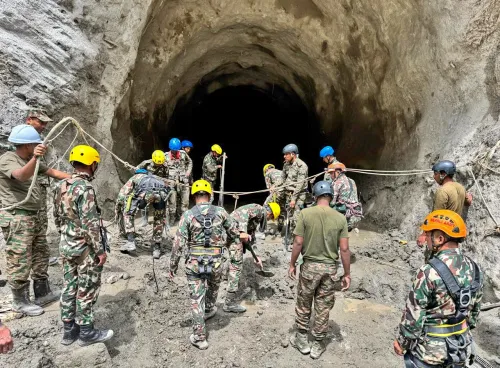
A joint team of the Nepal Army , Armed Police Force , and Chinese experts used five excavators, blasting, and tunnel drilling to reach the survivors.
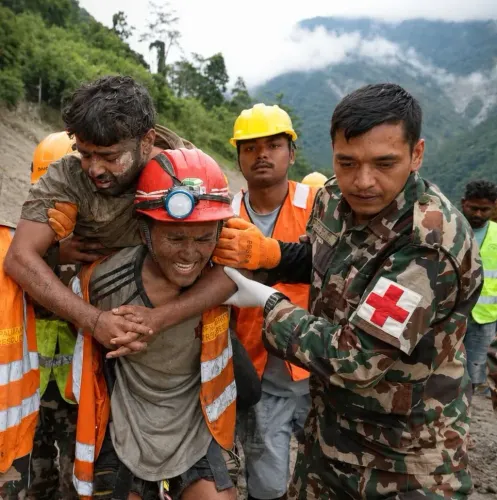
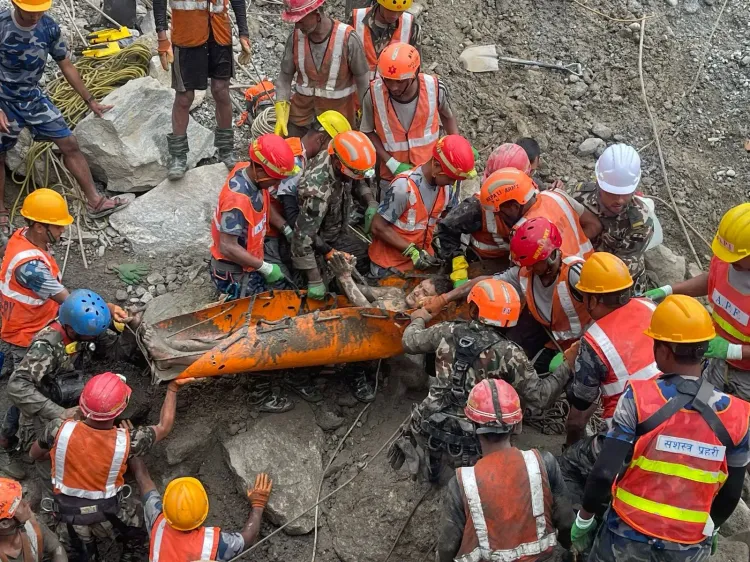
Rescuers on Friday, 4 September pulled out two workers alive from a tunnel at the Trishuli 3A Hydropower Project in Nepal, nine days after a catastrophic flash flood devastated the Trishuli River corridor — raising hopes that more survivors may still be trapped inside.
The Survivors
The Secretariat of the Minister for Energy, Water Resources and Irrigation confirmed the identities of the two rescued men: Kabir Maharjan, 45, a supervisor for the Hydropower Automation Project of Upper Trishuli 3A from Kathmandu, and Sanjaya Sah, 30, a foreman from Saptari district. Both were airlifted and transported to a hospital in Kathmandu for medical care.
Sah was rescued first on Friday, followed by Maharjan, according to information from the ongoing rescue operation. The breakthrough came after rescuers heard voices from within the tunnel and established communication with those believed to be trapped inside.
How the Rescue Unfolded
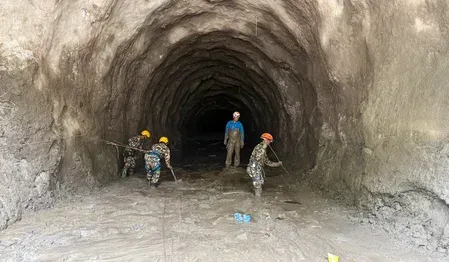
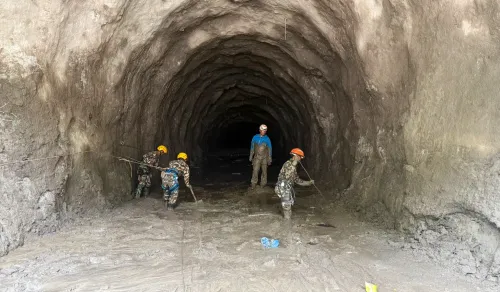
The Nepal Army and Armed Police Force intensified efforts after voices were detected inside the tunnel. Rescue teams reportedly called out to the trapped workers, urging them not to panic, and sustained operations eventually succeeded. A large rock obstructing access inside the tunnel was removed through controlled blasting, enabling rescuers to reach the survivors.
According to the minister's secretariat, a joint team comprising the Nepal Army, Armed Police Force, and Chinese experts has been deployed at the site, operating five excavators, compressors, and breakers. Tunnel drilling and holing work was intensified to clear access routes.
Scale of the Disaster
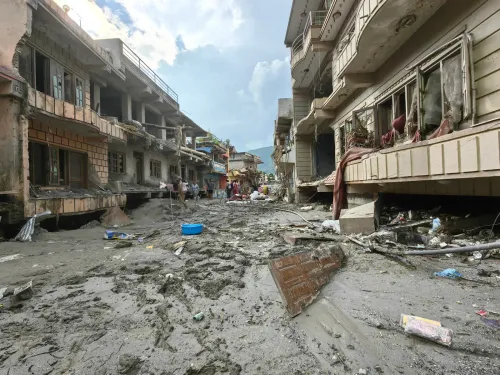
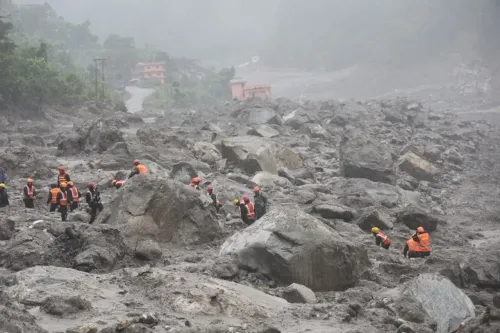
The flash flood struck on 26 August, tearing through the Trishuli and Bhotekoshi river valleys and causing extensive damage to dozens of hydropower projects and key road links. According to the latest situation report released by the National Disaster Risk Reduction and Management Authority (NDRRMA), the floods killed at least 1,252 people, while 5,053 remained missing as of Thursday evening.
Among the infrastructure damaged was the 60 MW Upper Trishuli 3A Project. The Independent Power Producers' Association, which represents private-sector power developers, said on Thursday that as many as 945 people working across 11 hydropower projects affected by the floods remained out of contact.
What Happens Next
Search and rescue operations are continuing in difficult conditions, with teams working to locate others who may be trapped in tunnels and other structures across the affected region. The rescue of Maharjan and Sah has renewed hope that further survivors could be found. The scale of the missing — nearly 5,053 people — means operations are expected to continue for days, if not weeks.
Point of View
053 still missing and 945 hydropower workers unaccounted for across 11 projects, Friday's rescue is a data point, not a turning point. Nepal's hydropower sector — built aggressively along its river corridors — has long been warned about flood exposure risk; the Trishuli-Bhotekoshi corridor is among the most geologically volatile in South Asia. This disaster raises urgent questions about site safety protocols, emergency communication systems inside tunnels, and whether the sector's rapid expansion has outpaced its disaster preparedness infrastructure.
NationPress
19 Oct 2026
Frequently Asked Questions
Who were the two workers rescued from the Trishuli 3A tunnel?
The two survivors are Kabir Maharjan, 45, a supervisor from Kathmandu working on the Hydropower Automation Project of Upper Trishuli 3A, and Sanjaya Sah, 30, a foreman from Saptari district. Both were airlifted to a hospital in Kathmandu after being rescued on 4 September.
How long were the workers trapped inside the tunnel?
The workers were trapped for nine days, following the flash flood that struck the Trishuli River valley on 26 August. Their rescue on 4 September marked one of the longest confirmed survival cases from the disaster.
What is the death toll from the Nepal floods?
According to the National Disaster Risk Reduction and Management Authority (NDRRMA), the floods killed at least 1,252 people, while 5,053 remained missing as of Thursday evening, 3 September.
How many hydropower workers are still missing?
The Independent Power Producers' Association said on Thursday that 945 people working across 11 flood-affected hydropower projects remained out of contact. Search and rescue operations are ongoing.
What methods were used to rescue the trapped workers?
A joint team of the Nepal Army, Armed Police Force, and Chinese experts used five excavators, compressors, breakers, and controlled blasting to remove a large rock obstruction inside the tunnel. Tunnel drilling and holing work was intensified after rescuers heard voices and established communication with the trapped men.