India-Myanmar ties gain strategic weight amid China's shadow
Synopsis
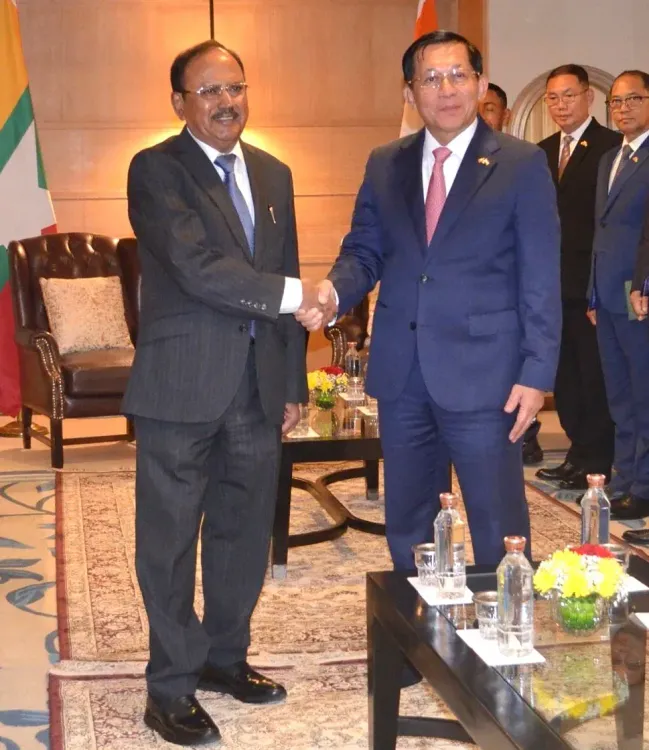
Myanmar's President visited India not just for diplomacy — and that distinction matters enormously. With a 1,643-km shared border, insurgent spillover, narcotics flows, and two stalled connectivity megaprojects worth over ₹1,000 crore, India's Myanmar policy is really a Northeast security policy. The visit also quietly reminded Beijing that financial dominance and strategic trust are not the same thing.
Key Takeaways
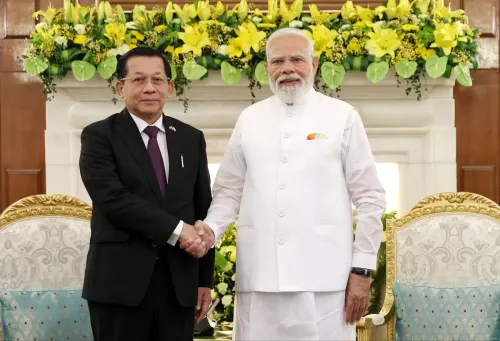
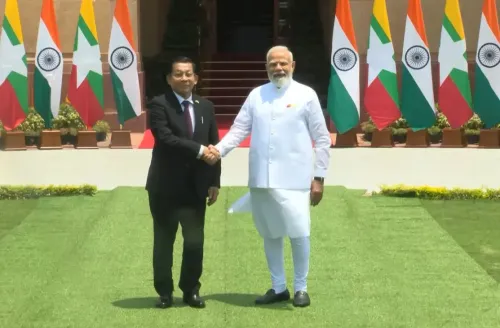
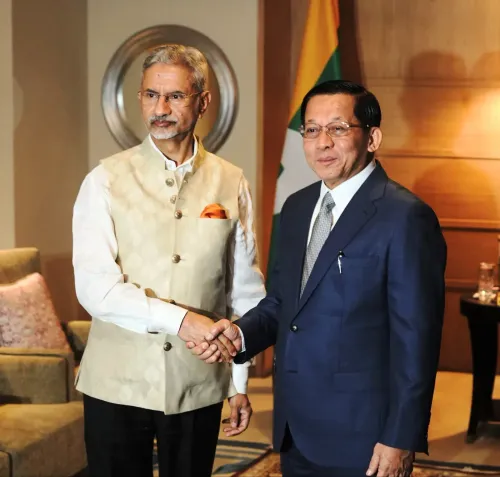
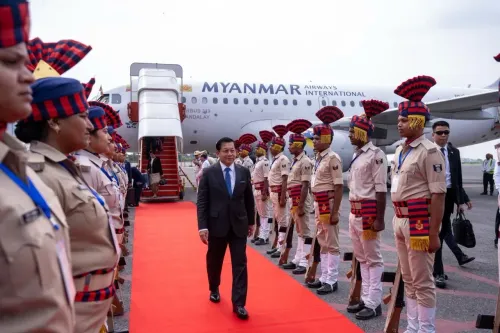
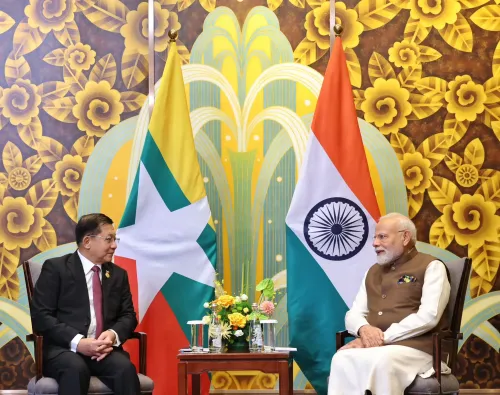
Myanmar's President U Min Aung Hlaing visited India, signalling Naypyidaw's search for a strategic balance beyond China .
India and Myanmar share a 1,643-km land border across Arunachal Pradesh , Nagaland , Manipur , and Mizoram .
Instability in Myanmar's border states has fuelled refugee inflows, arms trafficking, narcotics flows, and insurgent activity into Northeast India .
India has invested over ₹1,000 crore in the Kaladan Multi-Modal Transit Transport Project and the India-Myanmar-Thailand Trilateral Highway , both stalled by Myanmar's security crisis.
Unlike China, India has avoided ties with armed border actors, instead leveraging cultural and spiritual links — including President Aung Hlaing's visits to Bodh Gaya .
Analysts argue a stable, sovereign Myanmar is essential for India's Act East policy and Northeast development.
The recent visit of Myanmar's President U Min Aung Hlaing to India has drawn fresh attention to New Delhi's carefully calibrated engagement with its volatile eastern neighbour — a relationship that analysts say carries consequences far beyond diplomatic protocol. According to an analysis published in the Greek City Times, the visit reflected Myanmar's own search for a balancing strategy and served as a signal to China that proximity does not automatically translate into trust.
What Sets India Apart from China
India does not match China's scale of financial investment, infrastructure outreach, or coercive leverage in Myanmar. Yet, according to the report, that asymmetry may itself be an asset. 'India offers something China cannot easily provide: A relationship less burdened by domination,' the analysis noted.
Unlike Beijing, New Delhi has not cultivated deep ties with armed border actors inside Myanmar. Instead, India's engagement is anchored in cultural and spiritual linkages — underscored by President Aung Hlaing's visit to Bodh Gaya, a site he has visited during previous trips to India as well. The report observed that India's interest lies in a stable, sovereign Myanmar rather than in leveraging ethnic groups for indirect influence.
Why Myanmar Is Central to India's Internal Security
India and Myanmar share a 1,643-km land border across Arunachal Pradesh, Nagaland, Manipur, and Mizoram, with communities on both sides bound by kinship, clan, tribal, linguistic, and religious ties. This geography means that instability in Myanmar's border states — Chin, Sagaing, Kachin, and Rakhine — does not stay contained.
'It spills into Mizoram, Manipur, and Nagaland through refugee flows, arms trafficking, narcotics, insurgent movements, and social tensions,' the report stated. India is said to have carried out a few drone-based operations in Myanmar territory targeting Indian insurgent groups — a move the report interpreted as evidence of how critical it is for New Delhi to maintain working relations with the Myanmar military.
The violence in Manipur since 2023, refugee inflows into Mizoram, the presence of Indian insurgent outfits in Myanmar's borderlands, and the narcotics pipeline from the Golden Triangle collectively illustrate that Myanmar's instability is, in effect, India's security burden. As the report put it, 'A fractured Myanmar weakens India's Act East policy. A stable Myanmar strengthens India's Northeast.'
Strategic Connectivity at Stake
India has already committed over ₹1,000 crore to two flagship connectivity projects: the Kaladan Multi-Modal Transit Transport Project and the India-Myanmar-Thailand Trilateral Highway. Both have been severely hampered by Myanmar's ongoing security crisis.
The report described these projects as 'instruments of strategic transformation' rather than purely economic ventures. Once completed and secured, they could reduce the Northeast's landlocked disadvantage, expand trade corridors, offer alternatives to the Siliguri Corridor, and deepen India's links with Southeast Asia.
The Broader Strategic Calculus
The Greek City Times analysis concluded that Myanmar is not an optional diplomatic theatre for India — it is central to New Delhi's internal security architecture and its Act East ambitions. 'A peaceful Myanmar is essential for a peaceful Northeast. A sovereign Myanmar is in India's interest. And a Myanmar with options beyond China is good not only for New Delhi but also for Naypyidaw and the world,' the report stated.
As Myanmar's civil conflict deepens and China's influence remains contested within the country, India's patient, non-coercive engagement may prove to be a durable strategic differentiator in the years ahead.
Point of View
But the more accurate frame is internal security management. The violence in Manipur since 2023, the narcotics corridor from the Golden Triangle, and the presence of Indian insurgent groups in Myanmar's borderlands make this a live threat, not a theoretical one. New Delhi's restraint — avoiding armed proxy relationships that China has not always avoided — is a genuine strategic asset, but it comes with a cost: India has less leverage over outcomes on the ground. The two stalled connectivity projects, representing over ₹1,000 crore in committed capital, are the clearest measure of what instability actually costs India. Whether the presidential visit translates into any meaningful security cooperation or project revival will be the real test of this engagement.
NationPress
20 Jun 2026
Frequently Asked Questions
Why did Myanmar's President U Min Aung Hlaing visit India?
The visit reflected Myanmar's search for a strategic balance, offering Naypyidaw an alternative relationship to its heavy dependence on China. It also gave India an opportunity to engage with a neighbour whose instability directly affects Northeast India's security.
How does Myanmar's instability affect India's Northeast?
Unrest in Myanmar's border states — Chin, Sagaing, Kachin, and Rakhine — spills into Mizoram, Manipur, and Nagaland through refugee flows, arms trafficking, narcotics, and insurgent movements. The violence in Manipur since 2023 and narcotics from the Golden Triangle are direct consequences of this cross-border instability.
What connectivity projects has India invested in Myanmar?
India has committed over ₹1,000 crore to the Kaladan Multi-Modal Transit Transport Project and the India-Myanmar-Thailand Trilateral Highway. Both projects have been severely disrupted by Myanmar's ongoing security crisis but are considered vital for reducing the Northeast's landlocked disadvantage and linking India with Southeast Asia.
How does India's approach to Myanmar differ from China's?
Unlike China, India has not cultivated ties with armed border actors in Myanmar and does not offer the same scale of financial or infrastructure leverage. Instead, India relies on cultural, spiritual, and historical linkages — including President Aung Hlaing's visits to Bodh Gaya — positioning itself as a less domineering partner.
What is the significance of Myanmar for India's Act East policy?
Myanmar is the geographic gateway for India's Act East policy, providing land connectivity to Southeast Asia. A stable Myanmar enables the completion of key transit corridors and reduces the Northeast's dependence on the narrow Siliguri Corridor. A fractured Myanmar, by contrast, stalls both connectivity and regional trade ambitions.