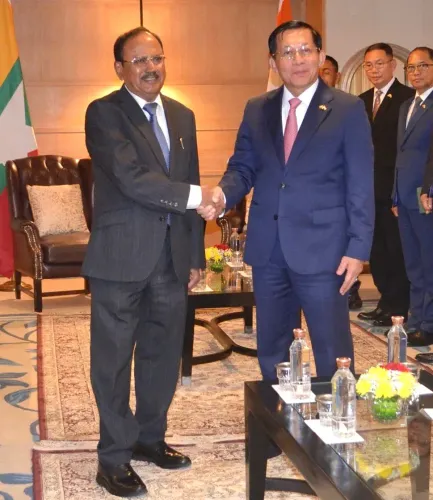
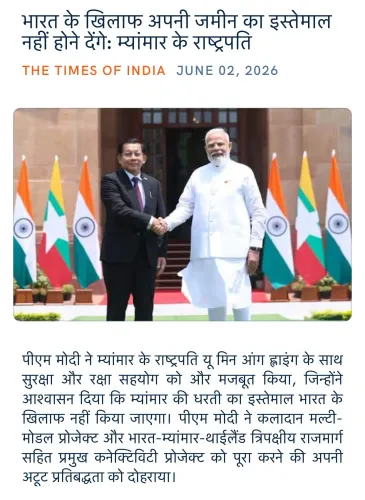
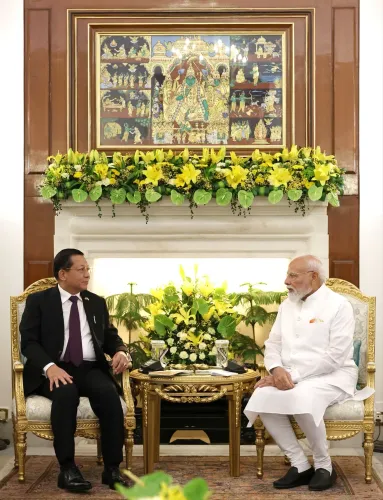
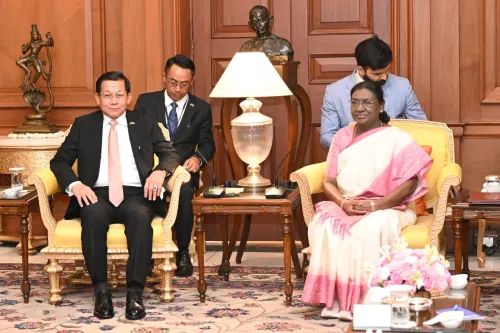
Modi-Myanmar talks: Indian insurgent groups, border security top agenda
Synopsis
PM Modi put India's most sensitive cross-border security concern squarely on the table — Indian insurgent groups using Myanmar as a base. With a 1,643-km shared frontier and a civil war still raging inside Myanmar, New Delhi's ability to hold Naypyidaw to its repeated assurances is the real test of this diplomatic engagement.
Key Takeaways
PM Narendra Modi raised the issue of Indian insurgent groups operating in Myanmar during bilateral talks on 1 June in New Delhi .
Myanmar President U Min Aung Hlaing reaffirmed his country's commitment to preventing these groups from threatening India's security , according to Foreign Secretary Vikram Misri .
India and Myanmar share a 1,643-kilometre border, with insurgent activity concentrated near India's northeastern states .
Misri highlighted Myanmar's ongoing efforts to bring ethnic armed organisations onto a single platform for a national peace process.
India stressed that stability in Myanmar is critical both for northeast India's security and for its connectivity to Southeast Asia , as well as for ASEAN cohesion.
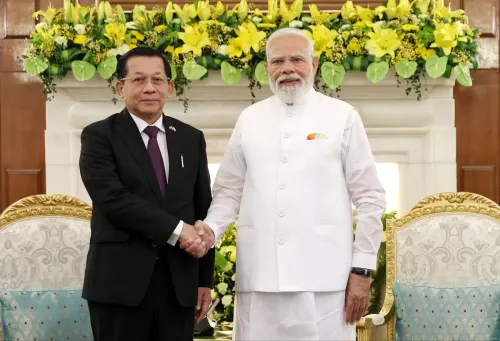
Prime Minister Narendra Modi on Monday, 1 June raised the issue of Indian insurgent groups operating inside Myanmar during bilateral talks with visiting Myanmar President U Min Aung Hlaing in New Delhi. The discussions centred on cross-border security threats, Myanmar's internal peace process, and India's broader connectivity interests in Southeast Asia.
What Modi Raised With the Myanmar President
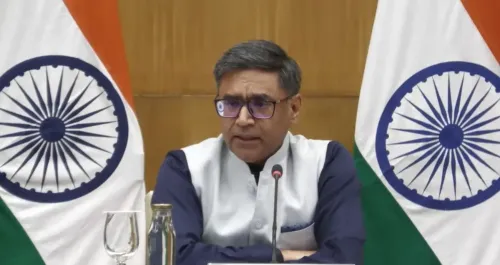
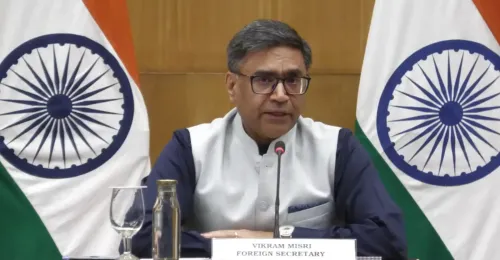
Foreign Secretary Vikram Misri, briefing reporters after the summit, confirmed that the Prime Minister directly flagged the activities of Indian insurgent groups sheltering near the 1,643-kilometre shared border. President U Min Aung Hlaing reportedly reaffirmed Myanmar's commitment to addressing these concerns.
'There is the very important question of the activities of Indian insurgent groups in Myanmar close to our borders. And this is something, again, that the Prime Minister raised with the President, and the President once again reiterated his assurance that Myanmar was sensitive to these concerns and again would do everything necessary to ensure that there was action against these, and these did not become a cause of threat against the security of India,' Misri stated.
Myanmar's Internal Security and Peace Efforts
Misri also addressed the ongoing hostilities between Myanmar's military and various ethnic armed organisations, noting that Naypyidaw is actively working to bring these groups onto a single platform to advance a national peace process. He described the effort as an attempt to build 'broad national consensus' around potential governance reforms.
'This is essentially an effort to see how the current structure of governance or the system of government that Myanmar has, what kinds of changes might be needed in that so that something is crafted around which there is broad national consensus and then move forward on that basis,' he added.
India's Strategic Stakes in Myanmar's Stability
Beyond immediate security concerns, Misri underscored that stability in Myanmar is integral to India's connectivity ambitions in Southeast Asia. A volatile Myanmar, he noted, also threatens the cohesion of ASEAN, of which Myanmar is a significant member.
'It is not just for the security of the northeast and the safety and security of people living along the 1,643-kilometre long border that we have with them but also for our interests, such as connectivity to Southeast Asia,' he said. 'Security and stability in Myanmar are also important for the coherence of ASEAN as a whole.'
Broader Context
The talks come amid a prolonged civil conflict in Myanmar following the February 2021 military takeover, which has displaced hundreds of thousands and emboldened multiple armed factions along India's northeastern frontier. India has maintained working ties with the Myanmar military government while also engaging ethnic armed groups in border states — a delicate balancing act that this summit appears designed to reinforce. Notably, the insurgent groups operating from Myanmar have historically posed a direct threat to stability in states such as Manipur, Nagaland, and Mizoram.
New Delhi's dual emphasis — pressing for action on insurgents while supporting Myanmar's internal dialogue — signals that India views security and diplomacy as inseparable in its eastern neighbourhood. How effectively Naypyidaw follows through on its assurances will be closely watched in the months ahead.
Point of View
With uneven follow-through. The more telling signal from this meeting is India's explicit linkage of Myanmar's internal peace process to its own connectivity agenda: New Delhi needs a stable Myanmar to advance its Act East Policy, which gives Naypyidaw quiet leverage. The civil conflict since 2021 has complicated that calculus considerably, as the military government's writ does not extend to the border zones where insurgent camps are most active. Whether this round of assurances translates into operational action — or remains diplomatic boilerplate — will be visible in the security situation along Manipur and Nagaland within the next few months.
NationPress
14 Sept 2026
Frequently Asked Questions
What did PM Modi discuss with Myanmar President U Min Aung Hlaing?
PM Modi raised the issue of Indian insurgent groups operating inside Myanmar near the shared border during bilateral talks in New Delhi on 1 June. The two leaders also discussed Myanmar's internal peace process and India's connectivity interests in Southeast Asia.
What assurance did Myanmar give India on insurgent groups?
Myanmar President U Min Aung Hlaing reaffirmed that Myanmar is sensitive to India's security concerns and would take all necessary steps to ensure that Indian insurgent groups do not pose a threat to India, according to Foreign Secretary Vikram Misri.
Why does Myanmar's stability matter to India?
India shares a 1,643-kilometre border with Myanmar, and instability there directly affects security in northeastern states like Manipur, Nagaland, and Mizoram. Beyond security, India also depends on a stable Myanmar for its connectivity and trade routes to Southeast Asia.
What is the status of Myanmar's internal peace process?
According to Foreign Secretary Misri, Myanmar authorities are working to bring ethnic armed organisations onto a single platform to advance a national peace process, with potential governance reforms aimed at building broad national consensus.
How does Myanmar's situation affect ASEAN?
Foreign Secretary Misri noted that security and stability in Myanmar are important not just for India but also for the overall cohesion of ASEAN, of which Myanmar is a significant member. Prolonged internal conflict risks fragmenting the regional bloc's unity.