Modi raises Aung San Suu Kyi detention with Myanmar President at New Delhi talks
Synopsis
PM Modi directly raised Aung San Suu Kyi's detention with Myanmar's military president at New Delhi's Hyderabad House — a rare on-record confirmation by India's Foreign Secretary. The exchange, framed as part of Myanmar's peace process rather than a formal demand, reveals India's tight-rope walk: strategic engagement with the junta while keeping democratic concerns on the table.
Key Takeaways
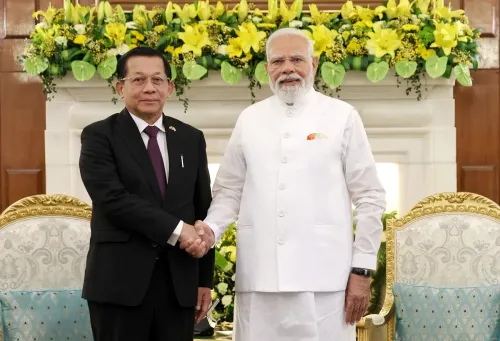
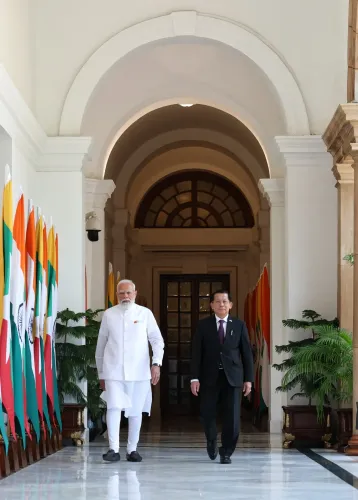
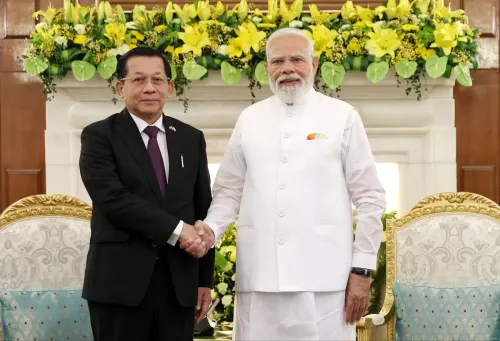
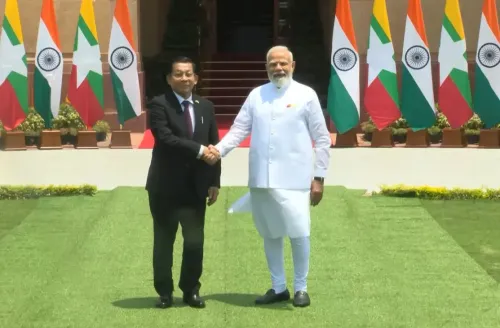
PM Narendra Modi raised Aung San Suu Kyi's detention during talks with Myanmar President U Min Aung Hlaing at Hyderabad House, New Delhi on 1 June .
Foreign Secretary Vikram Misri described it as a 'free-wheeling discussion' in the context of Myanmar's ongoing peace process.
India's position: sustained engagement — not isolation — is the only path to democratic change, according to Misri.
Both leaders agreed to deepen ties in trade, investment, connectivity, security , and border management .
MEA spokesperson Randhir Jaiswal confirmed on X that India remains Myanmar's 'trusted neighbour' and reaffirmed support for peace and dialogue.
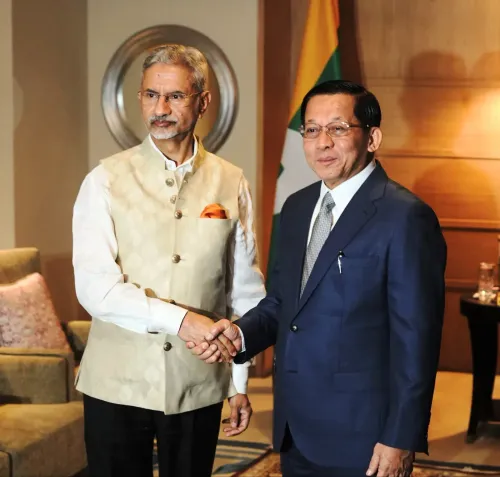
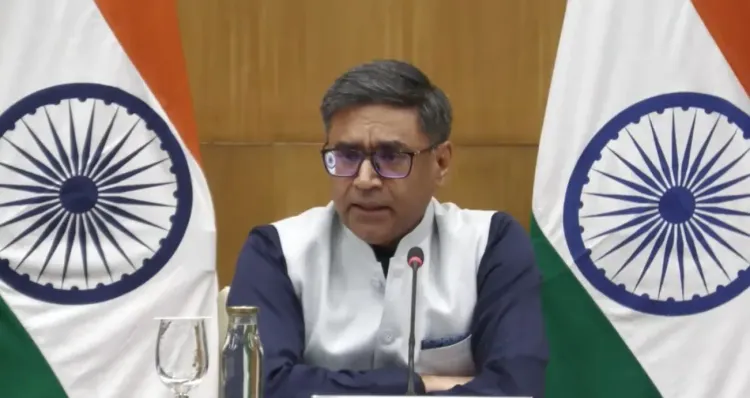
Prime Minister Narendra Modi raised the issue of detained Myanmar leader Aung San Suu Kyi during bilateral talks with Myanmar President U Min Aung Hlaing at Hyderabad House in New Delhi on Monday, 1 June, Foreign Secretary Vikram Misri confirmed at a special press briefing. The exchange came in the context of Myanmar's ongoing peace process, with Modi underlining the need for inclusion and democratic transition.
What Modi Raised and How
Foreign Secretary Misri described the exchange as a 'free-wheeling discussion' rather than a formal demand, framing it within India's broader push for an enduring peace in Myanmar. Modi, according to Misri, stressed the importance of bringing all ethnic groups and stakeholders to a common platform within a united Myanmar.
'The Prime Minister did raise this matter with the President and this was a discussion that was largely in the context of the peace process that is, or has been, underway in Myanmar for quite some time,' Misri said. 'As Myanmar finds its way back towards democracy, the need for an enduring peace in the country, the need for inclusion, the need to have all stakeholders at the table — that is where issues related to democracy, etc., were also raised,' he added.
India's Engagement Doctrine
Misri was categorical that India's outreach to Myanmar's military-led government is not an endorsement of its internal political arrangements. He argued that disengagement, historically, has produced neither better outcomes nor democratic change — and that a vacuum left by India would be filled by actors with no stake in democracy.
'History has shown that disengagement doesn't give us any results that are better than engagement and it certainly doesn't produce democratic change,' Misri said. 'Disengagement only produces a vacuum that others go on to fill — to our detriment — and those others have no interest in democracy,' he added.
This framing reflects India's longstanding Neighbourhood First and Act East policy calculus, where strategic geography and border security interests run alongside democratic values — a tension that critics have repeatedly flagged since the February 2021 military coup in Myanmar.
Bilateral Outcomes of the Summit
Beyond the Suu Kyi discussion, Modi and President Hlaing agreed to deepen cooperation across trade, investment, connectivity, development partnership, capacity building, security, and border management. The Ministry of External Affairs (MEA) spokesperson Randhir Jaiswal posted on X that both sides would advance the India-Myanmar partnership for 'peace, progress and prosperity.'
Jaiswal also noted that Modi conveyed India's identity as Myanmar's 'trusted neighbour, reliable partner and steadfast first responder in times of crisis,' reaffirming India's readiness to share federal governance and economic growth experiences in support of Myanmar's peace and dialogue process.
Context and What It Signals
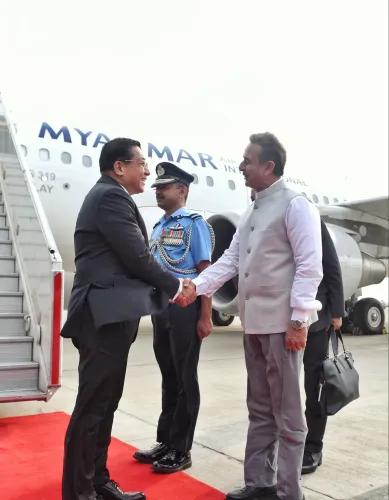
The visit by President Hlaing — the commander who led the coup against Suu Kyi's elected government — to New Delhi is itself diplomatically significant. India has walked a careful line, maintaining engagement with the junta while periodically flagging democratic concerns. Monday's summit suggests that calculus remains unchanged: strategic engagement with calibrated messaging on democracy, rather than isolation.
Notably, the ASEAN bloc and Western governments have largely shunned Hlaing since the coup. India's decision to host him signals its preference for dialogue over sanctions — a position that aligns with its MAHASAGAR connectivity policy but draws scrutiny from human rights observers. How Myanmar's peace process evolves in the coming months will determine whether India's engagement yields tangible democratic dividends.
Point of View
And Misri's briefing was careful not to resolve it. The 'free-wheeling discussion' framing does real work here: it signals concern without creating a formal diplomatic record that could strain ties. The deeper issue is that India's engagement doctrine, however strategically sound on paper, has produced no measurable democratic progress in Myanmar since the 2021 coup. Raising Suu Kyi's name in a bilateral meeting is not nothing — but without follow-through or multilateral coordination, it risks becoming a ritual disclaimer that lets both sides claim what they need to claim.
NationPress
22 Oct 2026
Frequently Asked Questions
Did PM Modi formally demand Aung San Suu Kyi's release from Myanmar's president?
No formal demand was made. Foreign Secretary Vikram Misri described it as a 'free-wheeling discussion' in the context of Myanmar's peace process, where Modi raised the need for inclusion and democratic transition, and issues related to Suu Kyi's situation came up in that frame.
Why did India host Myanmar President U Min Aung Hlaing despite the 2021 coup?
India's position, articulated by Foreign Secretary Misri, is that disengagement produces a strategic vacuum that rivals with no interest in democracy would fill. New Delhi maintains that sustained dialogue, not isolation, is the most effective path toward democratic change in Myanmar.
What bilateral agreements came out of the Modi-Hlaing summit?
Both sides agreed to advance cooperation in trade, investment, connectivity, development partnership, capacity building, security, and border management. India also reaffirmed its readiness to share federal governance and economic growth experiences in support of Myanmar's peace process.
What is India's official policy on Myanmar under the military government?
India follows its Neighbourhood First and Act East policies, treating sustained engagement as an imperative for a neighbouring country. Misri stated that India consistently raises concerns about democracy, the peace process, and inclusion while engaging — rather than withdrawing — from dialogue with Naypyidaw.
Who confirmed that Modi raised the Suu Kyi issue, and where?
Foreign Secretary Vikram Misri confirmed it at a special press briefing in New Delhi on 1 June, following President U Min Aung Hlaing's visit to Hyderabad House for bilateral talks with PM Modi.