Jaishankar Calls on Myanmar's President U Min Aung Hlaing in Delhi
Synopsis
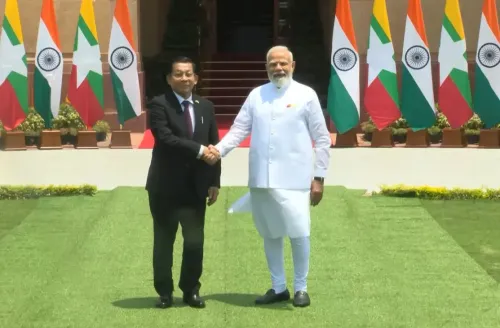
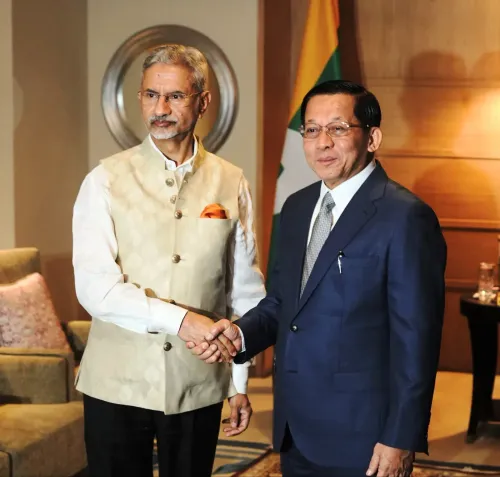
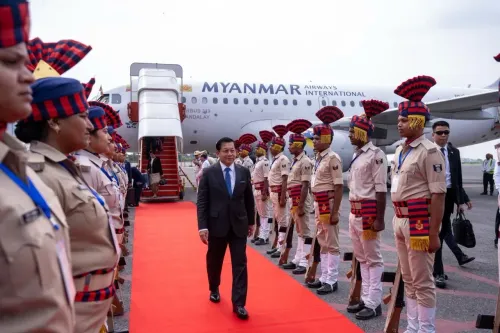
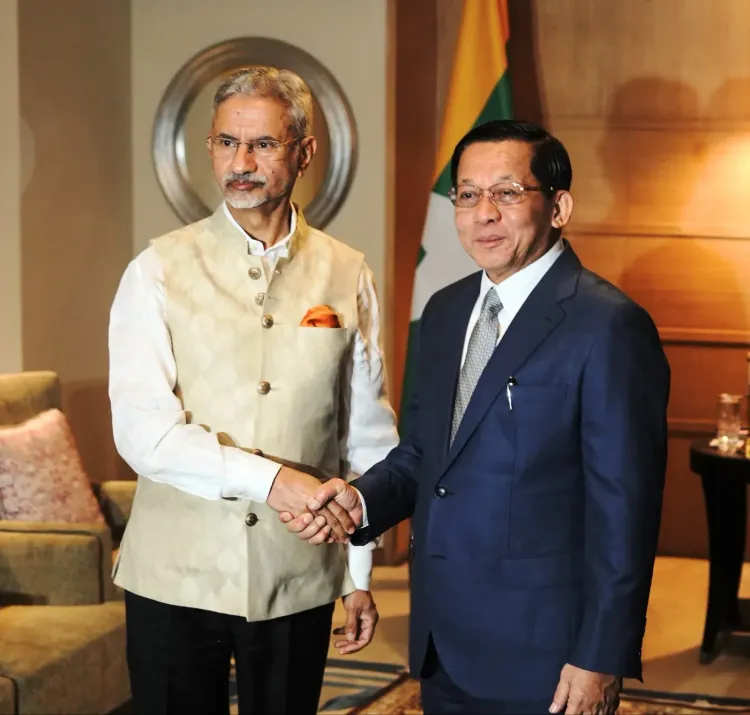
EAM Dr. S. Jaishankar called on Myanmar's President U Min Aung Hlaing in New Delhi on 30 May 2026, signalling deepened bilateral ties under the Neighbourhood First, Act East and Vision Mahasagar frameworks ahead of a Modi-U Min Aung Hlaing summit meeting.
Key Takeaways
Jaishankar met Myanmar President U Min Aung Hlaing in New Delhi on 30 May 2026 .
The visit is being positioned under three policy frameworks: Neighbourhood First , Act East and Vision Mahasagar .
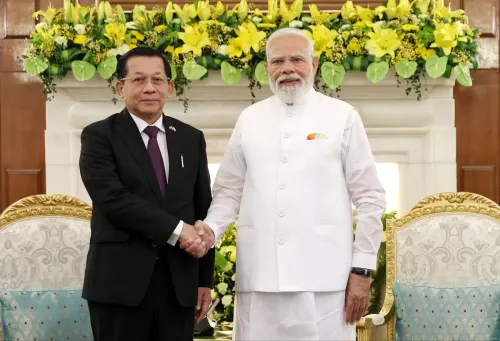
U Min Aung Hlaing is scheduled to meet Prime Minister Modi to advance the bilateral partnership.
Myanmar shares a 1,643-km land border with India and is a key node in India's connectivity push to Southeast Asia.
The Kaladan Multi-Modal Transit Transport Project , linking Mizoram to Sittwe port , remains a flagship project in the relationship.
New Delhi has sustained high-level engagement with Naypyidaw since the 2021 military takeover, prioritising border security and connectivity.
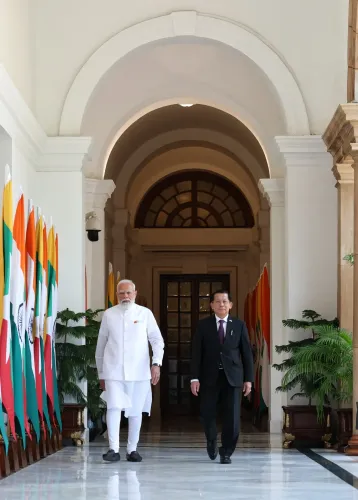
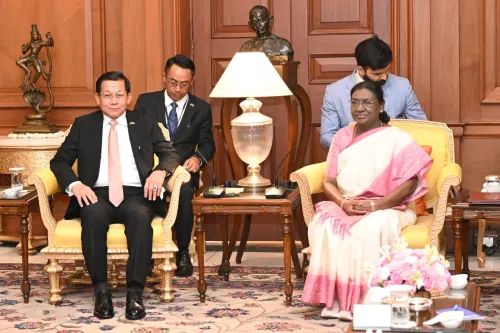
Union External Affairs Minister Dr. S. Jaishankar met Myanmar's President U Min Aung Hlaing in New Delhi on Saturday, 30 May 2026, ahead of the Myanmar leader's scheduled meeting with Prime Minister Narendra Modi. The call was described by Jaishankar as an occasion to appreciate U Min Aung Hlaing's positive sentiment toward deepening the longstanding bilateral relationship between the two neighbours.
Context
Posting on X, Dr. Jaishankar wrote: 'Pleased to call on President U Min Aung Hlaing of Myanmar in New Delhi today. Appreciate his positive sentiment towards deepening our longstanding bilateral cooperation. Look forward to his meeting with PM @narendramodi to advance our partnership for peace, progress and prosperity.' The post carried the hashtags #NeighbourhoodFirst, #ActEast and #VisionMahasagar, signalling that the visit is being framed within three of India's principal foreign-policy frameworks simultaneously.
U Min Aung Hlaing is the Chairman of Myanmar's State Administration Council and has served as the country's de facto head of government since the February 2021 military takeover. His presence in New Delhi marks a high-level engagement between the two capitals at a time when Myanmar continues to navigate a complex internal political and security situation.
Policy Backdrop
Neighbourhood First was articulated as a core foreign-policy priority by the Modi government immediately after the 2014 general election, placing India's immediate neighbours at the centre of its diplomatic calculus. Act East, upgraded from the earlier Look East Policy at the 2014 India-ASEAN Summit held in Myanmar, deepens India's economic and strategic engagement with Southeast Asia. Vision Mahasagar extends this logic into the broader Indian Ocean region, embedding the India-Myanmar relationship within a wider maritime and connectivity architecture.
Myanmar shares a 1,643-km land border with India and is a member of ASEAN. Connectivity projects such as the Kaladan Multi-Modal Transit Transport Project — formally agreed in 2008 and linking Mizoram with Myanmar's Sittwe port — remain central to India's strategy of opening overland and waterway corridors to Southeast Asia. New Delhi has maintained high-level contacts with Naypyidaw since 2021, prioritising border security, counter-insurgency coordination and the continuity of infrastructure projects.
Stakeholders and Impact
India's northeastern border states — particularly Mizoram, Manipur, Nagaland and Arunachal Pradesh — have the most direct stake in the stability of the bilateral relationship, given shared ethnic communities, cross-border trade routes and ongoing security sensitivities. ASEAN partners will also watch the outcome closely, as India's engagement with Myanmar's military government sits in tension with ASEAN's own five-point consensus on the Myanmar crisis. Defence and intelligence cooperation between the two countries on insurgent groups operating along the porous border is another layer of the relationship that high-level visits typically reinforce.
What's Next
The central event of the visit is the scheduled meeting between President U Min Aung Hlaing and Prime Minister Modi. Observers will look for concrete outcomes on border management, the pace of ongoing connectivity projects and any joint statement on regional stability. The framing of the visit under three distinct policy banners — Neighbourhood First, Act East and Vision Mahasagar — suggests New Delhi intends to position the engagement as part of a coherent, multi-dimensional strategy rather than a narrow bilateral transaction. The outcomes of the Modi-U Min Aung Hlaing talks are likely to set the tone for India-Myanmar cooperation through the near term.
Point of View
If it produces tangible deliverables on the Kaladan project or border management, would reinforce India's argument that sustained dialogue yields more than isolation. It also positions India as an alternative interlocutor to China in Myanmar, a subtext that runs through every high-level India-Myanmar engagement since 2021.
NationPress
20 Sept 2026
Frequently Asked Questions
Why did Jaishankar meet Myanmar's President U Min Aung Hlaing in New Delhi?
Dr. S. Jaishankar met U Min Aung Hlaing on 30 May 2026 to strengthen bilateral cooperation ahead of the Myanmar leader's meeting with Prime Minister Modi, with the visit framed under India's Neighbourhood First, Act East and Vision Mahasagar policies.
Who is U Min Aung Hlaing?
U Min Aung Hlaing is the Chairman of Myanmar's State Administration Council and the de facto head of government since the February 2021 military takeover in Myanmar.
What is India's Neighbourhood First policy?
Neighbourhood First is a foreign-policy doctrine articulated by the Modi government after 2014 that places India's immediate neighbours at the top of its diplomatic and development priorities.
What is the Kaladan Multi-Modal Transit Transport Project?
The Kaladan project, formally agreed in 2008, is a connectivity initiative linking India's Mizoram state with Myanmar's Sittwe port via river and road, designed to open an overland and waterway corridor to Southeast Asia.
What is India's Act East Policy and how does Myanmar fit in?
Act East, upgraded from the Look East Policy at the 2014 India-ASEAN Summit held in Myanmar, is India's strategy to deepen economic and strategic ties with Southeast Asia; Myanmar, sharing a long land border with India, is a critical land bridge under this framework.