President Murmu meets Myanmar's U Min Aung Hlaing, invokes Buddhist ties and India's gateway role
Synopsis
Myanmar's President U Min Aung Hlaing's first-ever visit to India has drawn in the President, Prime Minister, NSA, and External Affairs Minister — a rare full-spectrum diplomatic mobilisation. India is threading a careful needle: backing peace in a conflict-torn neighbour while keeping its gateway to Southeast Asia firmly open.
Key Takeaways
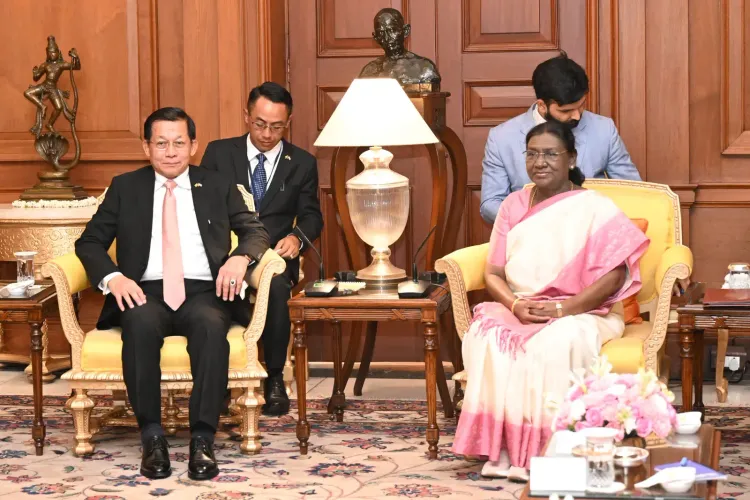
President Droupadi Murmu met Myanmar's U Min Aung Hlaing at Rashtrapati Bhavan on 1 June 2025 , reaffirming India's support for Myanmar's peace process.
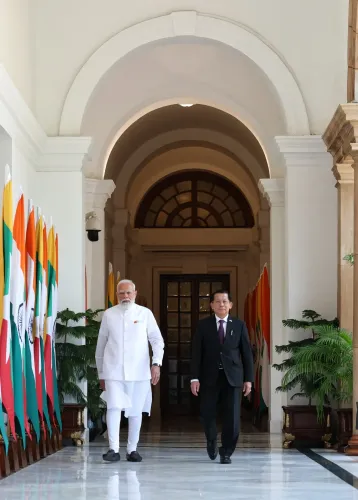
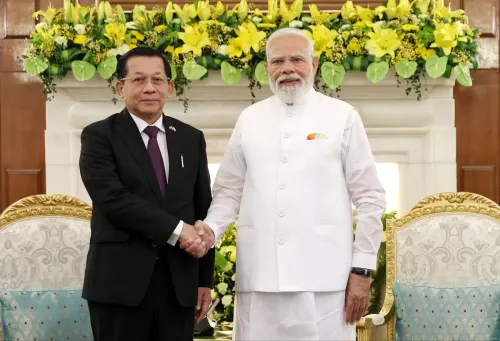
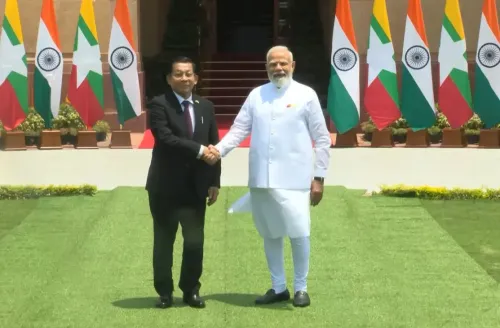
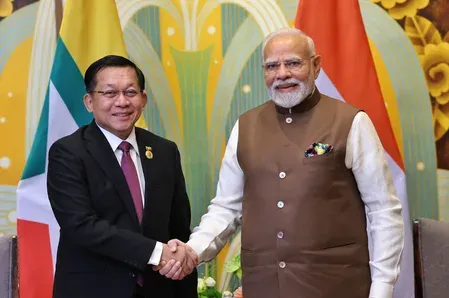
PM Narendra Modi held wide-ranging talks with Hlaing at Hyderabad House , covering trade, investment, connectivity, security, and border management.
India described Myanmar as its gateway to Southeast Asia and a convergence point for its Neighbourhood First , Act East , and MAHASAGAR policies.
NSA Ajit Doval and EAM S.
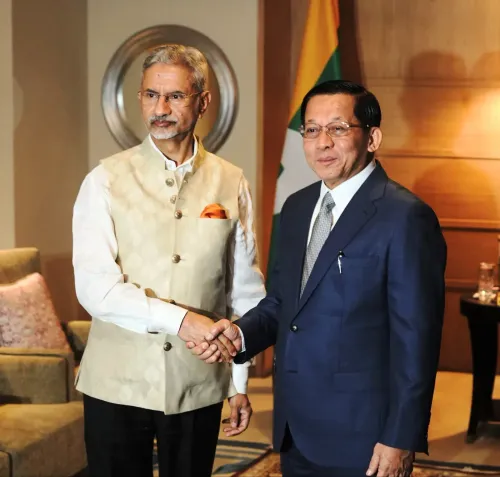
Jaishankar also separately met Hlaing during his five-day visit.
Hlaing began the visit with prayers at the Mahabodhi Temple in Bodh Gaya and is scheduled to travel to Mumbai for business interactions.
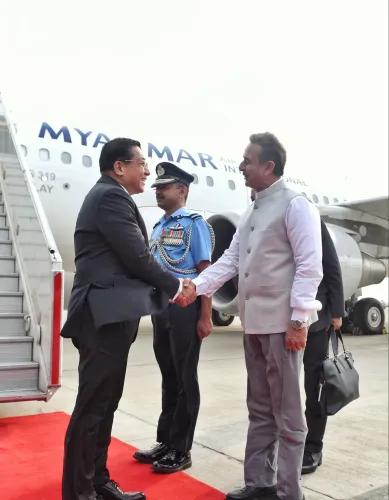
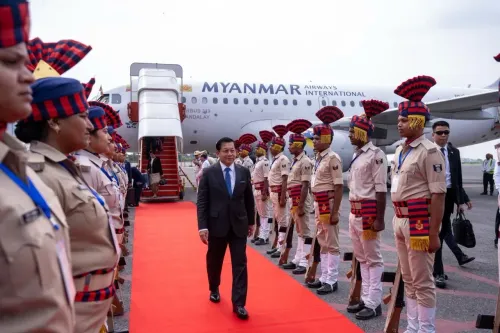
This is Hlaing's first visit to India since assuming office, accompanied by a high-level delegation of ministers, officials, and business leaders.
President Droupadi Murmu on Monday, 1 June held a bilateral meeting with Myanmar's President U Min Aung Hlaing at Rashtrapati Bhavan in New Delhi, reaffirming India's unwavering support for Myanmar's peace and reconciliation process. The talks underscored the shared Buddhist heritage and centuries-old people-to-people bonds that define one of South Asia's most strategically significant bilateral relationships.
Key Developments from Rashtrapati Bhavan
During the meeting, President Murmu described Myanmar as India's gateway to Southeast Asia — a framing that carries both geographic and strategic weight. 'The shared Buddhist heritage and centuries-old people-to-people bonds lend a unique warmth to India–Myanmar relations,' the President's Secretariat said in an official post on X, paraphrasing Murmu's remarks. She also conveyed India's steadfast support for Myanmar's pursuit of peace and reconciliation, according to the same statement.
PM Modi's Wide-Ranging Talks at Hyderabad House
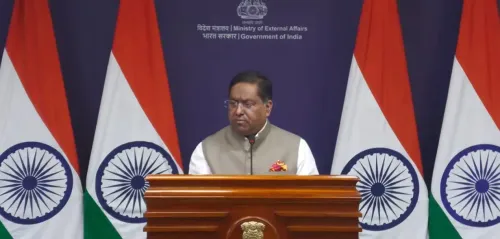
Earlier in the day, Prime Minister Narendra Modi met President Hlaing at Hyderabad House, where both sides agreed to deepen the India–Myanmar partnership across trade, investment, connectivity, development partnership, capacity building, security, and border management. Ministry of External Affairs (MEA) spokesperson Randhir Jaiswal said in an X post that the discussions were 'wide-ranging' and anchored in the 'enduring historic and people-to-people relationship.' Modi conveyed that India remains Myanmar's 'trusted neighbour, a reliable partner and steadfast first responder in times of crisis,' in line with India's Neighbourhood First, Act East, and MAHASAGAR policy frameworks. The Prime Minister also reaffirmed India's readiness to share its federal governance and economic growth experiences to support peace and dialogue in Myanmar.
A First Visit Packed with High-Level Engagements
This is President U Min Aung Hlaing's first visit to India since assuming office, and it has been marked by a dense diplomatic schedule. On Sunday, National Security Advisor Ajit Doval called on him in New Delhi. On 30 May, External Affairs Minister S. Jaishankar had also met Hlaing and expressed appreciation for his positive sentiment towards deeper bilateral cooperation. The visit began on Saturday when Hlaing offered prayers at the Mahabodhi Temple in Bodh Gaya, Bihar — a symbolically significant gesture given the Buddhist heritage both nations share. He is also scheduled to travel to Mumbai for business interactions and site visits, accompanied by a high-level delegation of cabinet ministers, senior officials, and business leaders.
Strategic Significance: Where Three Policies Converge
The MEA has described Myanmar as lying 'at the confluence of India's Neighbourhood First, Act East and MAHASAGAR policies' — a rare instance where three distinct foreign policy doctrines overlap in a single bilateral relationship. This visit is expected to further deepen the multi-faceted ties between the two countries, according to the MEA. Notably, the engagement comes at a time when Myanmar remains embroiled in internal conflict, making India's stated support for peace and dialogue a diplomatically delicate but deliberate signal.
What Comes Next
With business engagements lined up in Mumbai and a high-powered delegation in tow, the visit is expected to yield concrete outcomes on trade and connectivity corridors — particularly those linking India's northeastern states to Southeast Asia. The diplomatic groundwork laid across multiple high-level meetings suggests both sides are building toward a more structured bilateral framework in the months ahead.
Point of View
Prime Minister, NSA, and EAM all meeting Hlaing within days — signals that New Delhi views Myanmar as too strategically important to keep at arm's length, regardless of the country's internal turmoil. The Buddhist heritage framing is deliberate soft power, but the harder calculus is about northeastern connectivity and preventing Chinese influence from filling any vacuum. What remains unaddressed publicly is how India squares its 'support for peace and dialogue' with engagement with a government whose legitimacy remains contested internationally. That tension will define the durability of any agreements signed this week.
NationPress
21 Sept 2026
Frequently Asked Questions
Why did Myanmar's President U Min Aung Hlaing visit India?
U Min Aung Hlaing visited India on a five-day official trip — his first since assuming office — to deepen bilateral ties across trade, investment, connectivity, security, and border management. The visit included meetings with President Droupadi Murmu, Prime Minister Narendra Modi, NSA Ajit Doval, and EAM S. Jaishankar.
What did President Murmu say about India–Myanmar relations?
President Murmu highlighted the shared Buddhist heritage and centuries-old people-to-people bonds between the two countries, describing Myanmar as India's gateway to Southeast Asia. She also conveyed India's steadfast support for Myanmar's pursuit of peace and reconciliation.
What did PM Modi and Myanmar's President discuss?
PM Modi and U Min Aung Hlaing held wide-ranging talks at Hyderabad House, agreeing to advance the India–Myanmar partnership in trade, investment, connectivity, development partnership, capacity building, security, and border management. Modi also offered to share India's federal governance and economic growth experiences to support peace in Myanmar.
What is the significance of the Mahabodhi Temple visit?
Hlaing began his India visit by offering prayers at the Mahabodhi Temple in Bodh Gaya, Bihar — one of Buddhism's holiest sites. The gesture underscored the shared Buddhist heritage that both India and Myanmar have cited as a foundation of their bilateral relationship.
Which Indian foreign policy frameworks does Myanmar fall under?
According to the MEA, Myanmar sits at the confluence of three of India's key foreign policy doctrines: Neighbourhood First, Act East, and MAHASAGAR. This makes it one of the few bilateral relationships where all three frameworks simultaneously apply, reflecting Myanmar's outsized strategic importance to India.