Myanmar vital to India's Neighbourhood First, Act East, Indo-Pacific: PM Modi
Synopsis
Myanmar President U Min Aung Hlaing chose India as his first foreign destination after assuming office — and the symbolism was deliberate. From Bodh Gaya to Rashtrapati Bhavan, the visit reaffirmed New Delhi's strategic calculus: Myanmar is not just a neighbour, it is the hinge between India's Neighbourhood First doctrine and its Indo-Pacific ambitions, with rare earths now added to the equation.
Key Takeaways
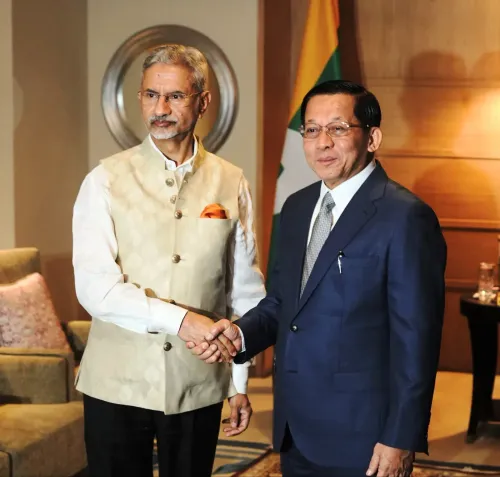
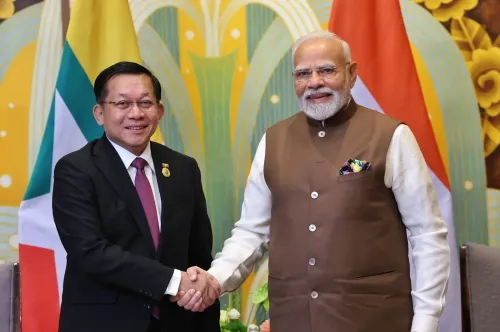
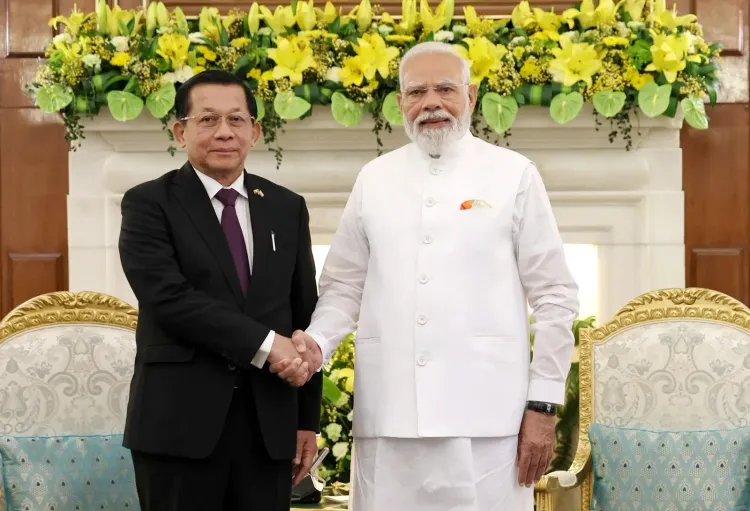
Prime Minister Narendra Modi met Myanmar President U Min Aung Hlaing in New Delhi on 1 June .
Modi described Myanmar as vital to India's Neighbourhood First , Act East , and Indo-Pacific policies.
Both sides agreed to cooperate on trade , rare earths , healthcare , connectivity , maritime security , and cybersecurity .
Myanmar reiterated its assurance that its territory will not be used against India's security interests .
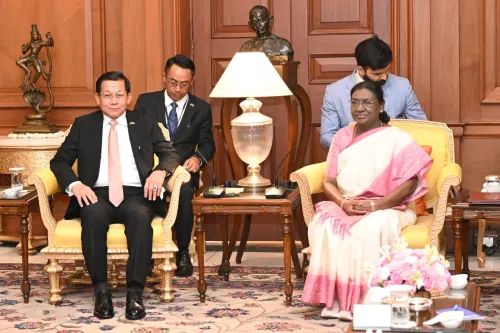
President Droupadi Murmu also met President Hlaing at Rashtrapati Bhavan , calling Myanmar India's gateway to Southeast Asia .
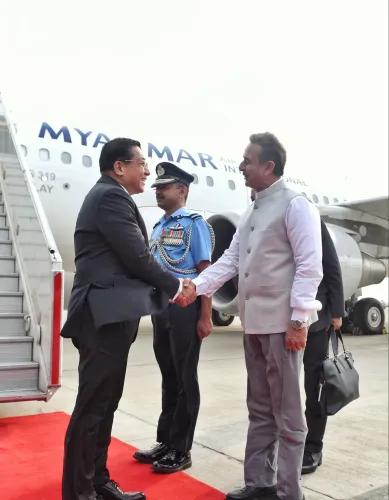
The visit is President Hlaing's first foreign trip as President, beginning at Bodh Gaya .
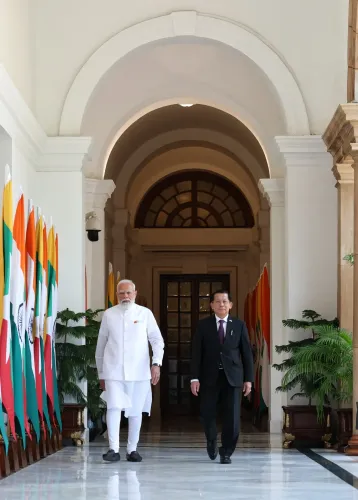
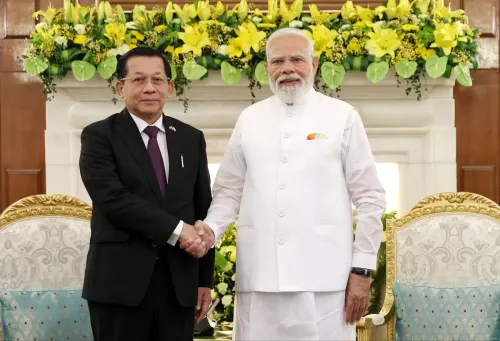
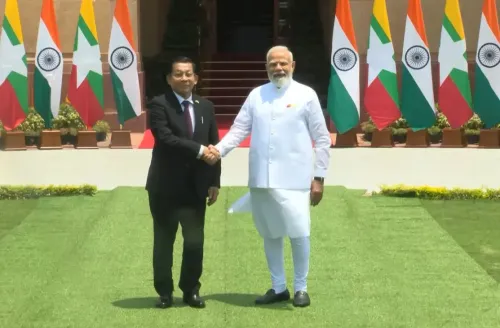
Prime Minister Narendra Modi on Monday, 1 June described Myanmar as central to India's 'Neighbourhood First', 'Act East', and Indo-Pacific policy frameworks, following a bilateral meeting with Myanmar President U Min Aung Hlaing in New Delhi. The visit marks President Hlaing's first foreign trip since assuming office, and he chose India as his inaugural destination — beginning with a stopover at Bodh Gaya.
What Modi Said After the Meeting
In a post on X following the talks, Prime Minister Modi described the meeting as productive and noted the symbolic significance of President Hlaing commencing his visit from Bodh Gaya. 'We reviewed the full range of India-Myanmar relations. Myanmar is vital to India's policies of Neighbourhood First, Act East and Indo-Pacific,' Modi wrote.
Modi added that the discussions covered deepening cooperation across trade, rare earths, healthcare, connectivity, heritage restoration, and capacity building. Both sides also agreed to work closely on maritime security, cybersecurity, and related areas.
Key Commitments in the Joint Statement
A joint statement released after the meeting detailed that President U Min Aung Hlaing reiterated Myanmar's assurance that its territory would not be used against India's security interests. Prime Minister Modi, in turn, reaffirmed India's support for Myanmar's sovereignty and territorial integrity.
Modi also expressed India's backing for Myanmar-led efforts toward peace, stability, national reconciliation, and socio-economic development, offering continued assistance grounded in mutual respect. President Hlaing acknowledged India's constructive engagement and cooperation.
President Murmu's Meeting at Rashtrapati Bhavan
President Droupadi Murmu separately received President U Min Aung Hlaing at Rashtrapati Bhavan, where she expressed India's steadfast support for Myanmar's pursuit of peace and reconciliation. President Murmu highlighted the shared Buddhist heritage and centuries-old people-to-people ties between the two nations.
'The shared Buddhist heritage and centuries-old people-to-people bonds lend a unique warmth to India–Myanmar relations,' the President's Secretariat noted, with President Murmu describing Myanmar as India's gateway to Southeast Asia.
Why This Visit Matters
The visit carries strategic weight at multiple levels. Myanmar shares a 1,643-kilometre land border with India and sits at the intersection of South and Southeast Asia — making it indispensable to the Act East Policy and to connectivity projects such as the India-Myanmar-Thailand Trilateral Highway. The mention of rare earths cooperation is notably new, reflecting India's push to diversify critical mineral supply chains amid global competition. This comes amid ongoing internal conflict in Myanmar, making the bilateral engagement diplomatically sensitive and strategically calculated.
Point of View
A presidential meeting at Rashtrapati Bhavan, and a joint statement — signals that New Delhi is deliberately maintaining engagement with Naypyidaw despite Myanmar's post-coup political crisis. The inclusion of rare earths in the cooperation agenda is the most consequential new element: it reflects India's strategic anxiety about critical mineral dependency and Beijing's dominance of that supply chain. Critics will rightly ask whether deepening ties with a military-led government undermines India's stated democratic values. The Modi government's implicit answer appears to be that geography and strategic interest outweigh that discomfort — a posture consistent with its broader neighbourhood doctrine but one that carries reputational risk as Myanmar's civil conflict continues.
NationPress
22 Sept 2026
Frequently Asked Questions
Why did Myanmar President U Min Aung Hlaing visit India?
President U Min Aung Hlaing chose India as the destination for his first foreign visit after assuming the presidency. The visit covered bilateral cooperation across trade, rare earths, connectivity, maritime security, and cybersecurity, and included meetings with both Prime Minister Modi and President Murmu.
What is India's 'Neighbourhood First' policy and why does Myanmar matter to it?
The Neighbourhood First policy prioritises diplomatic and economic engagement with India's immediate neighbours. Myanmar is central to it because the two countries share a 1,643-kilometre land border and Myanmar connects India to Southeast Asia, making it critical to both the Act East Policy and Indo-Pacific strategy.
What did Myanmar assure India about its territory?
According to the joint statement released after the meeting, President U Min Aung Hlaing reiterated Myanmar's assurance that its territory would not be permitted to be used against India's security interests.
What is new in the India-Myanmar cooperation agenda?
The inclusion of rare earths cooperation is a notable new element, reflecting India's push to diversify critical mineral supply chains. Other areas covered include heritage restoration, cybersecurity, and maritime security, alongside existing pillars of trade and connectivity.
What did President Droupadi Murmu say about India-Myanmar ties?
President Murmu received President Hlaing at Rashtrapati Bhavan and described Myanmar as India's gateway to Southeast Asia. She highlighted the shared Buddhist heritage and centuries-old people-to-people bonds as giving the bilateral relationship a unique warmth.