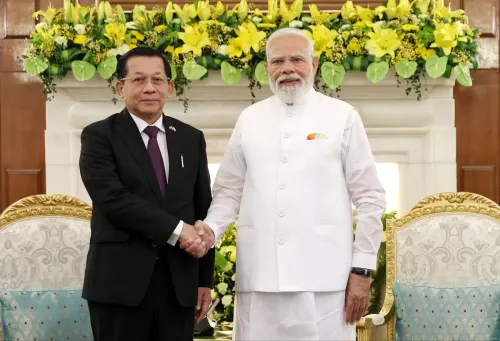
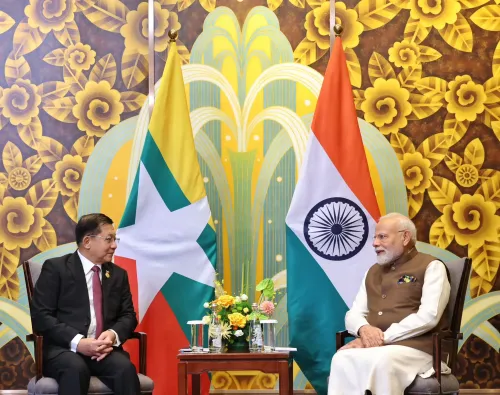
Giriraj Singh shares Myanmar pledge not to allow anti-India activity
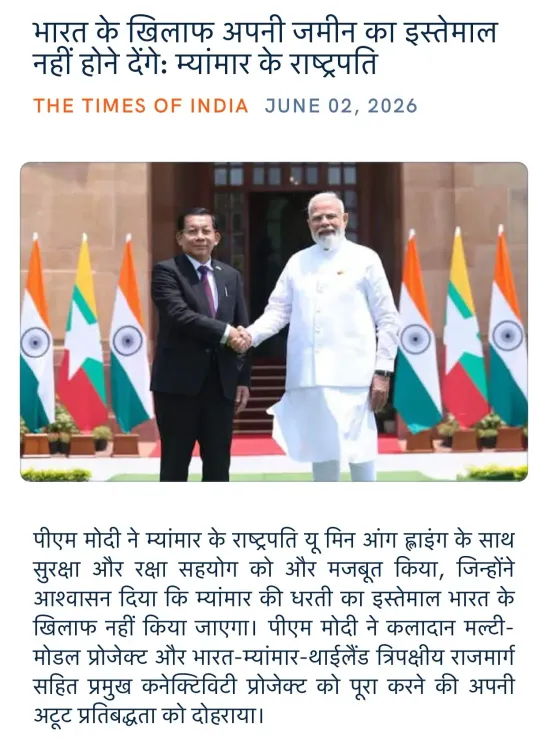
Synopsis
Union Textiles Minister Giriraj Singh amplified a statement by the Myanmar President pledging that Myanmar will not allow its soil to be used against India, spotlighting a key bilateral security assurance amid ongoing instability in Myanmar following the 2021 coup.
Key Takeaways
Union Textiles Minister Giriraj Singh shared the Myanmar President's security assurance via the NaMo App on 2 June 2026 .
The Myanmar President stated that Myanmar will not allow its territory to be used against India .
India and Myanmar share a 1,643-km border critical to the security of India's northeastern states.
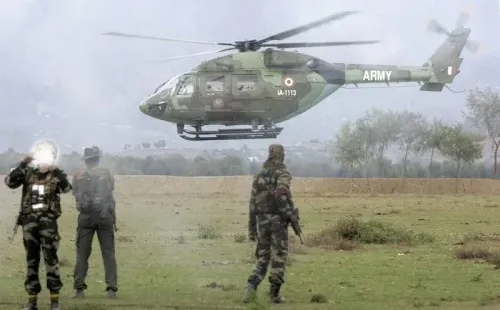
In 2019 , both nations conducted joint Operation Sunrise against anti-India insurgent camps inside Myanmar.
India's Act East Policy (2014) frames Myanmar as the primary land bridge to ASEAN , linking security and connectivity interests.
China's growing presence in Myanmar and post-coup territorial fragmentation complicate enforcement of any bilateral border assurance.
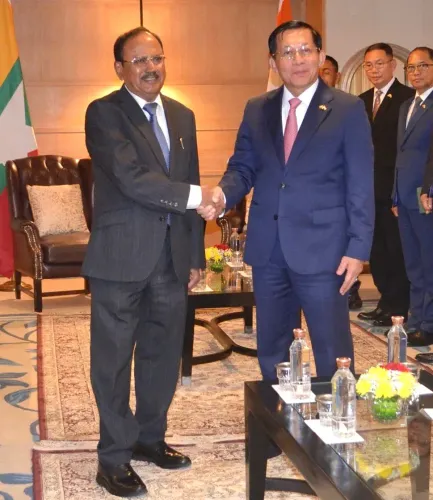
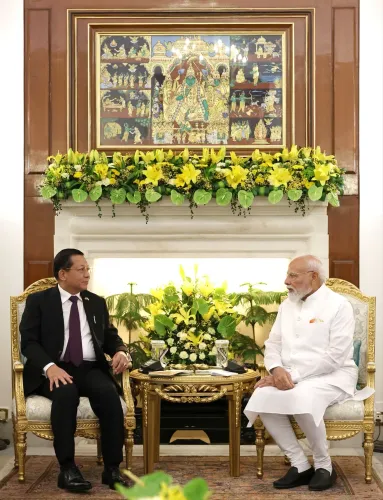
Union Textiles Minister Giriraj Singh on Tuesday, 2 June 2026 shared a report on the NaMo App highlighting a statement attributed to the Myanmar President, who has assured that Myanmar will not allow its territory to be used against India. The minister amplified the bilateral security message, underscoring New Delhi's longstanding concern about insurgent sanctuaries along the 1,643-km India-Myanmar border.
Context
The post, shared in Hindi, quotes the Myanmar President as saying: 'Bharat ke khilaf apni zameen ka istemal nahi hone denge' ('We will not allow our territory to be used against India'). The statement reflects a recurring diplomatic assurance that India has sought from Naypyidaw, particularly as Myanmar's internal instability has deepened since the 2021 military coup. Giriraj Singh, though a minister in the textiles portfolio, used his platform to highlight what the government considers a significant bilateral security signal.
Policy Backdrop
India's engagement with Myanmar is anchored in the Act East Policy, launched in 2014, which seeks to deepen economic, infrastructure, and strategic ties with ASEAN nations using Myanmar as the primary land bridge. Security cooperation has been a parallel track: in 2019, Indian and Myanmar forces conducted coordinated operations codenamed Operation Sunrise, targeting anti-India insurgent camps operating from Myanmar soil. The Kaladan Multi-Modal Transit Transport Project, connecting Kolkata to Mizoram via Myanmar, is a flagship connectivity initiative that underlines how deeply the two countries' strategic interests are intertwined.
Post-coup, India has maintained limited but continued security and connectivity engagement with Naypyidaw, navigating a complex situation where multiple armed factions now control different parts of Myanmar's territory, complicating any blanket assurance about border management.
Stakeholders and Impact
India's northeastern states — including Manipur, Nagaland, Mizoram, and Arunachal Pradesh — are the most directly affected by cross-border insurgent activity, and any credible assurance from Naypyidaw carries immediate security implications for communities and Indian forces deployed along the frontier. China's growing presence in Myanmar adds a strategic dimension, as Beijing's expanding influence over various armed groups and infrastructure projects in the country is closely watched by New Delhi. Indian security planners view public statements of this nature as diplomatically useful even when ground conditions remain volatile.
What's Next
Analysts will watch for the next round of India-Myanmar border liaison meetings and any progress on the Kaladan Multi-Modal Transit Transport Project as concrete indicators of whether the diplomatic assurance translates into operational cooperation. The broader test will be whether Naypyidaw — which itself exercises limited control over large swathes of its own territory — can enforce the commitment amid ongoing civil conflict. New Delhi is expected to continue its dual-track approach of engaging the Myanmar military establishment while hedging against further instability near the northeastern frontier.
Point of View
Reinforcing a whole-of-government posture. Myanmar's assurance, while diplomatically welcome, arrives against a backdrop of severe post-coup territorial fragmentation that limits Naypyidaw's actual capacity to police its borders. The timing suggests New Delhi is keen to project bilateral normalcy with Myanmar even as China deepens its footprint there. Ultimately, the value of such assurances will be measured against operational outcomes — joint patrols, insurgent camp dismantlement, and progress on stalled connectivity projects.
NationPress
24 Sept 2026
Frequently Asked Questions
What did the Myanmar President say about India?
The Myanmar President stated that Myanmar will not allow its territory to be used against India, reaffirming a bilateral security commitment that New Delhi has long sought from Naypyidaw.
Why is the India-Myanmar border important for India's security?
India and Myanmar share a 1,643-km border that runs alongside four northeastern states — Manipur, Nagaland, Mizoram, and Arunachal Pradesh — where several insurgent groups have historically used Myanmar soil as a sanctuary and staging ground.
What is Operation Sunrise between India and Myanmar?
Operation Sunrise was a series of coordinated military operations conducted jointly by Indian and Myanmar forces in 2019, targeting anti-India insurgent camps located inside Myanmar's border areas.
What is India's Act East Policy and how does Myanmar fit in?
India's Act East Policy, launched in 2014, aims to strengthen economic, infrastructure, and strategic ties with ASEAN nations; Myanmar serves as the primary land bridge for this connectivity, making stable bilateral relations essential.
Why is Giriraj Singh sharing foreign policy news if he is the Textiles Minister?
Senior BJP ministers routinely amplify government messaging across policy domains via social media and the NaMo App, reflecting a coordinated whole-of-government communication approach rather than a portfolio-specific development.