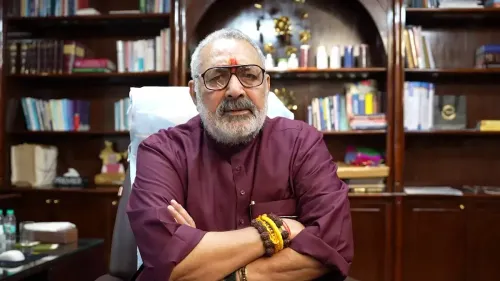
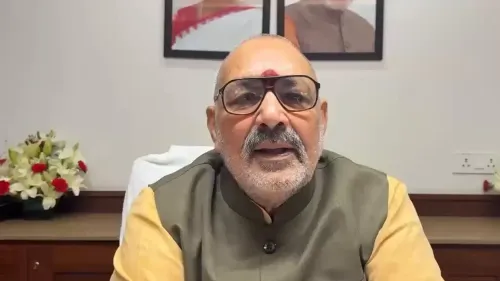
Giriraj Singh warns against conspiracies to push India into internal conflict
Synopsis
Union Textiles Minister Giriraj Singh declared on 3 November 2026 that forces conspiring to push India into internal conflict by obstructing development — and acting on foreign cues — will never succeed, reaffirming the country's sovereignty, unity, and integrity as inviolable.
Key Takeaways
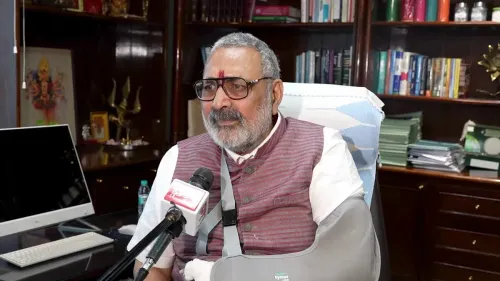
Giriraj Singh , Union Textiles Minister and BJP MP from Begusarai, Bihar , posted a sharp Hindi-language statement on 3 November 2026 .
He declared that those plotting to obstruct India's development and foment internal conflict 'will never succeed in their immoral efforts.' Singh warned that 'forces acting on outside signals' have already been identified by India's people.
The post affirms India's sovereignty, unity, and integrity as 'inviolable' and permanent.
No specific individual, organisation, or event is named — the statement follows a post-2014 BJP messaging pattern linking domestic disruption to alleged foreign influence.
Those plotting to derail India's development and push the nation into internal strife will never succeed — that is the blunt message Union Textiles Minister Giriraj Singh fired off on X on Tuesday, 3 November 2026, in a sharp statement that puts foreign-influenced forces on notice and reaffirms the country's sovereignty in unambiguous terms.
The warning in Singh's own words
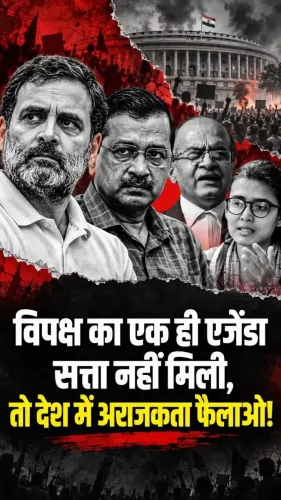
Writing in Hindi, Singh declared: 'विकास के मार्ग को बाधित कर राष्ट्र को आंतरिक संघर्ष में धकेलने का षड्यंत्र रचने वाले कभी अपने अनैतिक प्रयासों में सफल नहीं होंगे' — 'Those who conspire to obstruct the path of development and push the nation into internal conflict will never succeed in their immoral efforts.' He went further, stating that forces acting on 'outside signals' have already been identified by India's people, and that the country's sovereignty, unity, and integrity are 'inviolable and shall remain so forever.'
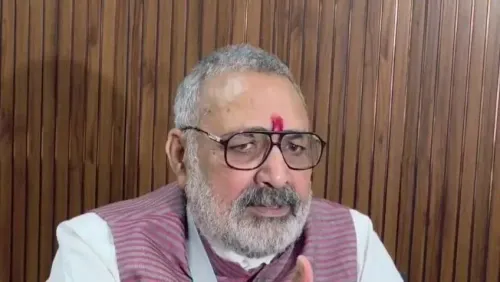
The post — posted alongside a video — is punchy, precise, and directed at unnamed actors. No specific incident is named. The warning, however, is clearly calibrated: development versus disruption, external influence versus national resolve.
A recurring BJP sovereignty playbook — and why it lands
Singh's post is not a one-off. Since 2014, senior BJP leaders have deployed a consistent messaging architecture: frame political opponents or disruptive forces as proxies of outside interests, contrast internal division with the government's development narrative, and invoke constitutional bedrock — sovereignty, unity, integrity — as non-negotiables. Singh, Lok Sabha MP from Begusarai, Bihar and a veteran in Narendra Modi's cabinet, has been among the most frequent voices in this tradition.
The phrase 'bāharī ishāron par chalne vālī tāqatein' ('forces that move on foreign cues') is a deliberate rhetorical escalation. It implies agency — that someone is being directed from abroad — without naming a country, an organisation, or an individual. That ambiguity is, arguably, the point: it is broad enough to apply to multiple political contexts while being specific enough to land as an accusation.
Why the timing of such statements matters
Singh's statement lands in a broader political environment where debates over domestic stability and foreign interference have intensified. The BJP's communications strategy has long sought to link opposition mobilisation and civil-society activism to external funding or influence — a charge opposition parties vigorously deny. What makes statements like this consequential is their cumulative effect: repeated enough by enough senior voices, the narrative shapes public perception of what 'threat' and 'development' even mean.
India's constitutional guarantees of sovereignty and territorial integrity are not in dispute. The political contest is over who is framing their erosion — and who gets to define the forces allegedly behind it. Singh's post is a move in that contest, confident and targeted, even if the immediate trigger remains unnamed.
India's people, Singh insists, are already watching. The question for the coming days is whether opposition leaders or civil society push back — or whether the silence becomes its own answer.
Point of View
Shielding the government's record from domestic critique by elevating the debate to existential terms. The phrase 'forces acting on outside signals' is deliberately vague — wide enough to encompass multiple actors yet pointed enough to delegitimise opposition. This kind of pre-emptive framing is most commonly deployed before politically sensitive periods: elections, state-level unrest, or anticipated civil-society campaigns. Whether the post signals a specific upcoming confrontation or is routine political signalling, it resets the discursive battlefield in the BJP's favour by making 'national loyalty' the operative metric.
NationPress
3 Nov 2026
Frequently Asked Questions
What did Giriraj Singh post on X on 3 November 2026?
Giriraj Singh posted a Hindi statement warning that conspirators obstructing India's development and pushing the nation toward internal conflict — including forces acting on foreign cues — will never succeed, and that India's sovereignty, unity, and integrity remain inviolable.
Who is Giriraj Singh?
Giriraj Singh is India's Union Minister of Textiles, a senior BJP leader, and Lok Sabha MP from Begusarai, Bihar. He is known for frequent statements on national unity and development.
What does 'forces acting on outside signals' mean in Singh's post?
Singh used the phrase 'bāharī ishāron par chalne vālī tāqatein' — 'forces that move on foreign cues' — to allege that certain actors disrupting India are being directed or encouraged from abroad, without naming any specific country or organisation.
Is this the first time BJP leaders have made such sovereignty statements?
No. Since 2014, senior BJP figures have repeatedly invoked national sovereignty, unity, and integrity while warning against alleged foreign-influenced forces — it is a consistent pattern in the party's political communication.
What event prompted Giriraj Singh's November 2026 post?
The specific trigger for the post has not been identified publicly. Singh's statement does not name an event, person, or organisation, making the immediate cause unclear.