Smriti Irani: Constitution lifts child from street to Cabinet
Synopsis
BJP leader Smriti Irani invoked the Indian Constitution on 20 June 2026, saying it can lift a child from the street to the Cabinet — underscoring the party's narrative of constitutional equality as a driver of individual social mobility.
Key Takeaways
BJP leader Smriti Irani posted on X on 20 June 2026 invoking the Constitution as a guarantor of social mobility.
Her Hindi post states the Constitution can take a child 'from the street to the Cabinet.' The Constitution of India was adopted on 26 November 1949 and enforced from 26 January 1950 , enshrining equality before law.
Ambedkar , the Constitution's principal architect, is historically cited as a personal embodiment of its promise of upward mobility.
The post aligns with BJP's recurring messaging that positions the Constitution as an instrument of individual merit over group identity.
Observers are watching for follow-up policy announcements on child welfare or education in the coming legislative session.
BJP leader and former Union Minister Smriti Irani took to X on Saturday, 20 June 2026, invoking the Indian Constitution as a guarantor of social mobility, stating that it has the power to lift a child from the street all the way to the Cabinet.
Context
Irani's post in Hindi reads: 'Desh ka Samvidhan ek bachche ko sadak se uthakar Cabinet tak le ja sakta hai' ('The Constitution of this country can lift a child from the street all the way to the Cabinet'). The statement is a pointed tribute to constitutional equality — the idea that the founding document of the Republic guarantees every citizen, regardless of birth or background, an equal shot at the highest offices of public life.
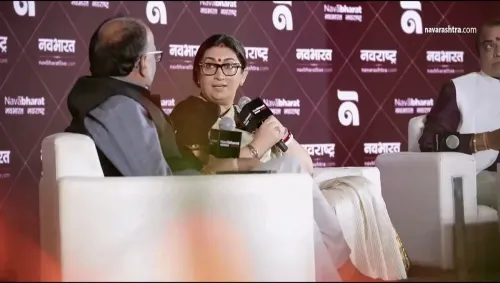
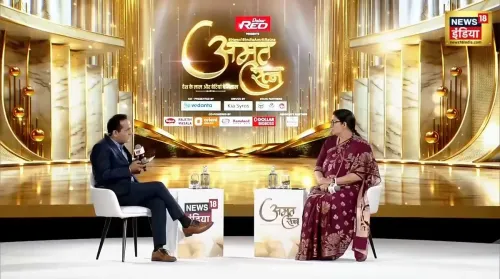
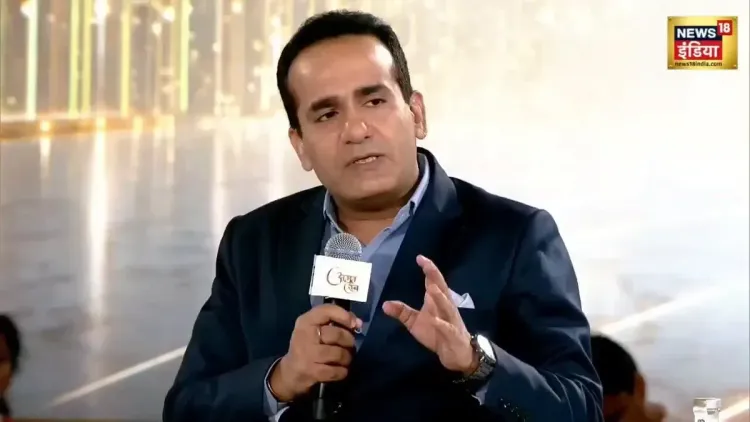
The post, accompanied by a video, was shared in the evening hours and quickly drew attention for its evocative framing of constitutional promise as a vehicle for individual ascent.
Policy Backdrop
The Constitution of India, adopted on 26 November 1949 and enforced from 26 January 1950, enshrines equality before law and equal opportunity as foundational rights. Its principal architect, B.R. Ambedkar, himself rose from a marginalised community to become the country's first Law Minister — a biographical fact that has long been cited as living proof of the Constitution's transformative potential.
The document's provisions on fundamental rights, directive principles, and non-discrimination form the legal backbone of India's welfare architecture, covering education, child protection, and affirmative action schemes that together aim to flatten inherited disadvantage.
Stakeholders and Impact
The sentiment resonates most directly with underprivileged children and first-generation political aspirants who rely on constitutional guarantees — rather than family lineage or inherited wealth — to access public institutions. Irani's own political biography, frequently cited by BJP, mirrors this narrative: a career that moved from television to Union Cabinet portfolios including Women and Child Development and Minority Affairs.
The post also fits into a recurring BJP communication pattern that presents the Constitution as an instrument of individual merit and social mobility, implicitly contrasting it with frameworks centred on group identity or dynastic succession. Critics of that framing argue that structural inequality requires active policy intervention beyond constitutional text alone.
What's Next
BJP leaders have increasingly used constitutional anniversaries, parliamentary sessions, and social-media moments to reinforce the party's self-positioning as a defender of constitutional values. Observers will watch whether Irani's post is followed by coordinated messaging from other senior leaders, or whether it precedes any child welfare or education policy announcement in the coming weeks. The broader debate over the Constitution's role in delivering social justice — versus the need for supplementary legislation and spending — is expected to remain central to political discourse ahead of the next legislative session.
Point of View
Individual-centred mobility rather than group-based entitlement. By invoking the image of a street child reaching the Cabinet, she personalises a legal text, making it emotionally resonant for aspirational voters. The framing is consistent with a broader BJP communication arc that has intensified around constitutional milestones and child welfare discourse. Whether this signals a forthcoming policy push or is primarily a narrative exercise will become clearer in the next parliamentary session.
NationPress
19 Sept 2026
Frequently Asked Questions
What did Smriti Irani post on X on 20 June 2026?
Smriti Irani posted in Hindi that India's Constitution has the power to lift a child from the street all the way to the Cabinet, highlighting the document's promise of equal opportunity for every citizen.
What does the Indian Constitution say about equality and opportunity?
The Constitution of India, enforced from 26 January 1950, guarantees equality before law and prohibits discrimination, forming the legal basis for every citizen's right to access public offices and institutions regardless of background.
Why is B.R. Ambedkar relevant to this post?
B.R. Ambedkar, the principal architect of the Indian Constitution, rose from a marginalised community to become India's first Law Minister — making him the most cited historical example of the Constitution's social mobility promise.
What is BJP's broader message about the Constitution?
BJP has consistently positioned the Constitution as an instrument of individual merit and social mobility, contrasting it with frameworks focused on group-based identity or dynastic politics.
What should we watch for after Smriti Irani's post?
Observers are watching for coordinated messaging by other BJP leaders and any child welfare or education policy announcements in the weeks ahead that may follow up on this constitutional framing.