India's defence, diplomacy and development drive global influence: Report
Synopsis
A Maldivian media report has put numbers to India's rise: defence production at a record ₹1.78 lakh crore in FY26, exports at ₹38,424 crore, and three indigenous naval platforms commissioned in June 2026. The analysis argues that India's global clout is no longer a future prospect — it is already compounding across diplomacy, military capability, and development outreach simultaneously.
Key Takeaways
India's defence production reached a record ₹1.78 lakh crore (approx.
USD 20.7 billion ) in FY 2025-26 , up 15.6% year-on-year and more than double the FY 2020-21 level.
Defence exports also hit a record ₹38,424 crore (approx.
USD 4.5 billion ), reflecting India's shift from importer to exporter of military technology.
Prime Minister Narendra Modi commissioned three indigenous naval platforms into the Indian Navy in June 2026 , reinforcing the Atmanirbhar Bharat push.
A report by Maldivian outlet Byline.mv describes India as one of the Maldives' closest development partners across healthcare, education, and infrastructure.
India's global influence is attributed to simultaneous progress across diplomacy ( G20 , BRICS , Global South ), defence, and development cooperation.
India's expanding global influence — anchored in diplomacy, defence modernisation, and development cooperation — is no longer a projection but an unfolding reality, according to a report published by Maldivian media outlet Byline.mv. The report, released on 30 June, charts how New Delhi has leveraged platforms such as the G20, BRICS, and Global South initiatives to emerge as a leading voice for developing nations while simultaneously engaging Western powers, Gulf states, Africa, and Southeast Asia.
A Broader Rise: Beyond Economic Growth
The report argues that India's ascent is no longer driven by economic growth alone. It is, according to the analysis, the convergence of military modernisation, industrial expansion, social progress, technological advancement, and deepening global partnerships that is reshaping India's international standing. 'For years, the world discussed whether India would emerge as a major global power. Increasingly, the evidence suggests that the process is already underway,' the report noted.
This comes amid intensifying great-power competition across Africa and the Indian Ocean region, where major powers are vying for strategic footholds. India, the report contends, has distinguished itself by anchoring its partnerships in long-term development cooperation — spanning infrastructure, healthcare, capacity building, and technology — rather than transactional geopolitics.
Record Defence Production and Exports
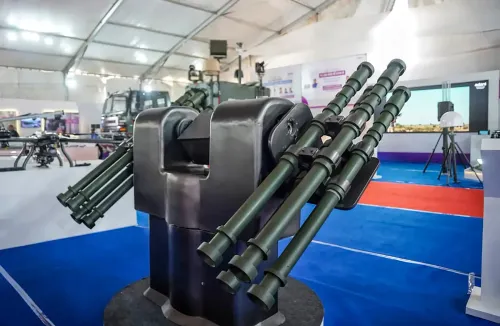
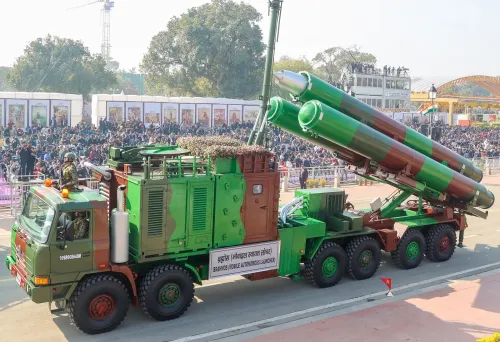
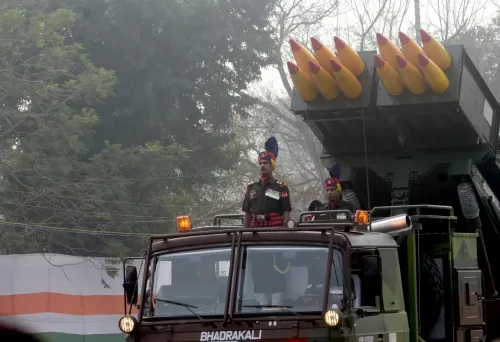
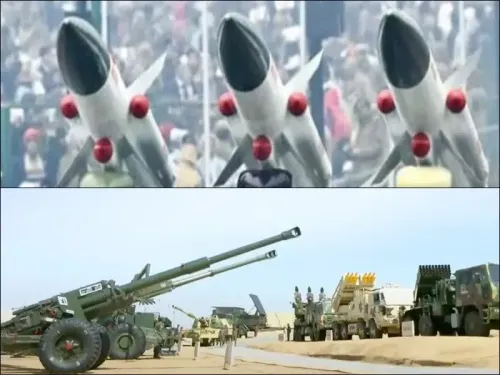
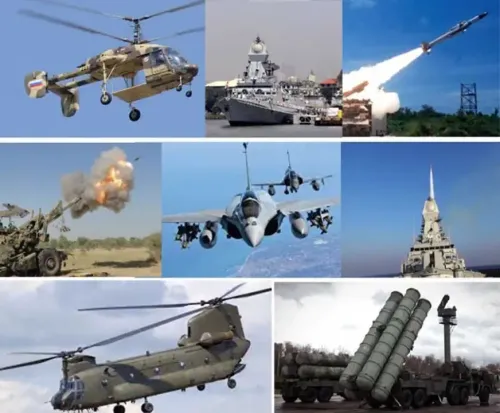
One of the most striking data points cited in the report concerns India's defence sector. Citing the Indian Ministry of Defence, the report stated that defence production reached a record ₹1.78 lakh crore (approximately USD 20.7 billion) in the 2025-26 financial year — a 15.6% increase over the previous year and more than double the output recorded in FY 2020-21.
Defence exports also hit a record ₹38,424 crore (approximately USD 4.5 billion), signalling India's growing footprint in the global arms market. 'A decade ago, India was largely viewed as one of the world's largest importers of defence equipment. Today, it is increasingly positioning itself as a producer and exporter of military technology,' the report observed.
The report linked these gains directly to the government's Atmanirbhar Bharat (Self-Reliant India) initiative and its sustained push for indigenous manufacturing across the defence supply chain.
Indigenous Naval Platforms and Maritime Power
The shift toward self-reliance in defence was underscored, the report noted, by Prime Minister Narendra Modi's commissioning of three indigenous naval platforms into the Indian Navy in June 2026. The induction of these vessels, the report argued, reflects India's growing capacity to design, build, and deploy advanced maritime assets without foreign dependence.
'In a region where maritime security and freedom of navigation are becoming increasingly important, such developments strengthen India's role as a key security actor in the Indian Ocean,' the report stated. Notably, this is a domain where China's expanding naval presence has drawn sustained attention from regional powers and Western navies alike.
India and the Maldives: A Regional Partnership
The report paid particular attention to India's relationship with the Maldives, describing New Delhi as one of Malé's closest development partners. Contributions span healthcare, education, infrastructure development, emergency assistance, and capacity-building programmes. 'For countries in the Indian Ocean region, including the Maldives, India's progress carries particular significance,' the report stated, adding that as India's economic and technological capabilities grow, so does its ability to support regional development and stability.
The framing is significant given the diplomatic turbulence in India-Maldives ties in recent years, making the Maldivian outlet's largely affirmative assessment a noteworthy signal of recalibration.
What Comes Next
The report stops short of prescribing a policy roadmap but underlines that the convergence of India's multiple growth vectors — diplomatic, military, economic, and technological — is what sets this moment apart from earlier, more fragmented phases of its rise. As global supply chains, security architectures, and development finance are all being redrawn, India's ability to operate across these domains simultaneously will likely define the next phase of its global role.
Point of View
But the framing of India as a benign development partner in the Indian Ocean deserves scrutiny alongside China's competing infrastructure investments in the same region. India's rise is multidimensional, but the gap between record production figures and verifiable strategic outcomes — particularly in converting defence exports into durable alliances — remains the story mainstream coverage consistently underplays.
NationPress
29 Sept 2026
Frequently Asked Questions
What is India's defence production figure for FY 2025-26?
India's defence production reached a record ₹1.78 lakh crore (approximately USD 20.7 billion) in FY 2025-26, according to the Indian Ministry of Defence. This represents a 15.6% increase over the previous year and is more than double the level recorded in FY 2020-21.
How much did India earn from defence exports in FY26?
India's defence exports climbed to a record ₹38,424 crore (approximately USD 4.5 billion) in FY 2025-26. The figure underscores India's transition from being one of the world's largest defence importers to an emerging exporter of military technology.
What is the Atmanirbhar Bharat initiative and how does it relate to defence?
Atmanirbhar Bharat, or Self-Reliant India, is a government policy framework that prioritises indigenous manufacturing across sectors, including defence. The initiative is credited with driving the surge in domestic defence production and reducing dependence on foreign military equipment.
What naval platforms did PM Modi commission in June 2026?
Prime Minister Narendra Modi commissioned three indigenous naval platforms into the Indian Navy in June 2026. The inductions are cited as evidence of India's growing capacity to design, build, and deploy advanced maritime assets domestically.
Why does India's rise matter specifically for the Maldives?
India is described as one of the Maldives' closest development partners, contributing to healthcare, education, infrastructure, emergency assistance, and capacity-building programmes. As India's economic and technological capabilities expand, its ability to support stability in the Indian Ocean region — including in the Maldives — is also expected to grow, according to the Byline.mv report.