IMF Projects Economic Growth Surge from India's Defence Expansion
Synopsis
The IMF's recent analysis highlights a promising outlook for India's economy, linking increased domestic defence manufacturing to enhanced growth. As military spending rises globally, India's focus on local production may yield significant economic benefits.
Key Takeaways
IMF suggests India’s defence expansion could boost economic growth.
Increased military spending can elevate local production and investment.
Domestic defence spending has stronger economic multipliers compared to imports.
India's shift towards self-reliance in defence minimizes external economic risks.
Rapid defence spending increases may risk fiscal stability.
Washington, April 9 (NationPress) The International Monetary Fund (IMF) has indicated that India’s initiative to enhance its domestic defence production could significantly bolster economic growth. The IMF highlighted that increased military expenditure can elevate output when it supports local industries.
According to the IMF, “Defence buildups can stimulate economic activity in the short term—boosting consumption and investment.” This observation comes amidst a global surge in defence spending due to escalating geopolitical tensions, with roughly half of all nations raising their military budgets in recent years, reversing a decline seen after the Cold War.
The findings are particularly beneficial for India, showing a clear economic advantage. The benefits are more pronounced when defence spending is focused on domestic production rather than foreign imports.
On average, the IMF noted, “Defence spending multipliers are close to 1,” suggesting that each increment in military spending generally correlates with a similar increase in economic output.
However, the impact varies significantly by country. “Countries that heavily rely on arms imports experience smaller defence spending multipliers due to demand leakages abroad,” the report stated.
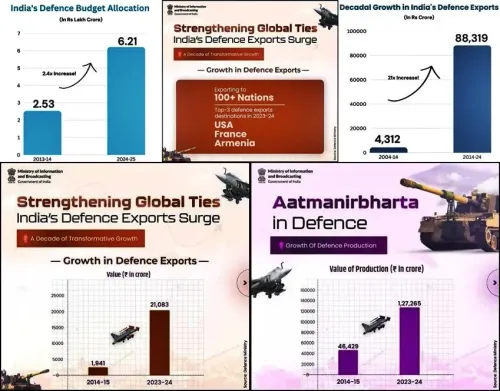
This distinction works in India's favour. New Delhi has intensified efforts to minimize reliance on foreign military equipment and foster a domestic defence sector. A larger portion of defence expenditure is now allocated to local manufacturing, private enterprises, and joint ventures.
According to the IMF, spending that is heavily import-dependent can undermine external balances. “External balances worsen as demand shifts towards imported equipment,” the report explained.
India’s commitment to indigenisation could mitigate such pressures, allowing a greater portion of the demand stimulus to stay within the economy, thereby fostering job creation and investment.
The report also indicated that defence expenditure serves as a targeted demand shock, enhancing government consumption and potentially encouraging private sector spending, particularly in defence-related areas.
Over the long term, it may also enhance productivity. “A buildup that prioritizes public investment could foster sustained productivity growth,” the IMF stated.
Nonetheless, the IMF cautioned against excessive spending increases, noting that fiscal deficits could rise by approximately 2.6 percentage points of GDP and public debt might grow by around 7 percentage points within three years.
These challenges intensify during conflicts, where debt accumulates more rapidly and social expenditure may decline.
Since the mid-2010s, global defence spending has been on the rise, with nearly 40% of nations now allocating over 2% of their GDP to military expenditures.
NATO allies have committed to increasing defence and security-related spending to 5% of GDP by 2035, indicating a persistent growth trend in military expenditures.
India currently allocates about 2% of its GDP to defence and has recently expanded domestic production through policy reforms and incentives.
The IMF analysis suggests that nations with robust local defence industries are in a better position to convert increased military spending into economic growth while mitigating external risks.
Point of View
I see the IMF's findings as a pivotal moment for India. The strategic shift towards bolstering domestic defence capabilities not only promises economic growth but also strengthens national security. By focusing on local production, India can create jobs and reduce dependence on foreign suppliers, marking a significant step towards self-reliance.
NationPress
19 Sept 2026
Frequently Asked Questions
How can increased defence spending boost economic growth?
Increased defence spending can stimulate economic activity by boosting consumption and investment, especially when it supports domestic industries.
What did the IMF report say about defence spending multipliers?
The IMF reported that defence spending multipliers are close to 1 on average, indicating that increases in military spending generally lead to equivalent rises in economic output.
Why is India's focus on domestic defence production important?
India's focus on domestic defence production reduces reliance on imports, allowing more economic benefits to remain within the country and supporting job creation.
What risks are associated with rapid increases in defence spending?
Rapid increases in defence spending can lead to worsening fiscal deficits and rising public debt, particularly during periods of conflict.
How has global defence spending changed recently?
Global defence spending has been rising since the mid-2010s, with nearly 40% of countries now spending over 2% of their GDP on defence.