India energy demand to triple in 25 years, US investors eye massive opportunity

Synopsis
ExxonMobil's top economist projects India's economy will grow seven to eight times in 25 years — and its energy demand will triple. With solar and wind needing to scale from 100 GW to 1,800 GW, and natural gas targeted to double its share by 2047, US industry leaders at the USISPF Summit see India as the world's single biggest long-term energy investment story.
Key Takeaways
India's energy demand is projected to grow by a factor of three over the next 25 years , against a global average rise of 12–15 per cent .
ExxonMobil 's Dr Prasanna Joshi projected India's GDP reaching $25–$30 trillion , expanding 7–8 times from current levels.
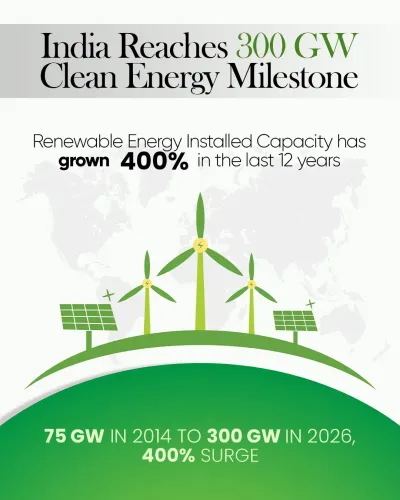
India targets scaling installed electricity capacity from 500 GW to 2,100 GW by 2047 , with solar and wind rising from 100 GW to 1,800 GW .
Natural gas share in India's energy mix is targeted to rise from 6 per cent to 12–15 per cent by 2047 .
India is the largest overseas market for US coal exports, absorbing 23 per cent of total exports — up from 1 million tonnes in 2005 to 21.5 million tonnes last year.
Only 10 per cent of India's energy resources have been explored, according to ExxonMobil .
India's energy demand is projected to grow by as much as three times over the next 25 years, making it one of the world's largest investment frontiers for US energy companies, according to industry leaders speaking at the ninth USISPF Leadership Summit in Washington on 30 June. The scale of opportunity spans renewables, natural gas, coal, and emerging energy technologies across the entire value chain.
India's Growth Trajectory Sets It Apart
Dr Prasanna Joshi, Director of Economics and Energy at ExxonMobil, told the panel on energy security and infrastructure that India's economic ascent was without parallel among major economies. He projected global GDP would roughly double over the next 25 years, while India's economy would expand by a factor of seven to eight times, reaching $25 to $30 trillion.
Reflecting that growth, energy demand in India is expected to rise by a factor of three — against a global average increase of just 12 to 15 per cent over the same period. 'Our outlook is projecting that the global GDP will essentially double in the next 25 years, whereas India... going almost a factor of seven to eight times... to 25 to 30 trillion dollars,' Joshi said.
From 500 GW to 2,100 GW: The Electricity Expansion
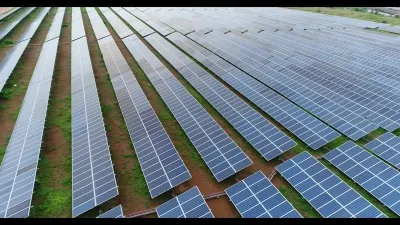
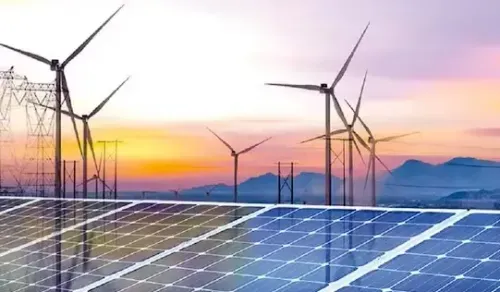
India's installed electricity generation capacity currently stands at approximately 500 gigawatts, with a long-term national ambition to scale that to around 2,100 GW by 2047, according to Joshi. Renewables will carry much of that load — solar and wind capacity alone would need to surge from roughly 100 GW to 1,800 GW.
Yet Joshi stressed that conventional energy sources would remain indispensable in the transition. He noted that only 10 per cent of India's energy resources have been explored to date, pointing to significant untapped potential in domestic production. Natural gas, currently accounting for just 6 per cent of India's energy mix, is targeted to reach 12 to 15 per cent by 2047 through new infrastructure and long-term investment commitments.
US Coal Exports to India: A Phenomenal Rise
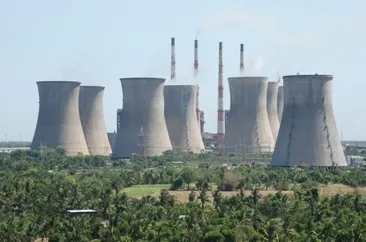
Ernie Thrasher, President and CEO of Xcoal Energy and Resources, highlighted India's emergence as the single largest overseas destination for American coal exports. India currently accounts for approximately 23 per cent of total US coal exports, with volumes rising from 1 million tonnes in 2005 to 21.5 million tonnes last year — a trajectory Thrasher described as 'phenomenal.'
Thrasher argued that no single energy source could address India's scale of demand. 'India and the world needs all forms of energy today. One form of energy by itself is not going to solve the world's sensational demand for energy and electricity,' he said. He also pointed to openings for American firms in underground mining, coal gasification, and battery storage technologies.
Collaboration Across the Value Chain
Both speakers converged on a central theme: the sheer scale of India's energy build-out makes it impossible for any single government or company to execute alone. Joshi said the infrastructure expansion required coordination across governments, businesses, and technology providers. 'This cannot be done by a single entity. You have to collaborate across the entire value chain,' he said.
He also underscored that India's growth engine is fundamentally domestic. 'India's growth is going to come from internal... That's what we can tap into is the consumer base in India,' Joshi added. Thrasher echoed the need for patient capital, urging investors to adopt a long-term horizon and keep energy costs within reach of the Indian economy.
Broader US-India Energy Context
The discussion took place at the ninth USISPF Leadership Summit in Washington, which convened senior government officials, diplomats, and business leaders from both countries to advance cooperation in trade, energy, technology, and strategic sectors. India and the United States have significantly deepened energy ties in recent years, spanning liquefied natural gas, civil nuclear energy, renewable technologies, critical minerals, and clean energy innovation. The summit's energy panel signals that this partnership is entering a new phase — one defined less by diplomatic intent and more by commercial scale.
Point of View
But the arithmetic also reveals a structural challenge: tripling energy demand in 25 years while simultaneously decarbonising requires capital, technology, and policy coherence at a scale India has not yet demonstrated. The natural gas target — doubling its share to 15 per cent by 2047 — depends on LNG import infrastructure and domestic exploration that remain works in progress. Meanwhile, India's continued dominance as a US coal export destination complicates its clean energy narrative abroad. The real question is not whether the opportunity is large — it clearly is — but whether the regulatory and infrastructure environment can absorb investment at the pace US companies are now projecting.
NationPress
29 Sept 2026
Frequently Asked Questions
How much is India's energy demand expected to grow in the next 25 years?
India's energy demand is projected to grow by a factor of three over the next 25 years, according to ExxonMobil's Dr Prasanna Joshi, speaking at the USISPF Leadership Summit in Washington. This compares with a global average energy demand increase of just 12 to 15 per cent over the same period.
What is India's electricity capacity target by 2047?
India aims to scale its installed electricity generation capacity from the current approximately 500 GW to around 2,100 GW by 2047. Solar and wind capacity alone would need to grow from roughly 100 GW to 1,800 GW to meet that target.
Why is India the largest market for US coal exports?
India accounts for approximately 23 per cent of total US coal exports, making it the single largest overseas destination, according to Xcoal Energy and Resources CEO Ernie Thrasher. Volumes have grown from 1 million tonnes in 2005 to 21.5 million tonnes last year, driven by India's industrial and power sector demand.
What role will natural gas play in India's energy future?
Natural gas currently makes up about 6 per cent of India's energy mix, with a national ambition to raise that share to between 12 and 15 per cent by 2047. Achieving this will require significant new infrastructure, expanded exploration, and long-term investment commitments, according to ExxonMobil's Dr Prasanna Joshi.
What is the USISPF Leadership Summit?
The US-India Strategic Partnership Forum (USISPF) Leadership Summit is an annual gathering of senior government officials, diplomats, and business leaders from India and the United States. The ninth edition took place in Washington and focused on expanding bilateral cooperation in trade, energy, technology, and strategic sectors.