How Can India’s Maoists Transition from Insurgency to Inclusion?
Synopsis
The ICPS paper by P.V. Ramana proposes a transformative development roadmap for India’s Maoist-affected areas, highlighting the potential of recently surrendered insurgents to aid in democratic reforms and community development. Could this signify a new chapter in India’s approach to insurgency?
Key Takeaways
Development-led strategy proposed for Maoist areas.
Engagement of surrendered insurgents in community development.
Focus on skill training and education .
Utilization of local resources for maximum impact.
Collaboration with government and private sectors emphasized.
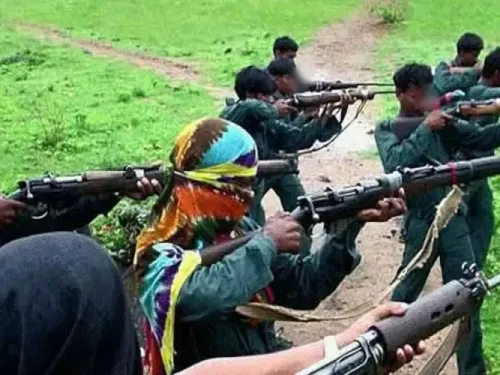
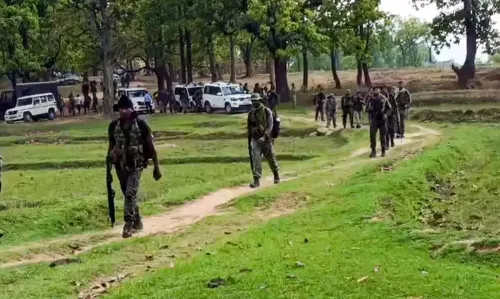
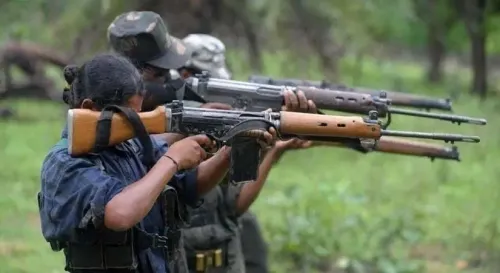
New Delhi, Jan 24 (NationPress) The International Centre for Peace Studies (ICPS) has released an in-depth policy paper authored by security analyst P.V. Ramana, which advocates for a development-oriented strategy for regions affected by Maoist activities in India. The paper emphasizes that the recent surge of surrenders by insurgents presents a unique opportunity to transition from a cycle of violence to democratic social reform.
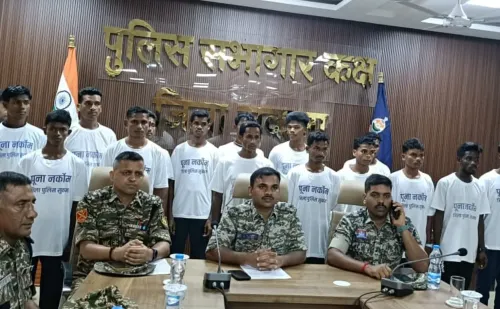
Entitled 'From Bullets to Ballots: A New Development Roadmap for India’s Maoists' and dated January 23, 2026, the document highlights that in 2025 alone, four Central Committee members of the Communist Party of India (Maoist) and over 2,000 cadres and leaders from various tiers surrendered. This included at least 11 State Committee members, 22 district or division committee members, squad commanders, and armed cadres.
In the year 2026 thus far, approximately 160 Maoists have surrendered, a trend the author anticipates will persist. Ramana estimates that the movement still has a support base of nearly 200,000 sympathizers.
Ramana asserts that those who have renounced violence can contribute positively to community development. “They are now willing to engage with the populace,” he notes, suggesting that while former rebels may eventually establish a political presence, they should also engage in a definitive development agenda as a “dividend of peace.”
He suggests that ex-Maoist leaders can enhance government welfare initiatives by mobilizing communities in areas previously plagued by conflict. “Without weapons, everything they do is legal,” he remarks, underscoring that social progress must now be pursued “through ballot, not bullet.”
A central theme of the paper is “ownership.” Ramana posits that when surrendered Maoists actively participate in development efforts, it fosters trust and accountability. “This would create support, investment, trust, and a lasting connection with the communities they aim to uplift,” he elaborates.
The document outlines sector-specific proposals, starting with skill enhancement. Ramana advocates for affordable vocational training in areas such as carpentry, bamboo crafts, handicrafts, masonry, and electrical work, with assistance from local polytechnic institutions. For health initiatives, he recommends utilizing former Maoist medical teams as health volunteers in tribal areas lacking healthcare facilities, focusing particularly on timely treatment for cerebral malaria and providing bike ambulances.
In the education sector, Ramana observes that many surrendered Maoists are literate and could serve as educators, initially teaching in local dialects and later transitioning to Hindi. He also encourages community involvement in improving road connectivity under current schemes in Left Wing Extremism-affected regions, along with the local construction of culverts and internal village roads.
Regarding funding, the paper advises redirecting Corporate Social Responsibility (CSR) and District Mineral Fund (DMF) resources straight to local committees instead of state governments. “NMDC has set aside Rs 240 crore for CSR initiatives,” Ramana notes, arguing that these funds should be utilized locally for maximum impact.
The states of focus include Chhattisgarh, Jharkhand, and Odisha. In conclusion, Ramana calls on ideologically transformed Maoists to collaborate with the government, public sector entities, and private industries to contribute to the “greater mission of a fair, developed, and prosperous India.”
Point of View
We recognize the critical nature of transitioning from conflict to constructive engagement in Maoist-affected regions. The ICPS report highlights a significant moment for India, where former insurgents could play vital roles in societal development, reflecting broader national goals of peace and prosperity.
NationPress
19 Sept 2026
Frequently Asked Questions
What is the main focus of the ICPS paper?
The main focus is to propose a development-led roadmap for India's Maoist-affected regions, leveraging the recent wave of insurgent surrenders to foster democratic social change.
Who authored the policy paper?
The policy paper was authored by security analyst P.V. Ramana.
What opportunities does the paper suggest for surrendered Maoists?
The paper suggests that surrendered Maoists can engage in community development and participate in government welfare programs.
Which states are highlighted in the report?
The report focuses on the states of Chhattisgarh, Jharkhand, and Odisha.
How does the paper propose to fund development activities?
It recommends redirecting Corporate Social Responsibility (CSR) and District Mineral Fund (DMF) resources to local committees.