India's maritime engagement boosts Indian Ocean autonomy: report
Synopsis
Can closer security ties with India strengthen, rather than dilute, the sovereignty of small island states? A new report argues they can. It cites the Colombo Security Conclave meet in Male, the Lespwar handover to Seychelles and a nine-nation crew aboard Indian Ocean Ship Sagar as evidence of India's MAHASAGAR shift.
Key Takeaways
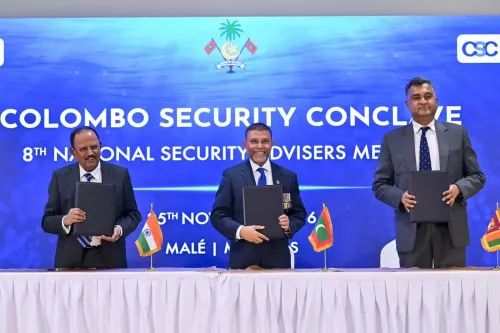
The Maldives hosted the eighth NSA-level meeting of the Colombo Security Conclave on 25 November .
A 'One World Outlook' report says India's maritime engagement helps smaller Indian Ocean nations exercise strategic autonomy .
India's maritime policy has shifted from SAGAR (2015) to MAHASAGAR (2025) , focusing on partner capacity-building.
India handed patrol vessel Lespwar to Seychelles in June 2026 and helped refit the coast guard vessel Zoroaster .
Indian Ocean Ship Sagar carried 44 naval personnel from nine partner countries in April 2025 .
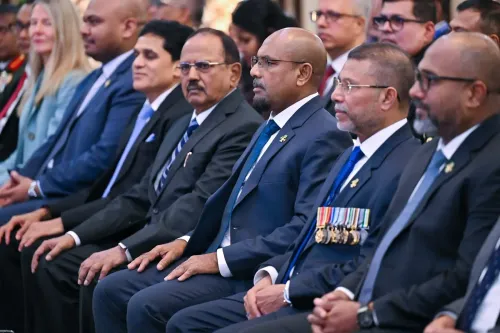
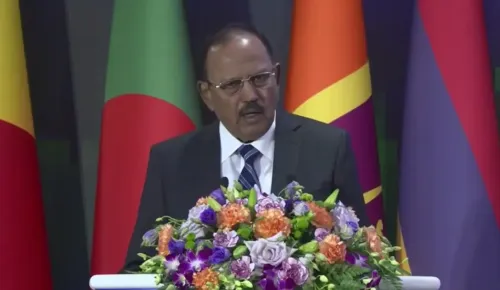
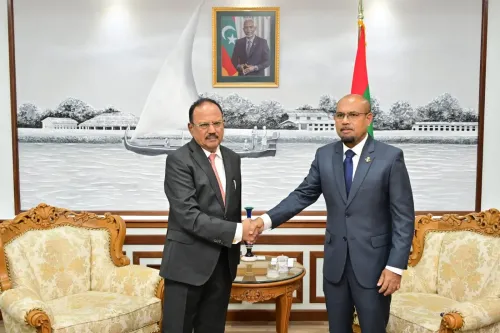
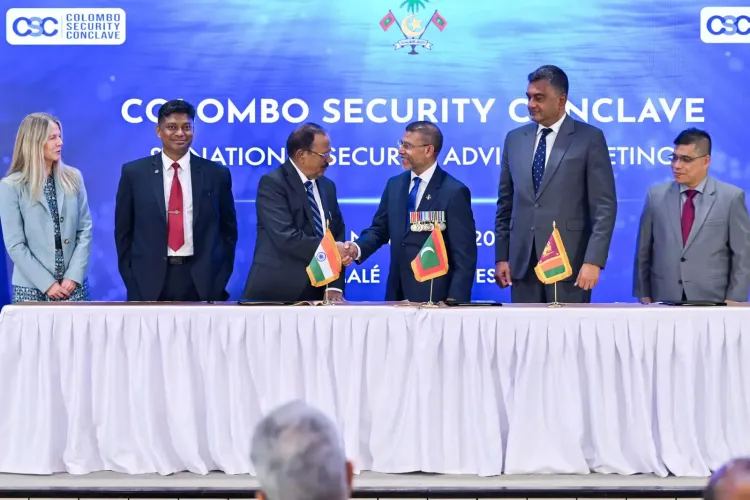
India's expanding maritime engagement is giving smaller Indian Ocean nations an opportunity to strengthen their institutions, build economic resilience and develop the security capabilities they need to make independent strategic choices, according to a report published in 'One World Outlook'. The analysis follows the eighth National Security Advisers' meeting of the Colombo Security Conclave (CSC), hosted by the Maldives in Male on 25 November.
The report argues that the region's real challenge is not to mirror the growing rivalries of the wider Indo-Pacific. Instead, it says the task is to build a regional order strong enough to withstand the consequences of those rivalries.
Colombo Security Conclave Meeting in Male
The CSC meeting brought together regional security officials to discuss maritime surveillance, transnational crime, terrorism and the protection of shared oceanic resources. The report described these as “a familiar but increasingly consequential set of challenges.”
According to the report, the meeting mattered for more than its formal agenda. “At a time when the Indo-Pacific is increasingly defined by geopolitical competition, an alternative approach to regional security is taking shape in the Indian Ocean, one driven by the practical requirements of its littoral states rather than the strategic doctrines of distant powers,” it stated.
The report said the Maldives hosting the conclave in November 2026 shows the resilience of India-Maldives relations. It added that earlier predictions of a strategic estrangement between the two countries had underestimated that resilience.
From SAGAR to MAHASAGAR
The report places India at the centre of this approach. It points to the shift in India's maritime policy from SAGAR, announced in 2015, to MAHASAGAR in 2025. According to the report, the shift reflects a broader recognition that regional stability cannot be secured through military dominance alone.
“It requires building the institutional and operational capacities of neighbouring countries, particularly those whose economic security is inseparable from the waters surrounding them,” the report said. It added: “For smaller Indian Ocean nations, closer security cooperation with India need not represent a concession of strategic autonomy. Increasingly, it offers a means of exercising it.”
India's Support to Seychelles
The report highlighted India's assistance to Seychelles. In June 2026, India handed over the patrol vessel Lespwar, and it has also helped refit another coast guard vessel, Zoroaster.
The report said such support strengthens the island nation's capacity for maritime surveillance, search and rescue, and protection of its waters under its own national authority. “The strategic importance of such assistance lies precisely in the capabilities it leaves behind,” it noted.
Indian Ocean Ship Sagar and the Western Indian Ocean
The report said the MAHASAGAR framework has begun to extend this approach across the Western Indian Ocean. In April 2025, the deployment of Indian Ocean Ship Sagar brought together 44 naval personnel from nine partner countries, alongside an Indian crew. The partner countries included Sri Lanka, Mauritius, Seychelles, Kenya, Tanzania and Mozambique.
“The initiative offered practical experience in multinational maritime operations and coordinated surveillance. More importantly, it demonstrated how regional security cooperation could extend beyond diplomatic declarations into shared professional expertise,” the report added.
Why It Matters
The analysis comes as competition between major powers increasingly shapes Indo-Pacific security debates. Its central argument is that capacity-building can give smaller littoral states more room to act independently, rather than less. Countries such as Seychelles and the Maldives depend heavily on the surrounding sea for their economic security.
Whether partners treat these vessels, training programmes and forums like the CSC as tools of their own sovereignty will likely shape the next phase of Indian Ocean security cooperation.
Point of View
Such as vessels, training and surveillance networks, remain under the recipient's own control. Male's hosting of the CSC contradicts the confident forecasts of an India-Maldives rupture, which shows how quickly island-state politics can change. India's credibility will depend on keeping MAHASAGAR a partnership on demand rather than a sphere of influence by design, especially as China's presence in the region grows.
NationPress
28 Nov 2026
Frequently Asked Questions
What is the Colombo Security Conclave?
The Colombo Security Conclave is a regional security grouping of Indian Ocean countries that brings together national security officials. Its eighth NSA-level meeting was hosted by the Maldives on 25 November and covered maritime surveillance, transnational crime, terrorism and the protection of oceanic resources.
What is India's MAHASAGAR policy?
MAHASAGAR is India's maritime policy framework adopted in 2025, succeeding the SAGAR policy announced in 2015. According to the report, it emphasises building the institutional and operational capacity of neighbouring countries rather than relying on military dominance alone.
How has India helped Seychelles with maritime security?
India handed over the patrol vessel Lespwar to Seychelles in June 2026 and assisted in refitting the coast guard vessel Zoroaster. The report says this improves Seychelles' maritime surveillance and search-and-rescue capacity under its own authority.
What was the Indian Ocean Ship Sagar deployment?
It was an April 2025 deployment that brought 44 naval personnel from nine partner countries, including Sri Lanka, Mauritius, Seychelles, Kenya, Tanzania and Mozambique, aboard alongside an Indian crew. It gave participants practical experience in multinational maritime operations and coordinated surveillance.
Why does the report say India-Maldives ties are resilient?
The report says the Maldives hosting the Colombo Security Conclave meeting in November 2026 shows the strength of bilateral ties. It adds that earlier predictions of strategic estrangement between the two countries had underestimated that resilience.