Colombo Security Conclave 9th meeting: Indian Ocean members vow deeper security ties
Synopsis
India chaired the ninth Colombo Security Conclave deputy-level meeting virtually on 30 September, with all six Indian Ocean member states — including Bangladesh, Maldives, and Seychelles — reaffirming commitments under a structured 2025–2026 cooperation roadmap. The meeting signals the CSC's growing institutional weight as geopolitical competition in the Indian Ocean intensifies.
Key Takeaways
India hosted the ninth Deputy NSA-level meeting of the Colombo Security Conclave (CSC) virtually on 30 September .
Member states — Bangladesh , Maldives , Mauritius , Sri Lanka , and Seychelles — reaffirmed commitment to Indian Ocean Region security cooperation.
Officials reviewed the Roadmap for Cooperation and Activities (2025–2026) and noted substantial progress in training and capacity-building events.
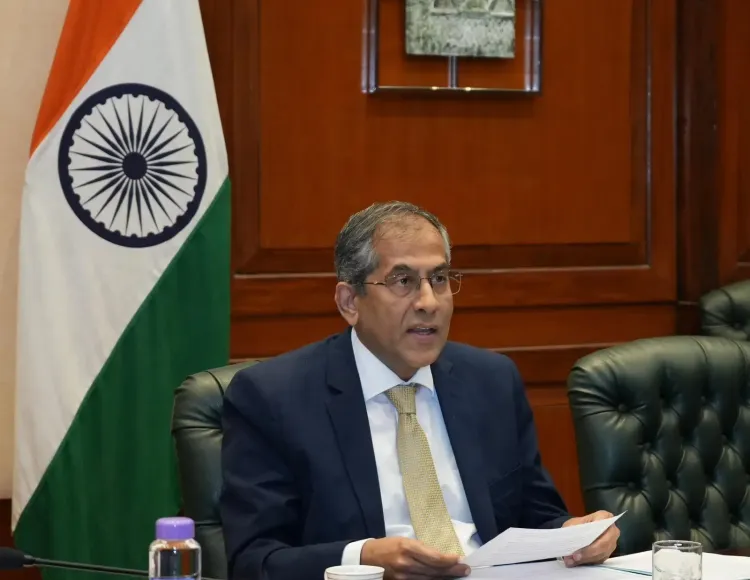
India's delegation was led by Deputy NSA (Strategic Affairs) Pavan Kapoor ; the CSC Secretariat was represented by Secretary General Vice Admiral S N Ghormade (Retd.) .
The CSC , founded in 2020 , operates across five pillars including maritime security, counter-terrorism, and humanitarian assistance and disaster relief.
The ninth Deputy National Security Adviser (NSA)-level meeting of the Colombo Security Conclave (CSC) was hosted virtually by India on Wednesday, 30 September, with member states reaffirming their collective commitment to strengthening security cooperation across the Indian Ocean Region. The meeting brought together senior officials from Bangladesh, Maldives, Mauritius, Sri Lanka, and Seychelles, according to a statement released by India's Ministry of External Affairs (MEA).
Key Developments at the Meeting
Officials reviewed decisions taken at the seventh National Security Adviser-level meeting of the CSC, held in New Delhi on 20 November. They also assessed the Roadmap for Cooperation and Activities (2025–2026) and expressed satisfaction over progress made by member states in organising training and capacity-building events across the conclave's five pillars of cooperation.
'Member States reiterated their resolve to further strengthen cooperation on vital matters of security in the Indian Ocean Region and continue their enduring partnership on humanitarian assistance and disaster relief,' the MEA stated.
Who Led the Delegations
Pavan Kapoor, India's Deputy National Security Adviser (Strategic Affairs), led the Indian delegation. Other delegation heads included Brigadier General Muhammad Ali Haider Siddiqui, Director General, Prime Minister's Office, Armed Forces Division, Bangladesh; Major General Hamid Shafeeg (Retd.), Maldives Deputy National Security Adviser; K. Jayeprokash, Acting Principal Coordinator Security Matters, Mauritius Prime Minister's Office; Joel Morgan, National Security Advisor to the Seychelles President; and P D Indika L. Wijegunawardana, Additional Secretary (Defence), Sri Lanka's Ministry of Defence.
The CSC Secretariat was represented by its Secretary General, Vice Admiral S N Ghormade (Retd.), who has recently assumed charge in Colombo.
What the Colombo Security Conclave Is
The Colombo Security Conclave is a regional security framework established in 2020 to foster cooperation among Indian Ocean nations in addressing shared security challenges. Its six member states are India, Sri Lanka, Maldives, Mauritius, Bangladesh, and Seychelles. The conclave operates across five broad pillars, encompassing maritime security, counter-terrorism, cyber security, humanitarian assistance, and disaster relief.
Why This Meeting Matters
The ninth deputy-level meeting signals the conclave's institutional momentum at a time of heightened geopolitical competition in the Indian Ocean. The review of the 2025–2026 Roadmap indicates that the CSC is moving beyond declaratory cooperation toward structured, time-bound deliverables. Notably, this comes amid broader regional anxieties over maritime security, with multiple Indian Ocean littoral states deepening bilateral and multilateral security arrangements simultaneously.
The virtual format of the meeting underscores the conclave's ability to maintain operational continuity across geographically dispersed member states. The next steps will likely include translating the roadmap commitments into concrete training exercises and joint capacity-building programmes ahead of the next NSA-level meeting.
Point of View
Precisely because it operates below the noise level of larger multilateral formats like the Quad or BRICS. The review of a structured 2025–2026 roadmap — rather than a fresh declaration — suggests the CSC is maturing from a talk-shop into an operational body. What mainstream coverage tends to miss is the significance of Bangladesh and Maldives both participating at a time when their bilateral relationships with New Delhi have faced friction; their presence signals that security cooperation has a resilience that political tensions do not always erode. The real test will be whether the five pillars translate into joint exercises and shared intelligence protocols — or remain aspirational language in ministerial communiqués.
NationPress
30 Sept 2026
Frequently Asked Questions
What is the Colombo Security Conclave?
The Colombo Security Conclave (CSC) is a regional security framework established in 2020 to promote cooperation among Indian Ocean nations on shared security challenges. Its six member states are India, Sri Lanka, Maldives, Mauritius, Bangladesh, and Seychelles, and it operates across five pillars including maritime security, counter-terrorism, and humanitarian assistance.
What happened at the ninth CSC Deputy NSA-level meeting?
India hosted the ninth Deputy NSA-level meeting of the CSC virtually on 30 September, where member states reviewed the 2025–2026 Roadmap for Cooperation and Activities and reaffirmed their commitment to strengthening Indian Ocean security cooperation. Officials expressed satisfaction over progress in training and capacity-building events.
Which countries participated in the CSC meeting on 30 September?
The meeting included senior officials from India, Bangladesh, Maldives, Mauritius, Sri Lanka, and Seychelles. Each country was represented at the Deputy National Security Adviser level or its equivalent.
Who led India's delegation at the CSC meeting?
India's delegation was led by Pavan Kapoor, the Deputy National Security Adviser (Strategic Affairs). The CSC Secretariat was represented by its Secretary General, Vice Admiral S N Ghormade (Retd.), who has recently assumed charge in Colombo.
Why is the Colombo Security Conclave significant for India?
The CSC is a key platform through which India engages its Indian Ocean neighbours on maritime security, disaster relief, and counter-terrorism, reinforcing its 'Neighbourhood First' and SAGAR (Security and Growth for All in the Region) policy frameworks. The structured 2025–2026 roadmap signals a shift from declaratory cooperation to time-bound, operational commitments.