India-Sri Lanka Coast Guards hold 9th High-Level Meet, deepen SAR and pollution ties
Synopsis
India and Sri Lanka have completed a ninth consecutive High-Level Coast Guard meeting — a streak that signals institutional durability in bilateral maritime ties. With a joint maritime domain awareness system reportedly on the table and equipment transfers already underway, this partnership is quietly expanding well beyond ceremonial cooperation.
Key Takeaways
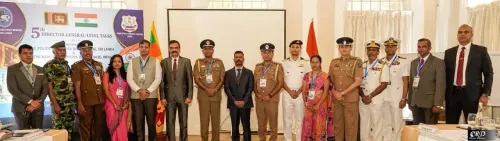
The Indian Coast Guard and Sri Lanka Coast Guard held their ninth High-Level Meeting at Mirissa, Sri Lanka on 3 November 2026 .
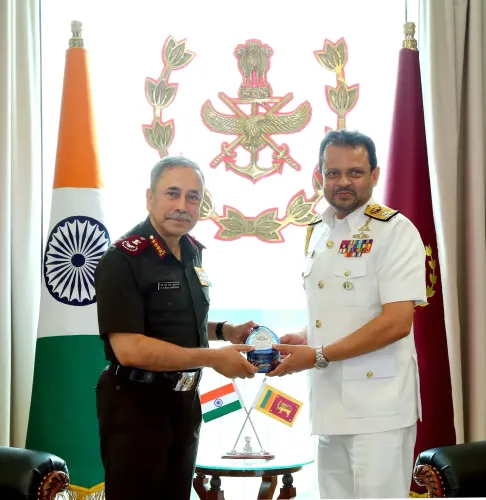
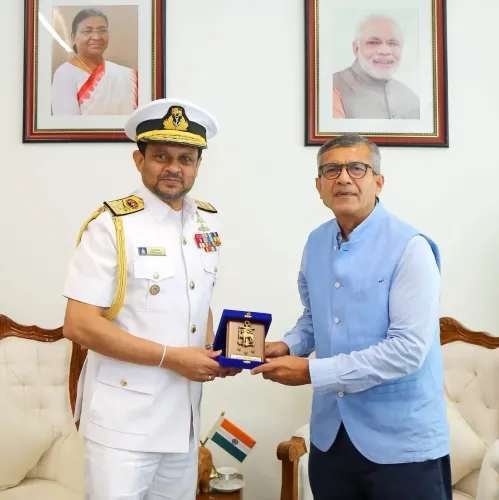
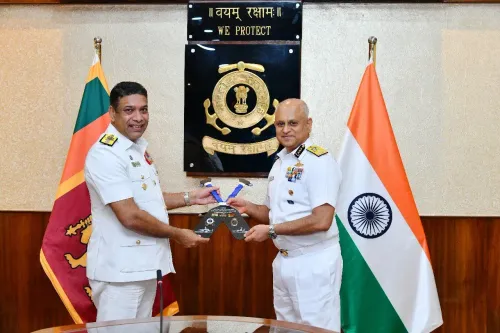
The Indian side was led by Director General Paramesh Sivamani ; Sri Lanka was represented by Rear Admiral Ruwan Rupasena .
Key agenda items included Marine Pollution Response , Maritime SAR , and Maritime Law Enforcement .
Defence Minister Rajnath Singh had earlier proposed a joint maritime domain awareness system covering illegal fishing and narcotics trafficking.
In April 2026 , India handed over two personal watercraft and safety gear to the SLCG at its Mirissa headquarters.
The Indian Coast Guard (ICG) and the Sri Lanka Coast Guard (SLCG) convened their ninth High-Level Meeting at Mirissa, Sri Lanka on Tuesday, 3 November 2026, reaffirming bilateral commitment to maritime safety, environmental protection, and law enforcement across their shared maritime domain. The meeting was confirmed by the Ministry of Defence in an official statement.
Who Led the Delegations
The Indian side was led by Director General Paramesh Sivamani, head of the Indian Coast Guard, while the Sri Lankan delegation was headed by Rear Admiral Ruwan Rupasena, Director General of the Sri Lanka Coast Guard. The senior representation on both sides signals the strategic weight both nations attach to this bilateral forum.
Key Areas of Cooperation Discussed
According to the Ministry of Defence, the deliberations centred on three core areas: Marine Pollution Response, Maritime Search and Rescue (SAR), and Maritime Law Enforcement. Both sides also explored avenues for expanding capacity building and technical assistance initiatives to deepen operational cooperation. The two delegations reaffirmed their commitment to addressing emerging maritime challenges and ensuring safety and security across the shared maritime domain, the ministry statement said.
Broader Context: A Deepening Maritime Partnership
This meeting is the latest in a series of structured engagements between the two nations. In September, Defence Minister Rajnath Singh had stated that India and Sri Lanka could become joint stakeholders in a maritime domain awareness system, covering cooperation among their navies, coast guards, and relevant agencies on issues including illegal fishing and narcotics trafficking. Notably, in April, India had handed over two personal watercraft and associated safety gear to the Sri Lanka Coast Guard to strengthen its near-shore SAR capability. The equipment was formally transferred at the Sri Lanka Coast Guard Headquarters in Mirissa by the Defence Advisor of the Indian High Commission.
Why This Meeting Matters
The Indian Ocean region faces mounting pressures from illegal fishing, drug trafficking, and climate-linked maritime incidents — all of which demand coordinated cross-border responses. With Mirissa serving as the venue for consecutive meetings, it underscores Sri Lanka's southern coast as a focal point for bilateral maritime coordination. This comes amid India's broader 'Neighbourhood First' policy, which has consistently prioritised maritime security architecture with littoral neighbours. The ninth meeting in an unbroken series reflects institutional durability rather than episodic engagement — a distinction that matters in a region prone to diplomatic turbulence.
What Comes Next
Both coast guards are expected to translate the meeting's deliberations into joint exercises and expanded technical training programmes. The maritime domain awareness initiative flagged by Defence Minister Singh in September is likely to be a key pillar of the next phase of cooperation.
Point of View
Not annual meeting communiqués. The equipment transfers are a concrete positive, but capability building at this scale demands sustained funding commitments on both sides, which neither government has publicly detailed.
NationPress
3 Nov 2026
Frequently Asked Questions
What was discussed at the ninth India-Sri Lanka Coast Guard High-Level Meeting?
The meeting focused on Marine Pollution Response, Maritime Search and Rescue (SAR), and Maritime Law Enforcement, along with capacity building and technical assistance initiatives. Both delegations reaffirmed commitment to maritime safety and environmental protection across the shared maritime domain.
Where and when was the ninth High-Level Meeting held?
The meeting was held at Mirissa, Sri Lanka on Tuesday, 3 November 2026. Mirissa has also previously served as the venue for coast guard equipment handover ceremonies between the two nations.
Who represented India and Sri Lanka at the meeting?
India was represented by Director General Paramesh Sivamani, head of the Indian Coast Guard. Sri Lanka's delegation was led by Rear Admiral Ruwan Rupasena, Director General of the Sri Lanka Coast Guard.
What is the joint maritime domain awareness system proposed by Rajnath Singh?
Defence Minister Rajnath Singh stated in September that India and Sri Lanka could become joint stakeholders in a maritime domain awareness system, involving cooperation between their navies, coast guards, and relevant agencies on illegal fishing and narcotics trafficking. Details of the framework have not yet been formally announced.
What equipment has India previously provided to the Sri Lanka Coast Guard?
In April 2026, India handed over two personal watercraft and associated safety gear to the Sri Lanka Coast Guard to strengthen its near-shore SAR capability. The handover took place at the Sri Lanka Coast Guard Headquarters in Mirissa.