Kishan Reddy flags decade of higher education expansion under Modi

Synopsis
Union Minister G. Kishan Reddy posted data showing India's university count grew from about 700 in 2014 to over 1,100 by 2026 under PM Modi, with 7 new IITs, 7 IIMs, 16 IIITs added and the Gross Enrolment Ratio rising from 23.7 per cent to around 29 per cent.
Key Takeaways
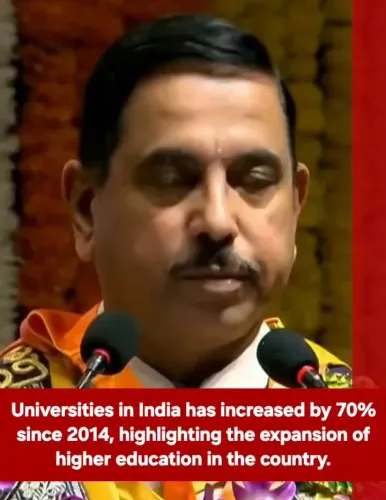
India's university count grew from about 700 in 2014 to over 1,100 by 2026 , an increase of more than 400 institutions.
7 new IITs, 7 new IIMs, and 16 new IIITs were established after 2014, expanding premier technical and management education to previously underserved states.
The Gross Enrolment Ratio rose from 23.7 per cent (2014-15) to an estimated 29 per cent (2026) , moving toward NEP 2020's 50 per cent target for 2035.
Female student enrolment in higher education has crossed one crore , signalling a structural shift in women's participation.
The National Education Policy 2020 , approved in July 2020, replaced India's 1986 policy and set the overarching framework for the ongoing expansion.
The next All India Survey on Higher Education (AISHE) report will be the key data checkpoint to verify and contextualise these figures.
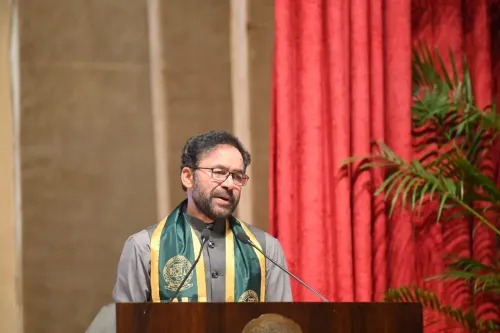
From roughly 700 universities in 2014 to over 1,100 by 2026, India's higher education landscape has been redrawn at a pace few policy cycles can claim — and on Tuesday, 3 November 2026, Union Coal and Mines Minister G. Kishan Reddy put that transformation on the record, citing a suite of figures that trace the arc of the last decade's institutional build-out.
From 700 universities to 1,100-plus: the numbers behind the claim
Reddy's post lists four headline metrics. University count has risen by more than 400 institutions over twelve years. The Gross Enrolment Ratio (GER) — the share of the eligible age-group actually entering higher education — has moved from 23.7 per cent in 2014-15 to an estimated 29 per cent in 2026, narrowing the gap toward the National Education Policy 2020's target of 50 per cent by 2035. And female student enrolment, he says, has crossed one crore. Each of these figures points in the same direction: a system absorbing more students, faster, than at any earlier point in independent India's history.
The post also flags the expansion of premier institutions specifically: 7 new IITs, 7 new IIMs, and 16 new IIITs added since 2014. These are not satellite campuses — they are full, autonomous institutions spread across states that previously had no access to the flagship engineering and management brand.
Seven new IITs, seven new IIMs — and where they landed
The IIT and IIM expansion was rolled out through successive Union Budgets between 2015 and 2018, with new IITs established in states including Andhra Pradesh, Bihar, and Goa, and new IIMs in states such as Jammu and Kashmir, Himachal Pradesh, and Odisha. The geographic spread was deliberate: each new campus was planted in a region that had historically sent students elsewhere for elite technical or management education, raising the cost and difficulty of access.
The sixteen new IIITs — Information Technology-focused institutions — completed the three-tier push, targeting the growing demand for specialised digital-skills training at a time when the broader economy was already tilting toward technology-intensive sectors.
NEP 2020 and the GER target that frames it all
The policy architecture behind these numbers is the National Education Policy 2020, approved by the Union Cabinet in July 2020 and the first comprehensive revision of India's education framework since 1986. NEP 2020 set the 50 per cent GER benchmark for 2035 — meaning the reported jump from 23.7 to 29 per cent represents roughly one-fifth of the distance still to be covered. The direction is clear; the pace will determine whether the target holds.
Female enrolment crossing one crore is the single most socially resonant data point in Reddy's list. Official higher-education surveys have consistently flagged female participation as a lagging indicator — so a milestone of this scale, if confirmed by the next All India Survey on Higher Education (AISHE) report, would mark a structural shift, not just a cyclical uptick.
The next AISHE release and any parliamentary debate on the education budget will be the real test of how these numbers hold up to scrutiny. But the scoreboard, as Kishan Reddy has posted it, is already on the wall.
Point of View
Directional achievement rather than a series of unconnected budget decisions. The figures on IITs, IIMs and IIITs align precisely with the geographic-expansion rationale built into successive Union Budgets from 2015 to 2018, giving the claim a traceable policy lineage. The GER number, however, is the most politically loaded: at 29 per cent, India is still less than halfway to NEP 2020's 50 per cent target with nine years left, which means the same data that celebrates progress also quietly acknowledges how much ground remains. The female enrolment milestone, if corroborated by the next AISHE survey, may prove the most durable talking point of all — it reframes a quantity story as an equity story.
NationPress
4 Nov 2026
Frequently Asked Questions
How many universities are there in India in 2026?
According to Union Minister G. Kishan Reddy's post, India had over 1,100 universities by 2026, up from about 700 in 2014. The figures are sourced from government data but await confirmation in the next official AISHE survey report.
How many new IITs were set up after 2014?
Seven new IITs were established after 2014, in states including Andhra Pradesh, Bihar, and Goa, as part of a broader higher education infrastructure push under PM Narendra Modi.
What is India's Gross Enrolment Ratio in higher education in 2026?
The Gross Enrolment Ratio is estimated at around 29 per cent in 2026 , up from 23.7 per cent in 2014-15. The National Education Policy 2020 sets a target of 50 per cent by 2035.
What is the National Education Policy 2020?
The National Education Policy 2020 was approved by India's Union Cabinet in July 2020. It replaced the 1986 policy and set key targets including a 50 per cent Gross Enrolment Ratio by 2035, along with broad reforms to school and higher education.
Has female enrolment in Indian higher education reached one crore?
Union Minister G. Kishan Reddy stated in his post that female student enrolment in India's higher education system has crossed one crore . Official verification will come with the next All India Survey on Higher Education report.