Colombo Security Conclave wraps up 3-day IOR exercise in Vizag
Synopsis
A 72-hour Colombo Security Conclave maritime drill at Visakhapatnam’s Eastern Naval Command put the spotlight on non-traditional threats across the Indian Ocean. With focus on smuggling, terrorism, and illegal fishing, the exercise transforms high-level NSA diplomacy into frontline tactical coordination under India’s MAHASAGAR framework.
Key Takeaways
The Colombo Security Conclave concluded a 3-day Table Top Exercise at Visakhapatnam on Friday.
The exercise was inaugurated by Rear Admiral Manoj Jha , CSO (Operations), Eastern Naval Command .
Simulations spanned 72 hours addressing maritime terrorism, narcotics smuggling, human trafficking, and IUU fishing.
The framework directly supports India’s maritime doctrine of MAHASAGAR .
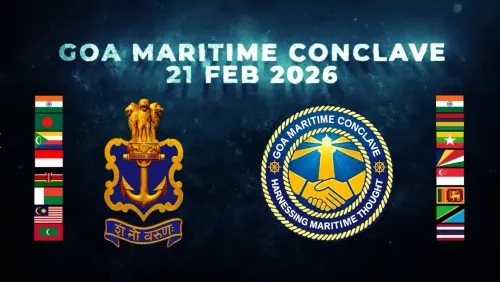
Member and partner nations include India , Maldives , Mauritius , Sri Lanka , Bangladesh , Seychelles , and Malaysia .
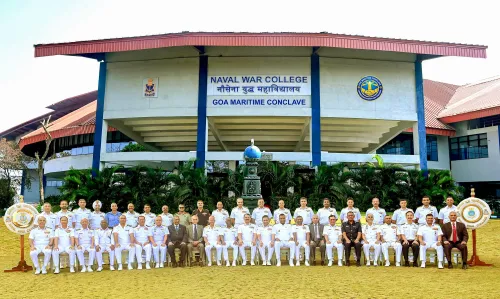
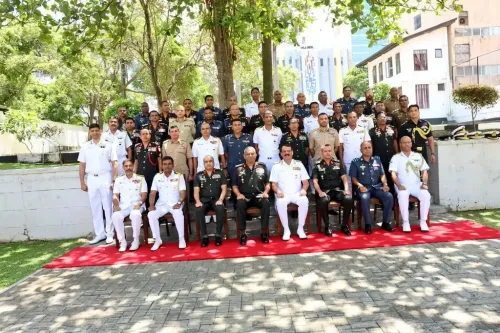
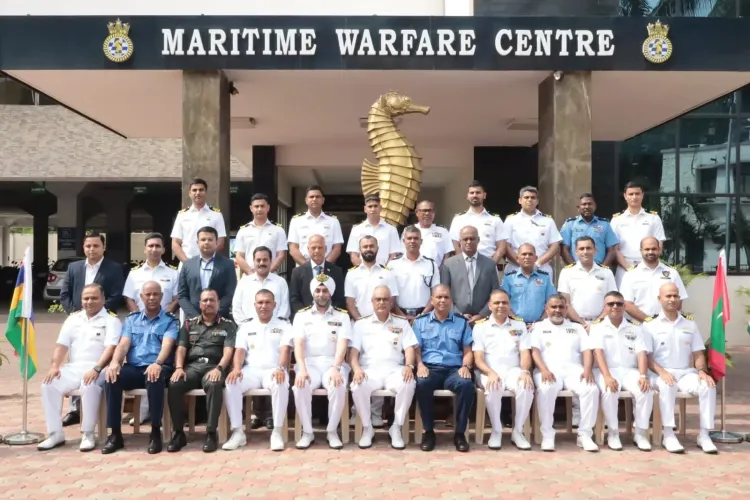
The Colombo Security Conclave (CSC) successfully concluded its intensive three-day Table Top Exercise (TTX) on Friday at the Eastern Naval Command (ENC) in Visakhapatnam, focusing on joint responses to illicit maritime operations across the Indian Ocean Region (IOR). Organised to address emerging maritime vulnerabilities, the joint simulation brought together operational delegations and maritime security specialists from member countries and observer nations for over 72 hours of tactical drills.
Tackling Non-Traditional Maritime Threats
According to the Ministry of Defence, the simulated scenarios tested real-time coordination against complex, non-traditional maritime threats. Key focus areas included countering maritime terrorism, narcotics smuggling, human trafficking, and illegal, unreported, and unregulated (IUU) fishing across critical sea lines of communication.
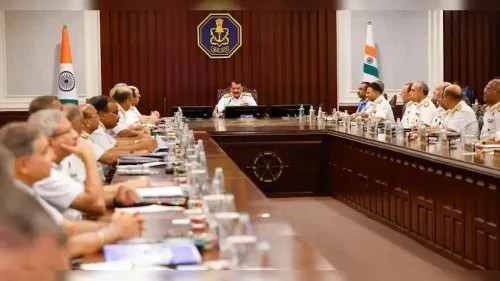
The exercise was formally inaugurated on Wednesday with an opening address by Rear Admiral Manoj Jha, Chief Staff Officer (Operations) at the Eastern Naval Command. Throughout the tactical exercise, participating delegations evaluated existing Standard Operating Procedures (SOPs) and formulated actionable mechanisms to streamline information-sharing protocols, thereby bolstering collective Maritime Domain Awareness (MDA).
Strategic Alignment with Vision MAHASAGAR
Defence officials highlighted that the successful execution of the exercise reaffirms the shared commitment of member states to preserve regional peace, stability, and blue economy prosperity. The conclave’s operational framework aligns closely with India’s overarching maritime vision of MAHASAGAR, which stands for Mutual and Holistic Advancement for Security and Growth Across Regions.
Notably, this exercise builds on the strategic momentum generated during the 7th National Security Advisor (NSA) level meeting held in New Delhi in November last year. During that high-level summit, Indian NSA Ajit Doval hosted counterparts and high-ranking security officials from member states including Bangladesh, the Maldives, Mauritius, and Sri Lanka, alongside Seychelles as an Observer State and Malaysia as a Guest nation.
The Five Pillars of Maritime Cooperation
The institutional architecture of the Colombo Security Conclave operates under five identified pillars of mutual cooperation established during previous ministerial convenings. These pillars comprise maritime safety and security; countering terrorism and radicalisation; combating trafficking and transnational organised crime; cybersecurity and protection of critical infrastructure; and humanitarian assistance and disaster relief (HADR).
At the previous ministerial review following the 6th NSA-level meeting in Mauritius, the inaugural Secretary General—appointed by India—presented an extensive roadmap on joint capacity building and operational synergy. Exercises such as the Visakhapatnam table-top simulation represent the functional translation of these high-level policy directives into frontline operational interoperability.
Looking ahead, member nations plan to expand multilateral joint surveillance, shared intelligence databases, and technical training modules to secure vital trade routes and maintain deterrence against non-state actors in the wider Indian Ocean.
Point of View
Institutionalising real-time intelligence exchange and SOPs across littoral states is essential. The enduring challenge will be sustaining political alignment across member capitals despite periodic domestic political shifts in the region.
NationPress
28 Oct 2026
Frequently Asked Questions
What was the purpose of the CSC Table Top Exercise in Visakhapatnam?
The exercise focused on building a coordinated response to illicit maritime activities in the Indian Ocean Region, including maritime terrorism, narcotics trafficking, human smuggling, and illegal fishing.
Where and when did the exercise take place?
The three-day exercise culminated on Friday at the Eastern Naval Command in Visakhapatnam, Andhra Pradesh, following more than 72 hours of simulated operational scenarios.
Which nations are involved in the Colombo Security Conclave?
The CSC core members and participants include India, Sri Lanka, the Maldives, Mauritius, and Bangladesh, with Seychelles attending as an Observer State and Malaysia as a Guest nation.
What are the five pillars of the Colombo Security Conclave?
The five core pillars are Maritime Safety and Security; Countering Terrorism and Radicalisation; Combating Trafficking and Transnational Organised Crime; Cyber Security and Protection of Critical Infrastructure; and Humanitarian Assistance and Disaster Relief.