CMO Karnataka: Toyota Bidadi ITI trainees skill-up in Japan
Synopsis
Karnataka's CMO highlighted ITI trainees from Toyota's Bidadi plant taking part in Japan's Global Skill-up programme, casting the overseas stint as proof that industry partnerships can ready the state's youth for advanced manufacturing jobs.
Key Takeaways
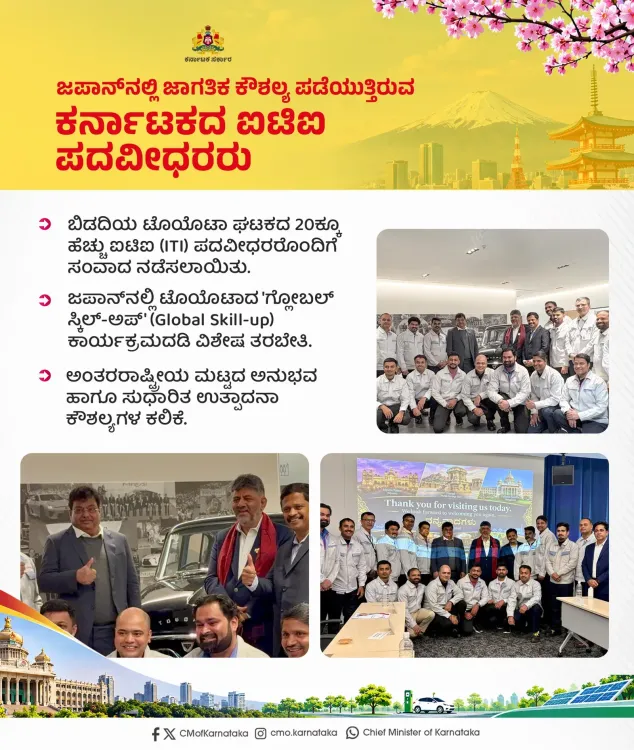
The Chief Minister's Office of Karnataka on 28 November 2026 said over 20 ITI trainees from Toyota's Bidadi facility are in Japan's Global Skill-up programme.
The office said industry partnerships help equip Karnataka's youth with advanced manufacturing skills and prepare them for a global workforce.
Toyota began vehicle production at Bidadi in Ramanagara district in 1999, a long-running auto manufacturing base for the state.
The post tied the training story to Invest in Karnataka and the tag DrivingKarnatakasSuccessInJapan.
The same message was issued in Kannada, stressing international experience for ITI trainees.
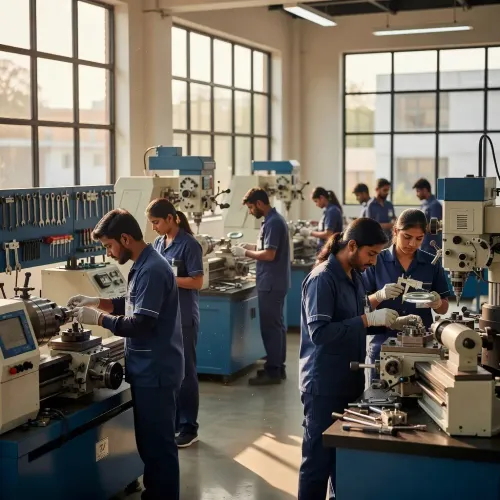
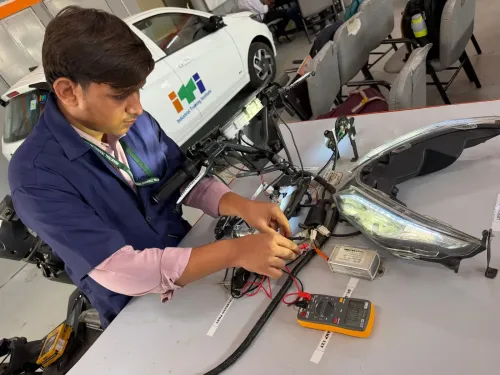
The Chief Minister's Office of Karnataka on Saturday, 28 November 2026 put a shop-floor story at the centre of the state's global pitch: ITI trainees linked to Toyota's plant in Bidadi are in Japan under the Global Skill-up programme, picking up advanced manufacturing practice far from the Ramanagara belt. The office said such industry partnerships play an important role in equipping Karnataka's youth with production skills and preparing them for a global workforce.
In the bilingual post, the office stated that over 20 ITI trainees from Toyota's Bidadi facility ‘are gaining valuable international exposure through the Global Skill-up programme in Japan.’ The Kannada text carried the same message, calling the overseas stint an invaluable international experience and tying it to readiness for a global job market. The post closed with the tags #DrivingKarnatakasSuccessInJapan and #InvestInKarnataka.
Bidadi's Toyota plant and the ITI pipeline
Toyota began vehicle production at its Bidadi facility in 1999, turning the Ramanagara industrial belt into one of Karnataka's most durable auto-manufacturing nodes. Around that plant sits a public vocational system — government-run Industrial Training Institutes — built to feed trades into factories rather than classrooms alone.
Pairing those ITI benches with a Japanese automaker is how the state has tried to keep vocational training close to export-oriented production. The CMO's message treats the Japan module as proof that the linkage is not theoretical: trainees attached to the Bidadi plant are being sent into a Japanese production environment.
Why the Japan stint sits inside Invest in Karnataka
Karnataka has spent years selling more than land and power to manufacturers. Workforce readiness — especially in automobiles — is part of the Invest in Karnataka argument, and company-run overseas modules give that argument a human face. The office's framing is blunt: industry partnerships equip youth with advanced manufacturing skills and prepare them for opportunities in a global workforce.
That pattern tracks a wider Indian push to align ITI courses with corporate standards so that vocational certificates travel beyond the district. Watch for further MoUs that send Karnataka ITI cohorts into similar overseas modules, and for whether fresh auto or electronics investments follow the same skills script.
Bidadi's Japan pipeline is a small cohort with a large signal. If the state can repeat it, the story stops being a one-off factory courtesy and becomes the product Karnataka wants investors to buy.
Point of View
And Bidadi becomes the showroom.
NationPress
28 Nov 2026
Frequently Asked Questions
What did the Karnataka CMO say about Toyota ITI trainees?
The Chief Minister's Office of Karnataka said over 20 ITI trainees from Toyota's Bidadi facility are gaining international exposure through the Global Skill-up programme in Japan. It added that such industry partnerships help equip the state's youth with advanced manufacturing skills.
Where is Toyota's plant in Karnataka?
Toyota's key Indian manufacturing facility is at Bidadi in Ramanagara district. Vehicle production there began in 1999.
What is the Global Skill-up programme mentioned by the CMO?
As described by the Chief Minister's Office of Karnataka, it is an initiative through which ITI trainees from Toyota's Bidadi facility receive hands-on training and international manufacturing exposure in Japan. Independent public records do not confirm duration or other 2026-specific outcomes.
How does this fit Invest in Karnataka?
The CMO post used the Invest in Karnataka tag to link overseas vocational training with the state's pitch to manufacturers. Karnataka has long used industry-academia ties, especially in automobiles, to argue that it can supply workforce-ready talent.
What are ITIs in this context?
Industrial Training Institutes are government-run vocational institutes in India offering trade courses aligned with industry needs. The CMO framed ITI-to-factory partnerships as a route into advanced manufacturing jobs.