CM Bhupendra Patel Launches 11 New-Age ITI Courses in Gujarat
Synopsis
Gujarat has launched 11 new-age courses across 73 ITIs covering AI, drone piloting, solar and EV repair under the Skill India Mission. Chief Minister Bhupendra Patel's government says the move will ready state youth for future job markets and contribute to the Viksit Bharat 2047 vision.
Key Takeaways
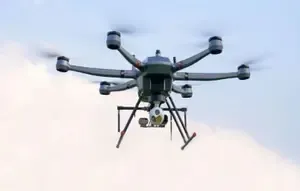
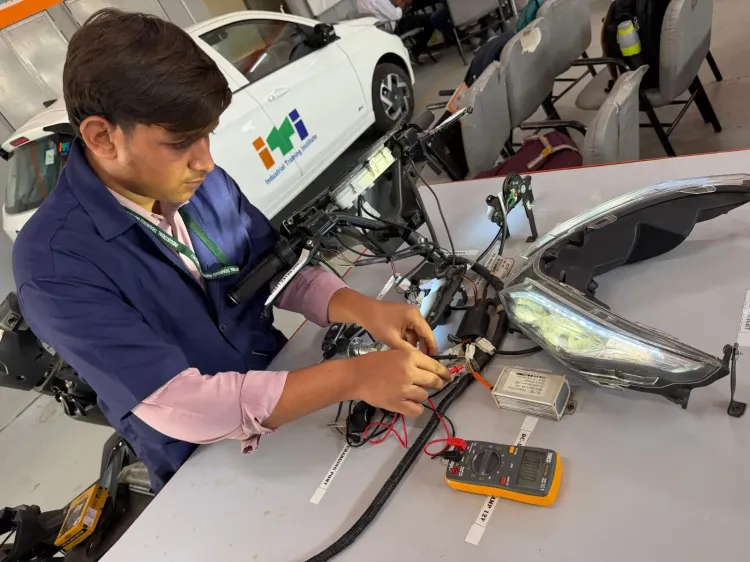
11 new-age courses have been introduced across 73 ITIs in Gujarat, covering AI, drone piloting, solar energy, and EV repair.
The initiative is framed under the national Skill India Mission , launched in 2015 , with its guiding mantra of 'work for every hand, dignity for every work.' Chief Minister Bhupendra Patel is leading the state-level rollout, targeting emerging global industrial trends and a future-ready job market.
Graduates are positioned as contributors to the Viksit Bharat 2047 vision through the 'Viksit Gujarat' framework.
The move aligns with the National Education Policy 2020 , which integrated vocational education from Class 6 onward.
Sectors such as EV manufacturing and renewable energy are expected to benefit from a locally trained talent pipeline in Gujarat.
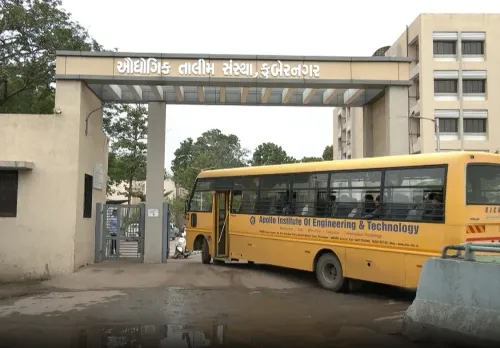
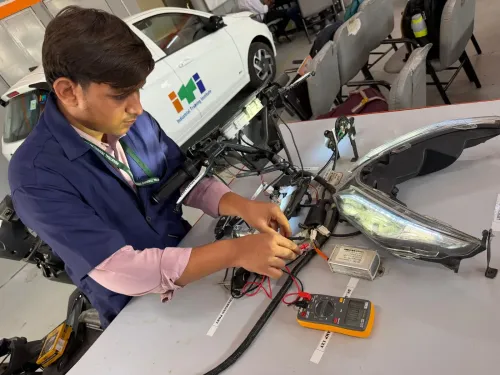
The Chief Minister's Office of Gujarat announced on Sunday, 7 June 2026 that Gujarat has introduced 11 new-age courses across 73 Industrial Training Institutes (ITIs) statewide, equipping youth with skills in AI, drone piloting, solar energy, and electric vehicle (EV) repair under the national Skill India Mission.
Context
The CMO's post, written in Gujarati, states that under the leadership and guidance of Prime Minister Narendra Modi, the Skill India Mission has been advancing the mantra of 'Har Haath Ko Kaam, Har Kaam Ko Sammaan' ('Work for every hand, dignity for every work'). It credits the mission with creating 'numerous opportunities for youth empowerment and career building through skill development and employment.'
Under Chief Minister Bhupendra Patel, the state has now operationalised these advanced courses to prepare Gujarat's youth for 'emerging global industrial trends and a future-ready job market,' according to the post.
Policy Backdrop
The Skill India Mission, launched in 2015 by the central government, was designed to provide market-relevant vocational training to millions of young Indians. Over the years, the programme has evolved to incorporate emerging technologies, aligning with the country's ambition to harness its demographic dividend.
The National Education Policy 2020 further reinforced this direction by integrating vocational education from Class 6 onward, signalling a structural shift in how India approaches workforce readiness. Gujarat, with its established manufacturing and industrial base, has positioned itself at the forefront of this transition by updating its ITI network with future-focused curricula.
The new courses — spanning artificial intelligence, drone piloting, solar technology, and EV repair — reflect the global pivot toward green energy and digital automation, sectors where India is actively seeking to build domestic talent pipelines.
Stakeholders and Impact
The primary beneficiaries are Gujarat's ITI trainees, who will now have access to industry-aligned certifications in sectors projected to see significant job growth over the next decade. The EV and renewable energy industries in particular have flagged a shortage of trained technicians as a key bottleneck to expansion.
The CMO described graduates of these programmes as 'New-Age Power' — youth who will contribute to 'Viksit Gujarat thi Viksit Bharat' ('Developed Gujarat for a Developed India'), directly invoking the national Viksit Bharat 2047 vision of building a developed economy through skilled human capital.
Beyond individual trainees, industries operating in Gujarat's industrial corridors stand to benefit from a locally trained workforce, potentially reducing dependence on skilled labour from other states or from abroad.
What's Next
Attention will now turn to enrollment numbers, certification completion rates, and — critically — industry placement outcomes from the newly launched ITI courses. Strong placement data would build a case for expanding similar new-age curricula to other states across India.
If Gujarat's model demonstrates measurable results, it could serve as a template for other industrially active states seeking to align their ITI networks with the demands of a rapidly changing global economy.
Point of View
Timed to align with the Viksit Bharat 2047 narrative ahead of what is likely to be an electorally active period. By anchoring the announcement to Prime Minister Modi's mission while foregrounding Chief Minister Bhupendra Patel's execution, the CMO's messaging serves a dual political purpose — reinforcing federal alignment while establishing state-level credit. The choice of AI, drones, solar and EVs is strategically calibrated: these are sectors with strong global investment momentum, giving the programme both economic credibility and headline appeal. The real test, however, will be whether placement outcomes match the ambition — India's ITI ecosystem has historically struggled with the gap between training capacity and industry absorption.
NationPress
21 Oct 2026
Frequently Asked Questions
What are the new courses launched in Gujarat ITIs?
Gujarat has launched 11 new-age courses across 73 ITIs, including subjects such as artificial intelligence, drone piloting, solar energy technology, and electric vehicle (EV) repair, aimed at aligning youth training with emerging global industries.
How many ITIs in Gujarat are offering new-age courses?
According to the Chief Minister's Office of Gujarat, 73 ITIs across the state are now offering the new curriculum covering future-ready skills.
What is the Skill India Mission?
The Skill India Mission is a national initiative launched in 2015 by the central government to provide vocational and technical training to millions of young Indians, with a focus on market-relevant and emerging-technology skills.
Who is the Chief Minister of Gujarat?
Bhupendra Patel has been the Chief Minister of Gujarat since 2021 and is leading the state-level implementation of skill development and industrial training programmes.
What is Viksit Bharat and how does Gujarat's ITI plan connect to it?
Viksit Bharat 2047 is India's national vision of becoming a fully developed economy by the centenary of independence. Gujarat's new ITI courses are framed as a contribution to this goal through the state's own 'Viksit Gujarat' framework, building skilled human capital for high-growth sectors.