CM Bhupendra Patel Hails India's Rise as Tech Superpower
Synopsis
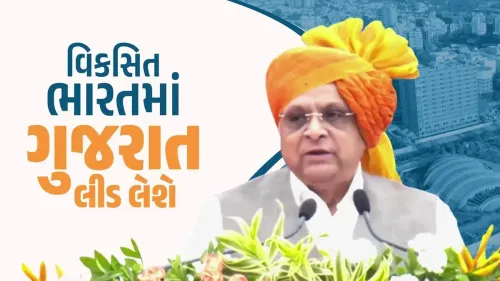
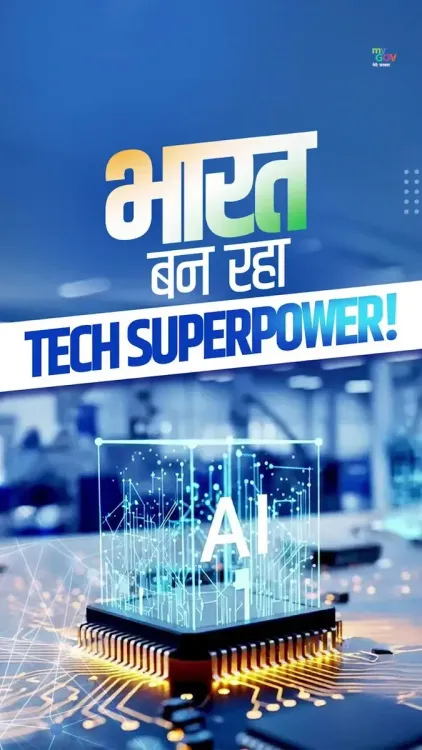
Gujarat Chief Minister Bhupendra Patel on 26 June 2026 declared India is transitioning from a technology consumer to a creator, citing PM Modi's leadership and progress in AI, semiconductors, quantum computing, data centres, and UPI as drivers of the country's 'Tech Superpower' ambition under the Viksit Bharat vision.
Key Takeaways
Gujarat CM Bhupendra Patel posted on 26 June 2026 calling India a rising 'Tech Superpower' under PM Narendra Modi's leadership.
The post highlights five technology pillars: AI , semiconductors , quantum computing , data centres , and UPI .
Digital India , launched in July 2015 , and the India Semiconductor Mission , approved in December 2021 , form the policy backbone behind the claim.
UPI , launched by NPCI in 2016 , is cited as a globally recognised example of India's public digital infrastructure strength.
The messaging is anchored to the Viksit Bharat goal of a fully developed India by 2047 .
Progress on approved semiconductor fabs and the IndiaAI Mission compute rollout will be key indicators to watch.
Gujarat Chief Minister Bhupendra Patel on Friday, 26 June 2026, credited Prime Minister Narendra Modi's leadership for transforming India from a technology consumer into a technology creator, citing advances in AI, semiconductors, quantum computing, data centres, and UPI as pillars of the country's emerging 'Tech Superpower' identity. The post, shared on X, frames this technological ascent as central to realising the Viksit Bharat vision.
Context
Patel's post, written in Hindi, declares: 'aaj Bharat sirf technology ka Consumer nahin, balki bhavishy ki takniikon ka nirmata Creator bankar ubhar raha hai' ('today India is not merely a consumer of technology, but is emerging as a creator of future technologies'). He adds that a 'new chapter of technology is now written in India's name.' The statement arrives as the central government continues to publicise milestones under the Digital India programme, which was launched in July 2015 to expand broadband access, e-governance, and digital literacy across the country.
Policy Backdrop
The post reflects a broader policy arc that successive administrations have pursued under the Atmanirbhar Bharat framework — shifting from dependence on imported technology to indigenous capability-building. The India Semiconductor Mission, approved in December 2021, provides incentives for fabrication units and chip-design firms, while the IndiaAI Mission — an expansion of the National Strategy for AI (#AIForAll) first released in 2018 — aims to build domestic compute infrastructure and AI research capacity. UPI, launched by the National Payments Corporation of India (NPCI) in 2016, has processed billions of transactions and is frequently cited as a global model for public digital infrastructure.
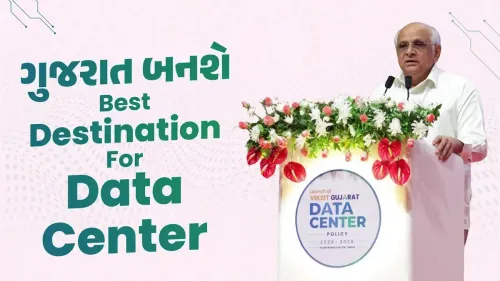
Patel specifically invokes quantum computing and data centres alongside AI and semiconductors, signalling alignment with the central government's push to position India at the frontier of next-generation technologies. The Viksit Bharat goal — a developed India by 2047 — has become a recurring policy anchor for such messaging.
Stakeholders and Impact
The constituencies most directly addressed by these policy directions include domestic tech startups, global and Indian semiconductor firms evaluating India as a manufacturing destination, and the hundreds of millions of digital payment users who rely on UPI daily. State-level leaders like Patel play a role in amplifying national technology priorities to regional audiences, particularly in states like Gujarat that host significant industrial and digital infrastructure investment. Gujarat has been a focal point for semiconductor investment announcements, making the Chief Minister's messaging especially resonant for industry stakeholders in the state.
What's Next
Observers will watch for concrete progress reports on approved semiconductor fabrication plants and the phased rollout of compute infrastructure under the IndiaAI Mission. The degree to which India's aspirational 'Tech Superpower' positioning translates into measurable output — in chip production, AI model development, and quantum research — will determine whether the narrative moves from political vision to verifiable milestone. For now, the post underscores that technology sovereignty remains a central and cross-party political theme heading deeper into the decade.
Point of View
Semiconductors, quantum computing, and UPI into a single aspirational arc, the message conflates mature achievements like UPI with still-emerging capabilities, a deliberate strategy to project momentum. The invocation of Viksit Bharat ties short-term technology announcements to a long-horizon national goal, insulating the narrative from near-term accountability. As Gujarat remains a key destination for semiconductor investment pitches, Patel's amplification of this theme also serves a clear economic-diplomacy function for his state.
NationPress
25 Sept 2026
Frequently Asked Questions
What did Gujarat CM Bhupendra Patel say about India's technology progress?
On 26 June 2026, CM Bhupendra Patel posted on X that India is no longer just a technology consumer but is emerging as a creator of future technologies in AI, semiconductors, quantum computing, data centres, and UPI, crediting PM Modi's leadership.
What is the Viksit Bharat vision mentioned by CM Patel?
Viksit Bharat is the Indian government's goal of transforming India into a fully developed nation by 2047, the centenary of independence. It is frequently cited as the overarching framework for technology, economic, and social policy.
What is India's semiconductor policy that Patel's post relates to?
The India Semiconductor Mission was approved in December 2021 and provides financial incentives for companies setting up chip fabrication units and design centres in India, aiming to reduce the country's dependence on imported semiconductors.
How has UPI contributed to India being called a tech superpower?
UPI, launched by the National Payments Corporation of India in 2016, processes billions of real-time digital transactions and has been adopted or studied by several countries as a model for public payments infrastructure, giving India global recognition in fintech.
What is the IndiaAI Mission?
The IndiaAI Mission is an expansion of India's National Strategy for AI, first released in 2018, aimed at building domestic compute infrastructure, supporting AI research, and enabling Indian startups and institutions to develop AI capabilities indigenously.