CM Sai: 30 Chhattisgarh ITIs to be Revamped Under PM-SETU
Synopsis
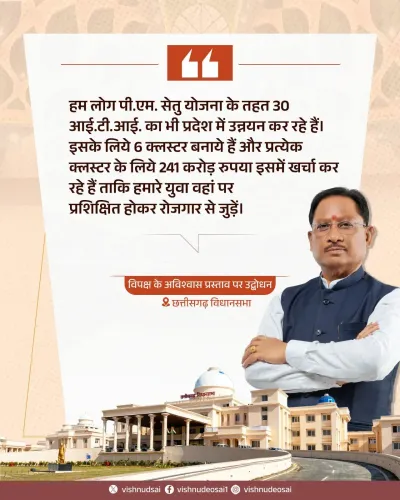
Chhattisgarh CM Vishnu Deo Sai announces a ₹1,446 crore overhaul of 30 government ITIs under PM-SETU, organised in six clusters, to align vocational training with industry needs and expand youth employment in the state.
Key Takeaways
30 government ITIs in Chhattisgarh will be revamped under the PM-SETU scheme.
The proposed investment stands at ₹1,446 crore , structured across six clusters .
Training will be redesigned to match current industry requirements in technology and manufacturing.
CM Vishnu Deo Sai credited the initiative to PM Narendra Modi's skill development vision.
The stated goal is to produce youth who not only find jobs but also create employment for others.
Key milestones ahead include tendering, curriculum reform, and eventual placement outcomes across all clusters.
A ₹1,446 crore investment is set to transform the way Chhattisgarh's youth train for the workforce — and it starts with 30 government Industrial Training Institutes. Chhattisgarh Chief Minister Vishnu Deo Sai announced on Wednesday, 14 October 2026 that the state's ITIs will be overhauled under the PM-SETU scheme, organised across six clusters, with the explicit goal of producing not just job-seekers but job-creators.
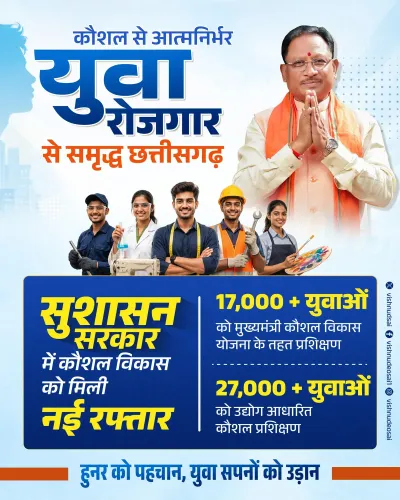
Posting in Hindi, CM Sai framed the announcement with a clear ambition: 'हर युवा हुनरमंद बने, हर हाथ को अवसर मिले' — 'every young person should become skilled, every hand should get an opportunity.' The target, he said, is a generation of Chhattisgarh youth that goes beyond finding employment to generating it for others.
30 ITIs, Six Clusters, One Overhaul
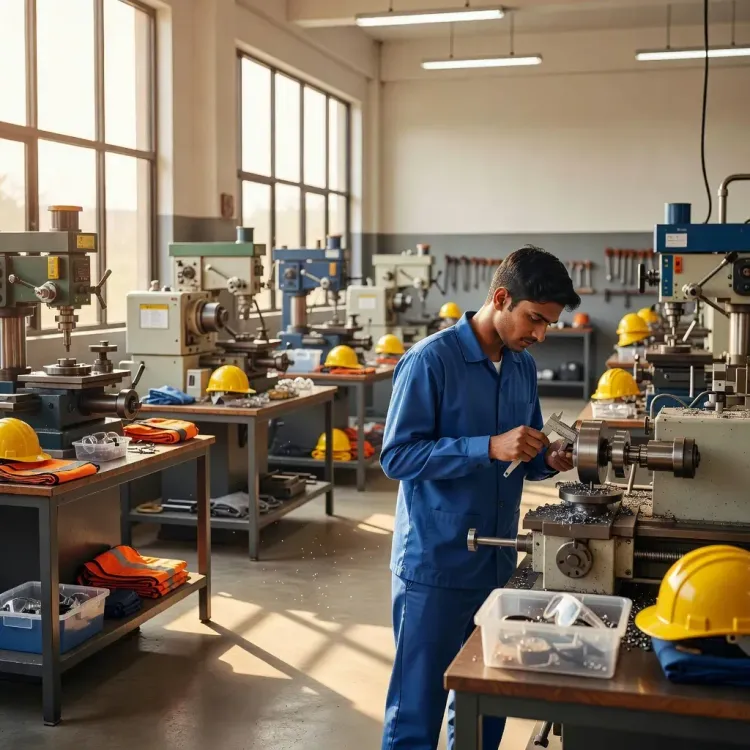
The proposed revamp clusters 30 government ITIs into six geographical or functional groups — a model designed to pool resources, standardise quality, and create regional centres of vocational excellence. The ₹1,446 crore outlay is earmarked to align training content with actual industry demand: modern machinery, current manufacturing processes, and service-sector competencies that today's employers actually hire for.
CM Sai attributed the scheme's vision to Prime Minister Narendra Modi, describing it as part of his 'farsighted leadership.' The framing is deliberate — ITI upgradation under central funding has been a recurring pillar of national skill policy since at least the 11th Five Year Plan, and PM-SETU appears to extend that lineage into a new programmatic phase.
Chhattisgarh's Skill Gap and Why ITIs Matter Here
Chhattisgarh is a state with a substantial tribal population, significant mineral wealth, and a manufacturing base anchored in steel, power, and mining. That industrial mix creates a specific demand for technically trained workers — precisely the profile a modernised ITI system is built to supply. Yet historically, ITI graduates have faced a gap between what they learned in classrooms and what factories and workshops needed on the floor.
National skill programmes — from the National Skill Development Mission launched in 2015 to the Pradhan Mantri Kaushal Vikas Yojana (PMKVY) — have tried to close that gap through curriculum reform and industry partnerships. The six-cluster architecture under PM-SETU is the state's most concentrated attempt yet to bring that reform inside the public ITI network itself, rather than routing it through parallel training centres.
What Comes Next: Tenders, Timelines, Placements
Announcements of this scale live or die in execution. The immediate milestones to watch are the tendering process for infrastructure upgrades across all six clusters, the pace at which revised curricula are introduced, and — most critically — the placement records that the upgraded institutes eventually post. For a ₹1,446 crore programme, placement data will be the only credible scorecard.
CM Sai's closing line set the bar high: the vision is of a Chhattisgarh youth who is not merely a naukri paane wala (one who finds a job) but a rozgaar dene wala — one who creates employment for others. Turning that aspiration into verifiable outcomes across thirty institutes and six clusters is the real test ahead.
Point of View
The ₹1,446 crore figure and the PM attribution serve a dual purpose: signalling Chhattisgarh's alignment with the national skill agenda while associating the BJP government with a tangible development headline ahead of the state's mid-term political cycle. Whether placement numbers eventually justify the investment will determine how durable that political dividend proves.
NationPress
14 Oct 2026
Frequently Asked Questions
What is the PM-SETU scheme for ITIs in Chhattisgarh?
PM-SETU is a central scheme under which 30 government ITIs in Chhattisgarh are proposed to be modernised, with a total investment of ₹1,446 crore organised across six clusters to align vocational training with industry needs.
How much money will be invested in the Chhattisgarh ITI revamp?
The proposed investment is ₹1,446 crore , distributed across six clusters covering 30 government Industrial Training Institutes in the state.
How many ITIs will be upgraded under PM-SETU in Chhattisgarh?
30 government ITIs are slated for upgradation, grouped into six clusters to ensure coordinated resource deployment and standardised quality.
Who announced the ITI revamp in Chhattisgarh?
Chhattisgarh Chief Minister Vishnu Deo Sai announced the revamp on 14 October 2026 , attributing the scheme's vision to Prime Minister Narendra Modi.
What is the goal of the Chhattisgarh ITI cluster scheme?
The goal is to equip youth with modern technical skills matched to industry demand, and to develop a generation that not only finds employment but also creates jobs for others.