India's rare earth magnet scheme draws 20 bids, targets 6,000 MT capacity
Synopsis
India's rare-earth magnet scheme has drawn 20 bids — from L&T and Coal India to Singapore's NEO Performance Materials — signalling that the market sees a real commercial case in building what China currently dominates: an integrated NdPr-to-magnet supply chain. With electric mobility, renewables, and electronics all dependent on permanent magnets, this scheme may be the most strategically consequential industrial push India has launched in years.
Key Takeaways
India's rare-earth permanent magnet scheme received 20 bids after technical bids were opened on 13 August 2026 .
The scheme targets 6,000 metric tonnes per annum of integrated REPM manufacturing capacity, with up to five beneficiaries each eligible for 1,200 MT/annum .
Bidders include Larsen & Toubro , Coal India , ReNew , Attero Recycling , NEO Performance Materials (Singapore), and Proterial India , among others.
The scheme links government support to actual magnet manufacture and sales — not just facility creation.
India's policy focus is shifting from raw-material extraction to midstream and downstream value addition in critical minerals.
Permanent magnets are a key input for electric vehicles , renewable energy , semiconductors , and electronics exports .
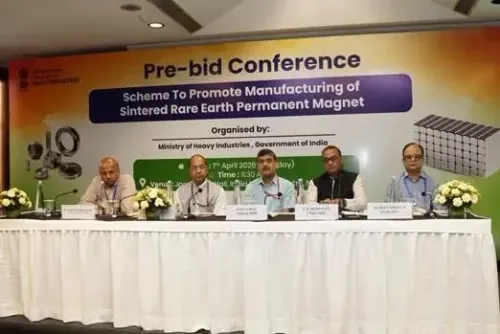
India's ₹7.74 billion rare-earth permanent magnet manufacturing scheme has attracted 20 bids from companies and consortia seeking to build integrated facilities, according to a new industry report. The Ministry of Heavy Industries opened technical bids on 13 August 2026, following an initial call for proposals on 20 March 2026, marking a significant milestone in India's push to build end-to-end rare-earth industrial capacity.
Key Developments
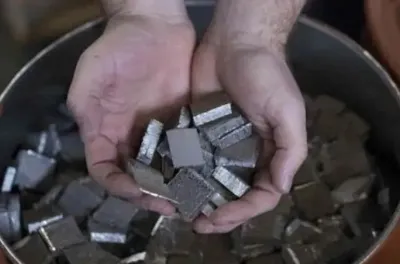
The scheme targets 6,000 metric tonnes per annum of integrated rare-earth permanent magnet (REPM) manufacturing capacity, with up to five beneficiaries selected through global competitive bidding. Each selected firm is eligible for up to 1,200 metric tonnes per annum of capacity support. The government's stated aim is to create an integrated chain stretching from NdPr oxide to finished magnets — covering midstream processing and downstream manufacturing that India has historically lacked at industrial scale.
Who Submitted Bids
The bidder pool spans a notably diverse set of industrial backgrounds. Companies that responded include Larsen & Toubro, Coal India, ReNew, Attero Recycling, 20 Microns, Lohum Magnets & Energy Solutions, NEO Performance Materials of Singapore, and Proterial India, among others. The participation of public-sector enterprises, recycling specialists, energy companies, magnet manufacturers, and international players signals that rare-earth processing is increasingly viewed as a broad industrial opportunity rather than a niche materials play.
Why This Matters for India's Industrial Strategy
India's critical-mineral policy has, until recently, focused primarily on securing raw material access and extraction rights. This scheme represents a deliberate shift — tying government support to the actual manufacture and sale of magnets rather than merely the creation of facilities. According to the report, government assessments have identified a substantial gap between India's upstream rare-earth capabilities and its industrial-scale midstream and downstream manufacturing capacity.
Permanent magnets sit at the intersection of several of India's fastest-growing sectors: electric mobility, renewable energy equipment, semiconductors, mobile phones, and advanced manufacturing. The scheme's timing is closely connected to India's broader technology and electronics export ambitions, where magnet supply chains are a critical dependency.
What the Scheme Design Signals
Notably, the scheme places production outcomes — not facility creation — at the centre of its incentive structure. This approach is intended to prevent a repeat of earlier industrial programmes where capacity was created but utilisation and sales lagged. The broad participation from firms across engineering, recycling, and energy sectors suggests the market sees a credible commercial case, not merely a policy-driven opportunity.
What Happens Next
The technical bids opened on 13 August 2026 will be evaluated before up to five beneficiaries are finalised. The selection process follows global competitive bidding norms. Industry observers will watch whether the final awardees include international participants, which would signal India's openness to foreign expertise in a sector where China currently dominates global supply chains.
Point of View
But the real test is execution depth. India has launched critical-mineral initiatives before that stalled at the policy stage because midstream processing — the hardest and most capital-intensive link — was left to market forces that never materialised. This scheme's production-linked design is structurally sounder, but the inclusion of recycling specialists and energy companies alongside traditional manufacturers raises a question: how many of these consortia have genuine magnet-making capability versus financial interest in the incentive? The Ministry of Heavy Industries' selection criteria will be the first real indicator of whether this scheme is designed to build industrial capacity or distribute subsidies.
NationPress
19 Oct 2026
Frequently Asked Questions
What is India's rare-earth permanent magnet manufacturing scheme?
It is a government initiative under the Ministry of Heavy Industries aimed at creating 6,000 metric tonnes per annum of integrated rare-earth permanent magnet (REPM) manufacturing capacity in India. The scheme covers the full value chain from NdPr oxide processing to finished magnets, with up to five beneficiaries selected through global competitive bidding.
How many companies bid for the rare earth magnet scheme?
20 companies and consortia submitted bids after the Ministry of Heavy Industries invited proposals on 20 March 2026 and opened technical bids on 13 August 2026 . Bidders include Larsen & Toubro, Coal India, ReNew, Attero Recycling, NEO Performance Materials of Singapore, and Proterial India, among others.
Why is India investing in rare-earth magnet manufacturing?
India has identified a significant gap between its upstream rare-earth extraction capabilities and its industrial-scale midstream and downstream manufacturing. Permanent magnets are critical inputs for electric vehicles, renewable energy equipment, semiconductors, and electronics — sectors central to India's growth and export ambitions.
How much capacity can each selected beneficiary receive?
Each of the up to five selected beneficiaries is eligible for support covering up to 1,200 metric tonnes per annum of REPM manufacturing capacity, selected through global competitive bidding.
How does this scheme differ from earlier Indian industrial programmes?
Unlike earlier schemes that incentivised facility creation, this programme ties government support to the actual manufacture and sale of magnets. This production-outcome focus is designed to ensure that capacity built under the scheme translates into real industrial output rather than underutilised infrastructure.