Rare earth magnet scheme: India extends bid deadline to August 12, 2026

Synopsis
India's ₹7,280 crore rare earth permanent magnet scheme — a first-of-its-kind domestic push to build a 6,000 MTPA NdFeB magnet industry — has extended its global tender deadline to 12 August 2026. With China dominating global rare earth processing, the stakes for India's EV and defence supply chains could not be higher.
Key Takeaways
The Ministry of Heavy Industries extended the REPM scheme bid deadline from 29 July 2026 to 12 August 2026 .
Technical bid opening rescheduled to 13 August 2026 to allow wider stakeholder participation.
The Union Cabinet approved the scheme on 26 November 2025 with an outlay of ₹7,280 crore .
The scheme targets 6,000 MTPA of integrated rare earth permanent magnet manufacturing capacity in India.
Bidders are eligible for capital subsidy and sales-linked incentives ; bidding is conducted via the CPP Portal using a Least Cost System.
Rare earth permanent magnets are critical for EVs , wind turbines , and defence systems , sectors where India currently depends heavily on imports.
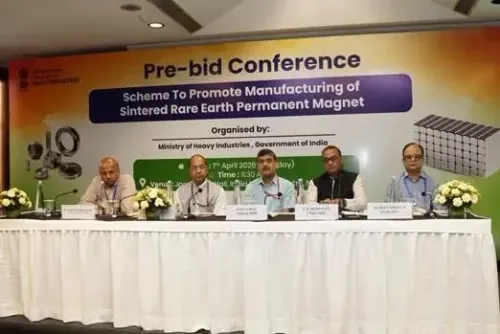
The Ministry of Heavy Industries has extended the bid submission deadline under the Scheme to Promote Manufacturing of Sintered Rare Earth Permanent Magnets (REPM) from 29 July 2026 to 12 August 2026, according to an official statement released on Wednesday. The opening of technical bids has been rescheduled from 30 July 2026 to 13 August 2026, with the extension aimed at facilitating broader stakeholder participation in the global tender process.
Background and Scheme Details
The global tender was originally floated by the ministry on 20 March 2026, inviting bids to select manufacturers as beneficiaries who would establish integrated rare earth permanent magnet facilities in India. The Union Cabinet had approved the REPM scheme on 26 November 2025 with a total financial outlay of ₹7,280 crore.
The scheme — described as a first-of-its-kind initiative — targets a cumulative manufacturing capacity of 6,000 Metric Tons Per Annum (MTPA) of integrated rare earth permanent magnets within India. Eligible applicants can bid to set up sintered NdFeB REPM manufacturing facilities and qualify for both capital subsidy and sales-linked incentives.
How the Bidding Process Works
The bidding is conducted entirely online through the Central Public Procurement (CPP) Portal via a transparent Least Cost System (LCS) structured in two stages: a Technical Bid followed by a Financial Bid. The two-stage design is intended to ensure both technical capability and cost competitiveness among prospective manufacturers.
Why Rare Earth Magnets Matter for India
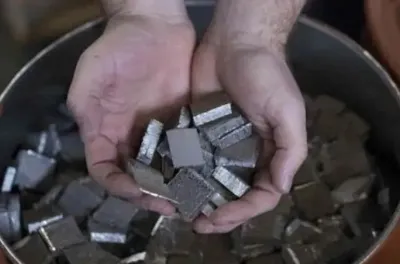
Rare earth permanent magnets are widely regarded as among the most powerful magnets available and are critical inputs for electric vehicles (EVs), wind turbines, high-end electronics, and aerospace and defence systems. India currently relies heavily on imports — particularly from China — for these components.
By building a complete domestic value chain from NdPr oxide to finished magnets, the scheme is expected to significantly reduce import dependence. This comes amid a broader global scramble for rare earth supply chain security, with the US, European Union, and Japan all pursuing similar self-sufficiency drives. Notably, China controls an estimated 60–70% of global rare earth processing capacity, making India's push strategically significant.
Strategic Significance and What Comes Next
The REPM scheme is a direct enabler of India's EV and clean energy transition targets, both of which require large volumes of high-performance permanent magnets. Industry stakeholders and prospective bidders now have until 12 August 2026 to submit their bids, with technical bid evaluation commencing the following day.
If the scheme achieves its 6,000 MTPA capacity target, India could emerge as a credible alternative supplier in the global REPM market — a position that carries both economic and geopolitical weight as supply chain diversification becomes a priority for importing nations.
Point of View
But the underlying story is strategic. India's rare earth magnet gap is not merely an industrial policy footnote — it is a direct vulnerability in the country's EV and defence supply chains, both of which the government has staked significant political capital on. China's grip on rare earth processing means every month of delay in domestic capacity is a month of continued exposure. The ₹7,280 crore outlay is meaningful, but the real test is whether the scheme attracts credible, technically capable bidders who can actually deliver at scale — not just paper commitments. Past manufacturing incentive schemes have seen low-quality participation that diluted outcomes. The two-stage Least Cost System is a sensible safeguard, but execution rigour will matter far more than the bidding architecture.
NationPress
13 Sept 2026
Frequently Asked Questions
What is the REPM scheme and what is its financial outlay?
The Scheme to Promote Manufacturing of Sintered Rare Earth Permanent Magnets (REPM) is a ₹7,280 crore initiative approved by the Union Cabinet on 26 November 2025. It aims to establish 6,000 MTPA of integrated rare earth permanent magnet manufacturing capacity in India, reducing dependence on imports.
Why has the bid deadline been extended?
The Ministry of Heavy Industries extended the deadline from 29 July 2026 to 12 August 2026 to facilitate wider participation and give prospective bidders additional time to prepare their submissions. The technical bid opening has been correspondingly moved to 13 August 2026.
Who can apply and what incentives are available?
Prospective manufacturers seeking to set up integrated sintered NdFeB rare earth permanent magnet facilities in India can apply. Eligible applicants can avail both capital subsidy and sales-linked incentives under the scheme, with bids submitted online through the Central Public Procurement (CPP) Portal.
Why are rare earth permanent magnets strategically important for India?
Rare earth permanent magnets are critical components in electric vehicles, wind turbines, aerospace systems, and defence equipment. India currently imports a significant share of these magnets, primarily from China, which controls an estimated 60–70% of global rare earth processing — making domestic manufacturing a strategic priority.
What is the bidding process for the REPM scheme?
Bidding is conducted online through the Central Public Procurement (CPP) Portal using a two-stage Least Cost System (LCS): a Technical Bid followed by a Financial Bid. This structure is designed to ensure both technical competence and cost efficiency among selected manufacturers.