Rare Earth Magnet scheme: India extends global tender deadline to July 29

Synopsis
India's rare earth magnet ambitions just got a one-month reprieve. The Ministry of Heavy Industries has pushed the REPM scheme's global tender deadline to 29 July 2026, signalling that the government wants maximum participation in what could be one of India's most strategically important industrial bets — a ₹7,280 crore push to build a domestic end-to-end rare earth magnet supply chain for EVs, wind energy, and defence.
Key Takeaways
The Ministry of Heavy Industries extended the REPM scheme global tender bid deadline from 29 June 2026 to 29 July 2026 .
Technical bid opening rescheduled from 30 June 2026 to 30 July 2026 ; addendum published on the CPP Portal .
The Union Cabinet approved the REPM scheme in November 2025 with an outlay of ₹7,280 crore .
The scheme targets 6,000 MTPA of integrated rare earth permanent magnet manufacturing capacity in India.
Beneficiaries are eligible for capital subsidy and sales-linked incentives to establish NdFeB magnet facilities domestically.
Rare earth magnets are critical inputs for EVs , wind turbines , aerospace , and defence systems .
The Ministry of Heavy Industries has extended the bidding timeline for its global tender under the Sintered Rare Earth Permanent Magnet (REPM) scheme, pushing the bid submission deadline from 29 June 2026 to 29 July 2026, according to an official statement issued on Thursday, 25 June 2026. The extension was granted in response to requests from stakeholders seeking additional time to participate in the process.
Key Changes to the Tender Timeline
The opening of technical bids has been correspondingly rescheduled from 30 June 2026 to 30 July 2026. An addendum to this effect has been published on the Central Public Procurement (CPP) Portal, which is also the platform through which the entire bidding process will be conducted. The ministry said the extension was aimed at facilitating wider participation in what is a strategically significant procurement exercise.
What the REPM Scheme Entails
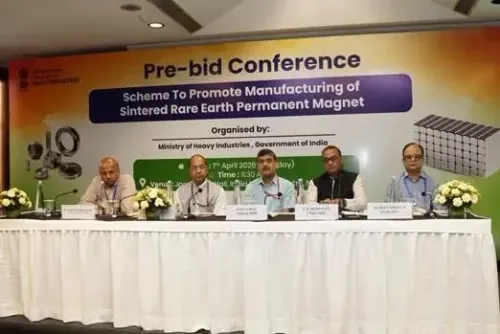
The global tender was originally floated by the ministry on 20 March 2026 to identify manufacturers as beneficiaries under the REPM scheme. Successful applicants will be eligible to establish integrated sintered NdFeB rare earth permanent magnet manufacturing facilities in India, and can avail themselves of both capital subsidy and sales-linked incentives under the scheme. The bidding follows a two-stage Least Cost System (LCS) — comprising a Technical Bid and a Financial Bid — conducted online through the CPP Portal for transparency.
The Union Cabinet approved the REPM scheme in November 2025 with a financial outlay of ₹7,280 crore. The scheme aims to establish a total manufacturing capacity of 6,000 Metric Tons Per Annum (MTPA) of integrated rare earth permanent magnets in India, building a complete value chain from NdPr oxide to finished magnets domestically.
Why Rare Earth Magnets Matter for India
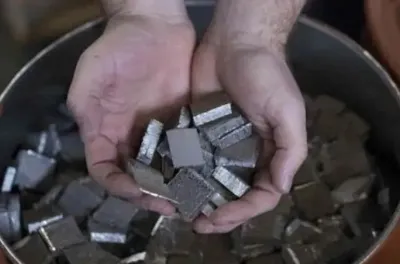
Rare Earth Permanent Magnets are among the most powerful magnets produced globally and are critical inputs across several high-growth industries. They are widely used in electric vehicles (EVs), wind turbines, high-end electronics, and aerospace and defence systems. India currently depends heavily on imports for these components, and the REPM scheme is designed to significantly reduce that dependence by building domestic manufacturing capability end-to-end.
This comes amid a broader global scramble for rare earth supply chain security, with countries including the United States, Japan, and members of the European Union aggressively investing in domestic rare earth processing to reduce reliance on China, which dominates global rare earth production and magnet manufacturing. India's move positions it as a potential alternative supply hub.
What Happens Next
With the revised deadline in place, prospective applicants now have until 29 July 2026 to submit their bids. If the scheme achieves its capacity targets, India could emerge as a meaningful player in the global REPM market — a sector that underpins the clean energy transition and next-generation defence technology. Industry observers will watch whether the extended window draws broader international participation, particularly from manufacturers in Japan and South Korea, who hold advanced NdFeB magnet technology.
Point of View
Possibly because the NdFeB magnet manufacturing ecosystem outside China remains shallow. India's ₹7,280 crore bet is sound in principle: rare earth magnets are the chokepoint of the EV and clean energy supply chain, and China's dominance is a documented vulnerability. But building an integrated value chain from NdPr oxide to finished magnets requires technology transfer partnerships that India has not yet publicly secured. The extended deadline buys time; it does not resolve the deeper question of whether credible global manufacturers will bid — or whether the scheme risks becoming another capacity-on-paper exercise.
NationPress
24 Sept 2026
Frequently Asked Questions
Why has India extended the REPM scheme global tender deadline?
The Ministry of Heavy Industries extended the deadline from 29 June 2026 to 29 July 2026 in response to requests from stakeholders who sought additional time to prepare their bids. The ministry said the extension was intended to facilitate wider participation in the tender process.
What is the REPM scheme and what does it offer bidders?
The Sintered Rare Earth Permanent Magnet (REPM) scheme is a ₹7,280 crore government initiative approved by the Union Cabinet in November 2025. It invites manufacturers to establish integrated NdFeB rare earth permanent magnet facilities in India, with successful applicants eligible for capital subsidy and sales-linked incentives.
What is the capacity target of the REPM scheme?
The scheme aims to establish a total manufacturing capacity of 6,000 Metric Tons Per Annum (MTPA) of integrated rare earth permanent magnets in India, covering the full value chain from NdPr oxide to finished magnets.
How will the REPM tender process work?
Bidding is conducted online through the Central Public Procurement (CPP) Portal using a two-stage Least Cost System (LCS), comprising a Technical Bid followed by a Financial Bid. The revised technical bid opening date is 30 July 2026.
Why are rare earth permanent magnets strategically important for India?
Rare earth permanent magnets are essential components in electric vehicles, wind turbines, aerospace systems, and defence equipment. India currently imports a significant share of these magnets, and the REPM scheme is designed to build domestic production capacity and reduce that import dependence.